
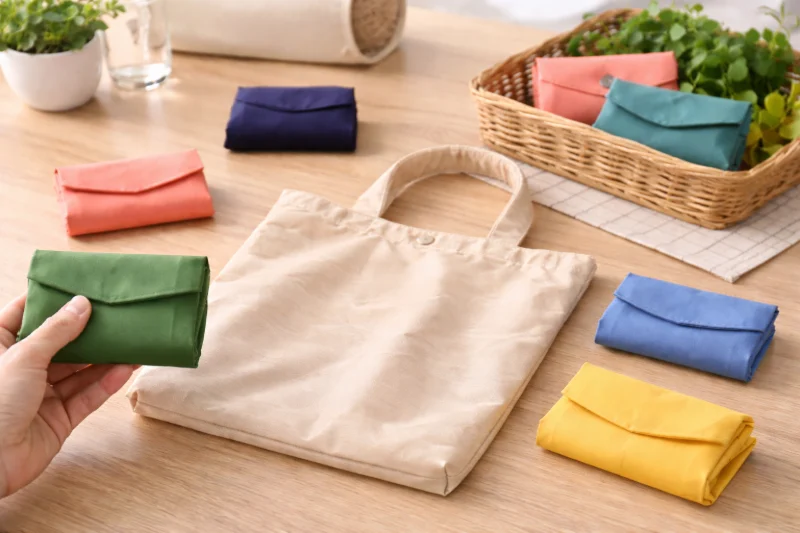
Foldable bags are often treated as a simple everyday item, but their materials, folding methods, user experience, and suitable scenarios can differ quite a bit. The following sections break these points down based on actual use, making it easier to understand how foldable bags are structured and where they work best.
A foldable bag is a portable bag that can be quickly compressed into a small size after use. Its core features are a soft structure, repeated foldability, and the ability to maintain normal load-bearing strength when unfolded. The materials range from lightweight nylon and polyester to thicker canvas and Oxford cloth; the final hand feel and weight are determined by the fabric itself, while the folding design simply defines how it is stored. Foldable bags are commonly used for shopping, commuting, and travel as a backup option, making them a practical everyday bag that balances portability and usability.
The advantages of foldable bags come from portability, practicality, and eco-friendliness, allowing them to perform steadily across daily life, travel, ecommerce retail, and branded giveaways. These points below are the most noticeable benefits in real use.
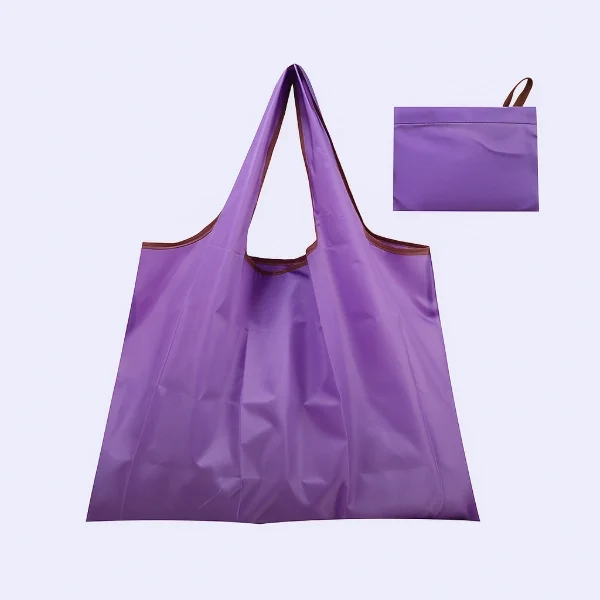
The materials commonly used for foldable bags range from lightweight to medium and heavier options, and each fabric differs in hand feel, durability, folded volume, and shipping cost. The examples below are all materials we’ve actually worked with, and they are also the ones customers use most often, listed here for reference.
Polyester is light, soft, and folds into a very small size, making freight easier to control. Many cross-border ecommerce buyers choose it because it moves quickly in large volumes and offers strong cost performance.
Nylon is tougher than polyester, stays firm after long use, and has a more solid hand feel. The price is slightly higher. Some customers compare polyester and nylon before deciding; when we quote, we usually present both options so they can choose based on budget. Others request samples of both and decide only after trying the texture themselves.
Oxford fabric1 is thicker than polyester, with a textured surface that looks more structured. It folds into a slightly larger volume than polyester but is still very portable. Many retail brands prefer it because it feels more substantial when carried.
Cotton has a soft, natural texture and looks comfortable. Canvas is a thicker version of cotton—solid and durable, lasting a long time without wearing out. It folds into a larger volume, but cultural and gifting customers often value this sturdy feel.
Non-woven material is lightweight, cost-effective, comes in many colors, and produces quickly. It’s widely used for promotions and trade show giveaways, where quantities are high and turnover is fast, and many customers order tens of thousands at a time.
The printing method2 for foldable bags mainly depends on the material and the style of the design. The heat resistance of the fabric, the texture of its surface, and the complexity of the artwork all influence the final choice. Once the fabric type and the logo’s position and size are confirmed, the printing method usually corresponds quickly to a suitable option.
Polyester, nylon, Oxford fabric, and full-polyester canvas work well with sublimation printing. These materials can lock the color into the fibers when heated, producing bright and stable results. Sublimation handles large and complex designs effectively, making it especially suitable for full-coverage prints with smooth, even color that won’t fade from folding.
Screen printing is suitable for simple, small, single-color designs, with clean lines and solid color blocks presented in a direct, crisp way. It fits basic bag styles with clear positioning, and the print remains durable through long-term use.
Heat transfer printing is more commonly used on materials that cannot undergo sublimation, such as non-woven fabric, and it performs well with multi-color or detail-heavy small designs. It works best in areas that don’t need to endure fold lines, as the film layer can be affected by repeated folding, so it is usually applied to fixed-position small logos.
If a full-coverage design is not suitable for sublimation, UV printing is often used to achieve the overall effect. UV printing adapts to a wider range of materials and can present rich details and layered visuals, making it suitable for styles requiring a specific look or structures that cannot withstand high temperatures.
Overall, screen printing is ideal for small single-color logos; heat transfer is used for multi-color small graphics on non-woven fabric; and sublimation and UV printing are preferred for full-coverage designs.
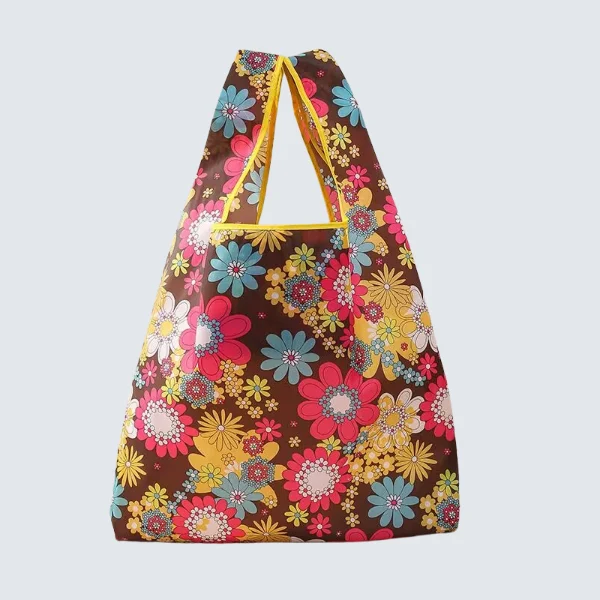
Foldable bags work well across many situations, offering clear value from daily use to commercial applications. Their light weight, easy storage, and freedom in design are the main reasons they continue to stay popular across different channels. With various styles and materials available, foldable bags can cover shopping, travel, ecommerce, and gifting markets, making them a highly flexible product category.
Smooth communication is the most direct way to judge whether a foldable bag supplier is suitable. Clear expression, mutual understanding, and timely responses during detail confirmation keep the development process moving steadily and reduce unnecessary back-and-forth.
Professional capability determines the reliability of collaboration. A supplier should understand how different materials behave, how folding structures differ, and how to match printing methods with specific artworks. Long-term, stable partners in fabric, printing, and logistics also make production more controllable and reduce uncertainties during delivery.
Foldable bags appear simple, but factories vary greatly in material quality, print clarity, and how strictly they handle loose threads and defects. Whether the fabric feels solid, whether colors are even, whether print edges are clean, and whether stitching is neat and trimmed—these details directly affect the overall finish of the final product. Factories with strict quality control deliver cleaner and more refined bags.
The ability to provide samples and accept trial orders is a direct indicator of cooperation flexibility. Samples help confirm the real texture, workmanship, and print quality, while trial orders allow small-batch testing of sales performance, reducing inventory and cash flow pressure. This early stage also helps build stable cooperation for future orders.
Price is not the most important factor. Extremely low unit prices often come from reduced material quality or simplified production processes, which affect hand feel, print clarity, and durability. Over time, this can weaken brand image and harm user experience. Choosing a stable, professional, and cooperative supplier results in more consistent products and is better suited for ongoing replenishment and long-term sales.
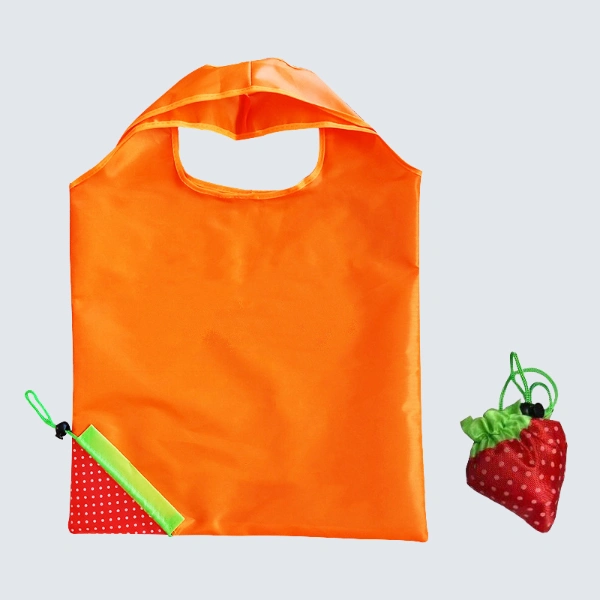
Foldable bags have remained widely used because they provide steady value in the most ordinary daily scenarios. Their light weight, compact storage, and reusability make them stand out compared with other bag types. Whether for shopping, travel, or promotional use, foldable bags offer convenience with minimal effort and can be opened instantly whenever needed and folded again after use. For individuals, they serve as a reliable backup; for brands, they offer high usage rates and continuous exposure. This is why foldable bags continue to maintain strong demand.
Get a free quote and expert consultation today. Let's bring your brand vision to life.
1 The Wikipedia entry on Oxford cloth identifies it as a woven fabric characterized by a basket-weave structure and comparatively heavier construction, aligning with its structured surface and substantial hand feel.
2 Industry guidance published by Printing United Alliance frames printing method selection as a technical decision based on substrate performance, surface behavior, and image complexity.
Answer: Foldable bags are commonly made from polyester, nylon, Oxford cloth, cotton, canvas, and non-woven fabric. Each material offers different benefits in durability, foldability, printing compatibility, and shipping efficiency.
Answer: Polyester and nylon foldable bags support sublimation printing for full-color and full-coverage designs. They can also use screen printing for small single-color logos.
Answer: A good supplier should offer clear communication, strong material knowledge, reliable printing capability, strict quality control, sample availability, and support for trial orders. Consistency in workmanship and fabric quality is essential for long-term cooperation.
Answer: Polyester is considered the best lightweight option because it is soft, compact when folded, cost-efficient, and widely used in reusable shopping bags and cross-border ecommerce products.
Answer: Yes. Materials like polyester, nylon, Oxford cloth, and canvas offer strong tear resistance and load capacity, making foldable bags suitable for repeated daily shopping use.
Answer: Yes. Foldable bags are reusable, reduce the consumption of single-use plastic bags, and support sustainable shopping habits. Materials like RPET polyester enhance eco-friendly value by using recycled plastic bottles.
Answer: Foldable bags take up minimal luggage space, expand into a full-size tote or backup bag when needed, and are ideal for souvenirs, extra clothing, or handling overweight luggage at airports.
Answer: Sublimation printing is best for full-color or edge-to-edge artwork on polyester or nylon. UV printing is recommended for materials that cannot withstand high heat but still require detailed, vibrant designs.
Answer: Yes. Non-woven foldable bags are lightweight, low-cost, available in many colors, and easy to mass-produce, making them ideal for trade shows, campaigns, and large-volume brand promotions.
Answer: Yes. Lightweight materials such as polyester and nylon fold very compactly, reducing carton volume and dimensional weight. This makes them one of the most cost-efficient bag categories for cross-border ecommerce shipping.

Order or no-order we are Always here to help you!
We will contact you within 1 working day, please pay attention to the email with the suffix “@yanxinbag.com”.
Order or no-order we are Always here to help you!
We will contact you within 1 working day, please pay attention to the email with the suffix “@yanxinbag.com”.