
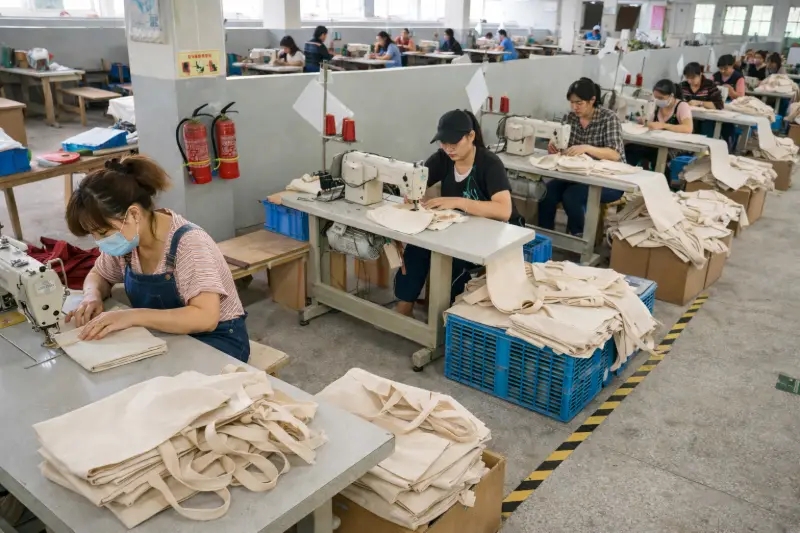
Low MOQ, meaning smaller minimum order quantities, was originally just a temporary adjustment some factories made to win new clients. At that time, factories that were willing to take small orders were usually smaller manufacturers willing to spend more time in exchange for a chance at new business. In the past, efficiency in manufacturing came from scale—the more you produced, the more cost-effective it became. Large orders signaled capability, while small orders were considered uneconomical.
But in recent years, the rhythm of the market has genuinely changed. Product cycles are faster, inventory is more expensive, and buyers place orders more cautiously. The demand for small orders has always existed; many factories simply weren’t willing to accept them before. Now that competition is intense, more manufacturers are learning to handle flexible order quantities. As a result, Low MOQ has become far more common. It’s not that buyers have changed—it’s that factories have become more willing to adapt. Buyers want flexibility, and factories are adjusting accordingly. In the end, it isn’t about one side accommodating the other; it’s the market adjusting itself.
In manufacturing, MOQ was originally the result of production efficiency. Machine setup1, calibration, and material preparation all carry fixed costs that are diluted across quantity. In bag manufacturing, it’s the same — when the order quantity is small, the cost of each step becomes more concentrated. The factory can’t get bulk prices on materials, printing has a setup fee, and both cutting and sewing have to be arranged separately. Workers are paid by the batch, not per piece. The smaller the quantity, the higher the cost distributed to each bag, and naturally, the unit price goes up. The larger the order, the lower the unit cost—that was the old logic.
But the pace today is different. Customer needs change faster than production, product lifecycles are shorter, and more brands place small test orders before committing. Many companies would rather place multiple smaller orders than be locked down by excess inventory. For them, “flexibility” is more important than “the lowest cost.”
So Low MOQ isn’t a rejection of traditional practices—it’s a shift in rhythm. As the market speeds up, factories naturally have to speed up too. This isn’t easy for manufacturers, but it’s reality. In the past, profit came from stable routines; now survival depends on response speed.
In manufacturing, lower minimum order quantities usually mean higher unit prices and thinner margins. The old logic was simple: the more you produce, the more cost-effective it becomes. Everyone understood that. But the rhythm of the market has changed. Today’s brands update products faster, sales cycles are shorter, and no one wants to tie up too much capital in inventory. Instead of locking money in a warehouse, many prefer producing a small batch first, testing market response, and then deciding whether to continue.
This approach may look inefficient on the surface, but in today’s environment it makes more sense. It gives brands room to adjust, and it keeps the supply chain closer to real market demand. Many customers now prefer placing several small orders rather than committing to one large, inflexible order. This shift isn’t driven by any single party—it’s simply the natural outcome of market forces.
From the manufacturing side, small orders are indeed more demanding and less profitable, but that’s the reality. The pace has changed, and so have the rules. Low MOQ isn’t some kind of “innovation”; it has simply become another normal way of doing business today.
Low MOQ sounds flexible, but it comes with its own burdens. For a bag manufacturing factory, orders of 200 canvas bags and 300 non-woven bags, with different specifications and printing, make scheduling even more complex. Smaller quantities and more frequent batches require finer planning. When several small orders are processed at the same time, the demands on scheduling, coordination, and quality control actually increase. Communication becomes more frequent as well. Every batch requires confirmation of details—designs, colors, packaging—all must be right. The orders may be smaller, but the management effort doesn’t really decrease.
For factories, this isn’t something they can’t handle, but it does test experience2. Faster pace and more changes mean both people and systems must stay steady. The factories that have been in this business long enough understand one thing well: the real issue isn’t small orders, but messy ones.
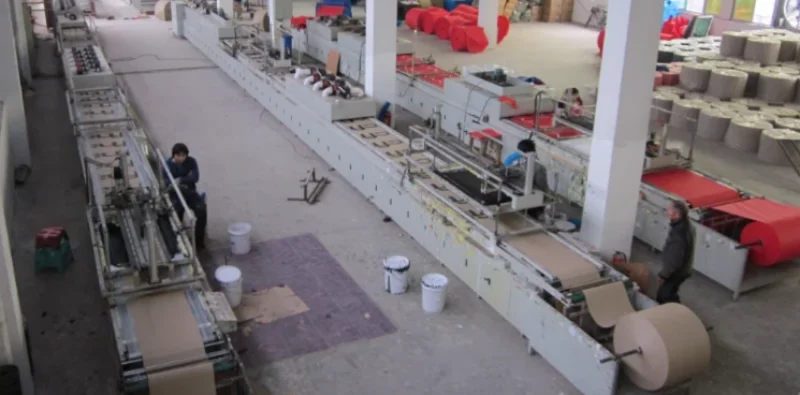
In the future, large and small orders will coexist. Customer segmentation will become more refined: some brands rely on small batches to test the market, while others still need large volumes to maintain cost efficiency. For manufacturers, this isn’t an either-or situation—it requires two capabilities: the ability to handle large production runs and the flexibility to manage short-batch orders.
Large orders depend on efficiency, while small orders depend on responsiveness. These two modes won’t replace each other; they will continue along their own paths. Some factories will stick to mass production, while others will shift toward more flexible models. The key is finding the balance that fits.
Low MOQ isn’t a trend, nor is it a concession. It is simply an inevitable result of a more competitive market. For brands, it’s a choice; for manufacturers, it’s adaptation. Whether a factory can handle this shift reflects its true capacity to adjust.
Over the years, we’ve worked with many types of clients. Some are just starting their brand, so naturally their quantities are smaller; others are established companies that require large, coordinated batches. For us, all of this is normal. Different clients follow different rhythms, and our job is to match that rhythm and manage production well. The level of MOQ has never been the real issue—the real priority is stability and reliability. In the end, business isn’t about how big the order is, but about who can get things done properly.
Get a free quote and expert consultation today. Let's bring your brand vision to life.
1 According to AccountingCoach, setup cost in manufacturing refers to the batch-level expense required to prepare equipment and materials for production, aligning with how bag factories handle printing and cutting startup costs.
2 The Wikipedia entry on the experience curve effect identifies experience as the accumulated production knowledge that drives measurable efficiency gains and cost reduction in manufacturing environments.
Answer: MOQ stands for Minimum Order Quantity, which refers to the smallest number of units a supplier or manufacturer is willing to accept in a single order to ensure production remains financially viable.
Answer: A low MOQ allows small brands and startups to order fewer units, reduce inventory costs, test market responses, and improve cash flow without committing to large production runs that could tie up capital.
Answer: Yes, different suppliers can set different MOQs for the same product based on their production methods, raw material sourcing, and business model, meaning you may find multiple MOQ options for the same item.
Answer: Low MOQ has become more common as market dynamics change and more factories adapt to small-batch orders, but it exists alongside traditional bulk order models rather than completely replacing them.
Answer: MOQ impacts inventory and cash flow by determining how much stock must be purchased up front; ordering smaller quantities can reduce inventory holding costs and improve cash flow, especially for small businesses.
Answer: Low MOQ orders can increase scheduling complexity, require more frequent communication, demand tighter coordination and quality control, and test a factory’s experience and systems to keep multiple small batches moving smoothly.
Answer: Some clients prefer large orders because they offer lower unit costs through economies of scale, better predictability in production, and may provide overall cost savings for established businesses.
Answer: The rise of low MOQ means that future production models will need to accommodate both bulk and small-batch orders, requiring factories to be efficient at high volume and adaptable with flexible production runs.

Order or no-order we are Always here to help you!
We will contact you within 1 working day, please pay attention to the email with the suffix “@yanxinbag.com”.
Order or no-order we are Always here to help you!
We will contact you within 1 working day, please pay attention to the email with the suffix “@yanxinbag.com”.