
Our Academy
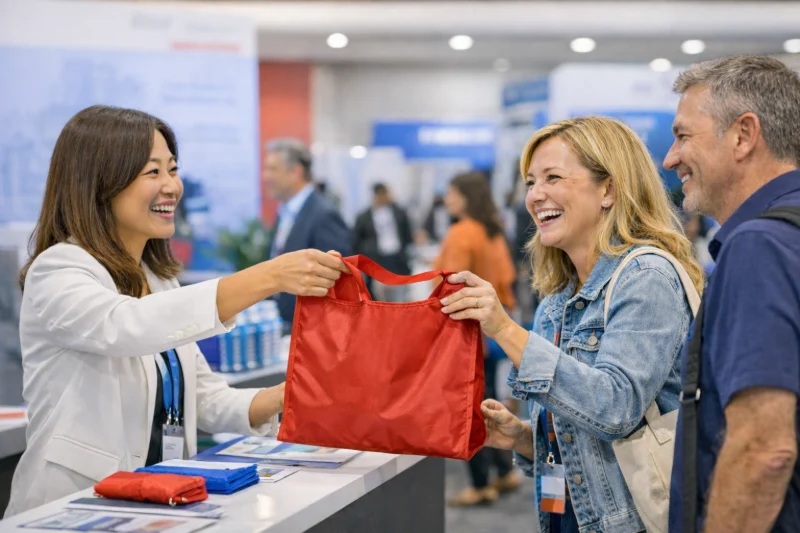
Brands prefer foldable bags for events and promotions because they offer three key advantages at the same time: long-term exposure, controllable costs, and high usage frequency. Compared with many one-time giveaways, foldable bags are more practical and more likely to be kept and reused, rather than discarded after the event ends. Since they naturally enter daily scenarios such as shopping, commuting, or travel, the brand message does not stop on the event day but continues to appear in the user’s everyday life. This steady and repeated exposure, combined with manageable budget input, makes foldable bags a long-term choice for brand activities.
Many promotional items are designed with more emphasis on commemorative value than on actual usage frequency. They can help create atmosphere on the event day, but whether they continue to be used afterward is often uncertain. When brands begin to focus on the long-term effectiveness of their promotions, they tend to pay more attention to products that can naturally integrate into everyday life.
Foldable bags naturally integrate into everyday scenarios such as shopping, commuting, and travel, rather than appearing only once on the event day. Once they enter daily life, the brand logo is repeatedly displayed through regular use1, creating more stable and continuous exposure.
At trade shows or corporate events, attendees often need to carry brochures, samples, or promotional materials. Foldable bags can be unfolded and used immediately, solving storage needs on the spot. As a result, they are more easily accepted and more likely to create mobile brand visibility throughout the venue.
Once foldable bags become part of everyday use, the brand no longer remains limited to the event day but is seen repeatedly with each use. Compared to promotional materials that appear only once at the venue, this kind of sustained visibility is more likely to build a stable brand impression. Over time, familiarity increases, and brand memory forms more naturally.
Foldable bags usually offer a complete and flat printing surface that clearly presents brand logos, key visuals, or event-themed graphics. A larger display area helps strengthen brand recognition and makes the design more noticeable in public settings. For brands aiming to maintain consistent visual identity, this display space carries practical value.
Practical gifts are more likely to be kept long-term rather than forgotten after the event ends. When users repeatedly carry the same bag in daily life, the brand gradually becomes associated with convenience and practical experience. This steady and subtle connection tends to last longer than a one-time high-exposure campaign.
Foldable bags are typically produced using lightweight fabrics, with relatively stable unit pricing that is easier to manage in bulk purchases. In addition, because the product itself is compact and lightweight, transportation and storage costs are more advantageous, especially for cross-city or cross-border distribution.
A foldable bag requires only one production cost but can continue generating exposure through repeated use. Compared to one-time advertising placements or short-term promotional materials, reusable products deliver multiple brand impressions2 over time, making overall marketing investment more stable and sustainable.
In a trade show environment, attendees usually need to carry a large amount of brochures, samples, and promotional materials. The venue is crowded and highly mobile. Foldable bags can be unfolded and used on the spot, immediately solving storage needs and allowing attendees to move around the exhibition hall more easily. As people walk between different booths carrying bags printed with brand logos, the brand naturally gains mobile exposure throughout the venue.
In corporate meetings or client appreciation events, foldable bags also provide practical value. As customized gifts, they offer real functionality without appearing overly casual, and they are more likely to be kept long-term compared to one-time souvenirs. When the gift continues to be used in everyday life afterward, it helps reinforce a professional corporate image and allows the partnership to remain present in daily scenarios.
Event materials are often a recurring expense, especially for trade shows, promotions, and brand campaigns that require distributing large quantities of bags at one time. Purchasing foldable bags in bulk can effectively reduce the unit cost, helping brands better control overall event budgets and improve purchasing efficiency. For activities with high usage frequency and stable quantity demand, placing one consolidated order is more reasonable than making multiple small purchases, while also reducing the time and transportation costs associated with repeated reordering.
Brand image is reflected not only in products but also in the materials used during events. Bulk customization ensures that printing colors, logo placement, and structural specifications remain consistent, avoiding color differences or detail variations caused by multiple small production runs. For chain brands, e-commerce businesses, or companies organizing events in different cities, unified visual standards help strengthen brand recognition and present a more professional overall image.
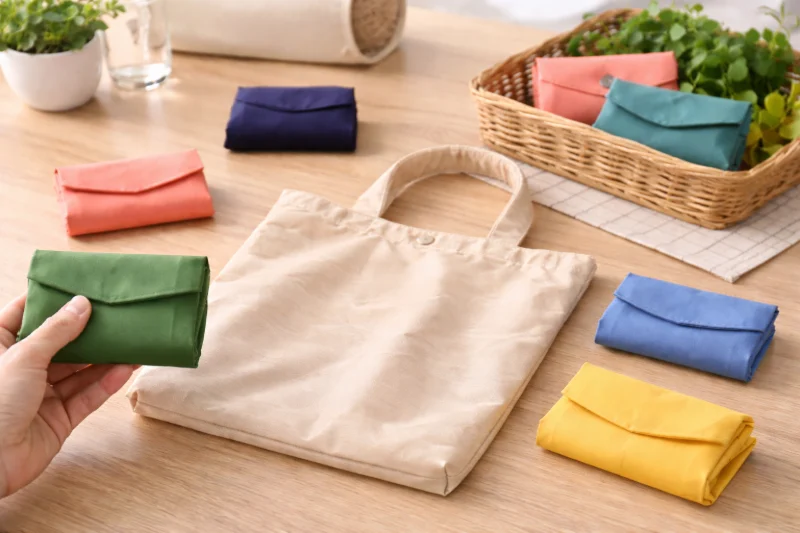
Foldable bags offer considerable flexibility in size, material, printing method, and folding structure. Bulk orders make it easier to confirm all details at once and complete production under a unified standard, ensuring that every bag aligns with the event positioning and brand style. Compared to using generic stock bags, customized foldable bags allow brands to express their identity more accurately and keep event materials consistent with their overall image.
Foldable bags are reusable products that can replace single-use plastic bags or temporary packaging materials. Distributing reusable foldable bags in large quantities during events not only provides practical value but also reflects a brand’s attention to environmental and sustainability concerns. In a market environment that increasingly values green positioning, this choice itself becomes a form of value expression.
For brands with ongoing event plans, purchasing foldable bags in bulk helps stabilize supply planning. Once specifications, materials, and printing details are confirmed, future reorders become smoother and require less repeated communication. A stable production plan not only improves efficiency but also lays a more reliable foundation for long-term cooperation.
When selecting foldable bags for events, the material should match both the budget and the positioning of the activity. Polyester and nylon are lighter and more compact after folding, making them suitable for trade shows or large-scale promotional distribution; Oxford fabric has a firmer hand feel and suits brand events that require a certain level of texture; canvas is thicker and structurally more stable, emphasizing durability and a natural feel; non-woven fabric offers stronger cost advantages and is commonly used for high-quantity promotional or event distribution. Differences in weight, volume, and hand feel among materials will directly affect the carrying experience at the event.
The choice of printing method is usually determined by the material, the design artwork, and the order quantity. Polyester and nylon more commonly use sublimation printing, which is suitable for full-coverage designs and rich colors; if the design is relatively simple, screen printing can also be used. UV printing is also suitable for full-coverage designs and has the advantage of adapting to a wider range of materials, especially for structures or fabrics that are not suitable for high-temperature processing. Non-woven fabric mainly uses screen printing; for small graphics that are not positioned on fold lines, heat transfer printing can be applied. When the budget allows, laminated full-color printing can also be used to present a more complete visual effect. Evaluating printing methods based on material characteristics, design complexity, and order quantity helps ensure stable results and controlled costs.
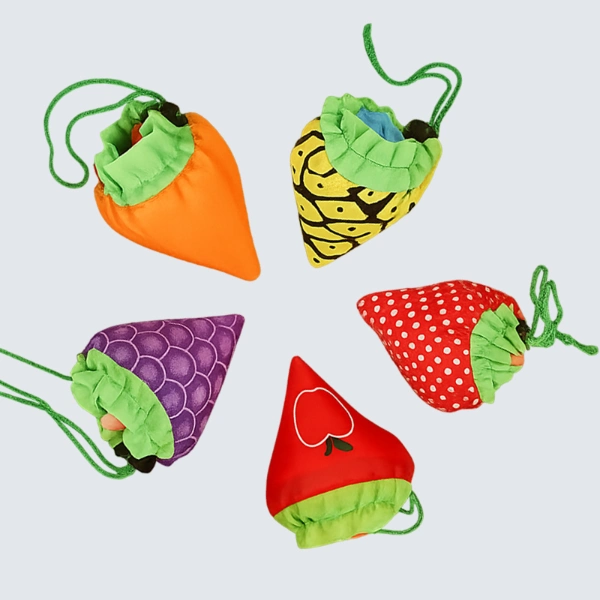
In terms of structural styles, common options include the basic vest-shaped design when unfolded, as well as the rounded single-handle structure; both can be folded into a small pouch for storage. Among polyester and nylon materials, there are also folding designs made into fruit or animal shapes. Canvas styles more often use a three-side zipper enclosure for storage, while non-woven styles commonly use plastic snap buttons or Velcro for fastening. The differences between styles mainly lie in the unfolded shape and the closure method.
Foldable bags continue to be favored by brands in events and promotions not because they are novel in form, but because they strike a balance between usage frequency, cost control, and brand exposure. Compared to giveaways that function only at the venue, foldable bags are more likely to enter daily life and create long-term, natural brand visibility. For brands that need to balance budget, image, and sustainability considerations, they represent a stable and practical choice for event materials.
When materials, printing methods, and structural styles are aligned with the goals of the event, a foldable bag becomes more than just a packaging tool—it becomes part of brand communication. This is why foldable bags continue to maintain steady demand across trade shows, promotions, and corporate events.
Get a free quote and expert consultation today. Let's bring your brand vision to life.
1 As outlined by the United Nations Environment Programme in its life cycle assessment meta-analysis, regular use directly determines whether reusable bags achieve lower climate impact compared to single-use plastic bags.
2 In the measurement framework described by Wikipedia, impressions function as frequency-based indicators of how often a message becomes visible.
Answer: Brands often choose foldable bags for events and promotions because they provide long-term brand visibility, are cost-effective for large giveaways, and tend to be reused by recipients, resulting in repeated exposure rather than being discarded after the event.
Answer: Foldable promotional bags act like moving billboards; when recipients use them in daily life, the printed logo and messaging are repeatedly seen by others, enhancing brand awareness beyond the event itself.
Answer: Popular materials for foldable reusable promotional bags include polyester, nylon, canvas, and non-woven polypropylene, each offering varying weight, durability, and printing surface for event branding.
Answer: Custom foldable tote bags offer cost-effective, long-lasting promotion, wide design options, eco-friendly appeal, and repeated brand exposure when used by customers in daily activities.
Answer: Yes, foldable reusable bags reduce reliance on single-use plastic bags, help lower environmental impact, and align with sustainability initiatives, making them an eco-friendly choice for promotions.
Answer: Yes, foldable bags can be customized with logos, slogans, and graphics using various printing technologies, helping brands communicate their identity and values.
Answer: UV printing and sublimation printing are commonly used for full-coverage designs on foldable bags, offering vibrant color and adaptability across various materials.
Answer: Yes, foldable bags are suitable for everyday activities like grocery shopping, errands, or travel, which increases the likelihood that they will be used frequently and seen by many.
Answer: Foldable bags are a functional and reusable alternative to single-use plastic bags, helping reduce plastic waste while offering ongoing brand visibility and environmental benefits.

Order or no-order we are Always here to help you!
We will contact you within 1 working day, please pay attention to the email with the suffix “@yanxinbag.com”.
Order or no-order we are Always here to help you!
We will contact you within 1 working day, please pay attention to the email with the suffix “@yanxinbag.com”.