
Our Academy
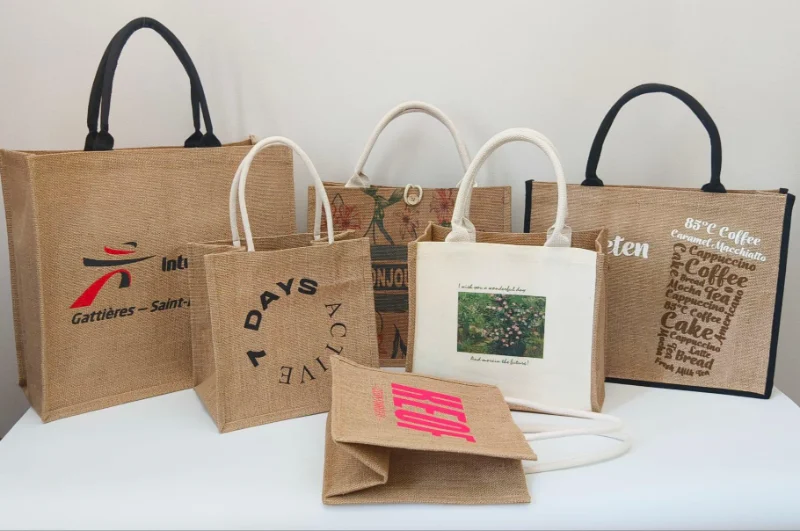
Why are more businesses considering jute bags for packaging and promotional use? For many brands, packaging is no longer just a container, but part of how they present themselves.
Companies often choose jute bags not only for sustainability, but for the natural and understated character the material brings. The coarse woven texture and neutral tones make the bag feel less polished and less industrial, closer to everyday life. The structure is relatively firm, so when filled with materials or products, it keeps its shape and looks more organized.
Of course, jute bags are not suitable for every situation. They work well in certain contexts, while in others they may not be the ideal choice. Rather than focusing only on advantages, it is more practical to consider whether they match the brand’s positioning and actual usage needs.
When businesses choose jute bag1, they often take into account the material’s inherent character. Made from plant fiber, jute naturally reveals its fiber texture and tone on the surface, creating a sense of raw authenticity. This material quality does not rely on deliberate surface treatment, but instead preserves the natural state of the fiber itself. Because of this, it tends to feel more distinctive among commonly used packaging materials.
In event or brand distribution settings, this material presence makes the bag easier to notice. The structure is relatively firm, with a defined silhouette, allowing printed logos or graphics to remain clear and visible. For many brands, choosing jute or burlap bags is less about material performance alone, and more about how the overall presentation aligns with the image they want to convey2.
The sustainability aspect of jute bags is not limited to written descriptions. Made from plant fiber and designed for reuse, these qualities are visible through the material itself. The woven texture, natural color, and tactile surface clearly feel different from synthetic alternatives.
In real use, people often notice the material before reading any printed message. Instead of relying only on environmental slogans, choosing jute or hessian already communicates a certain direction. Sustainability becomes part of the material experience, not just something stated in words.
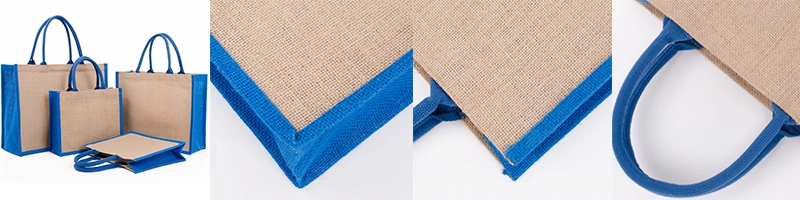
In practical use, jute bags offer moderate carrying capacity. They are suitable for holding event materials, product kits, or distributed items. The jute fabric itself is relatively tightly woven, and many designs are laminated with a PE coating on the inside. This lamination adds structural stability and helps the bag maintain its shape when filled.
During meetings or event distribution, this structure keeps the bag looking more organized and prevents it from collapsing easily. The focus is on balanced stability and practicality, rather than lightweight convenience or extreme load performance.
At trade shows, corporate meetings, or anniversary events, jute bags are often used as document carriers or commemorative totes. Compared to disposable distribution bags, jute or burlap bags are more likely to be kept and reused. When printed with a logo or event information, the branding remains visible during later use.
This continued presence is one reason many brands consider them. The bag does not disappear after the event ends, but stays in circulation through repeated use. Rather than relying on short-term impact, it allows brand visibility to extend naturally over time.
Jute bags are not universal solutions. They are better suited for brand-focused packaging, event distribution, and product presentations that emphasize a natural or rustic character. In settings such as agricultural displays, gift packaging, or craft-oriented product bundles, the material helps create a consistent overall impression.
However, in certain situations, they may not be the ideal option. If extremely lightweight carrying, high-frequency daily use, or large-scale low-cost distribution is required, other materials may be more practical. Likewise, in environments that demand clear waterproof performance, jute or hessian does not offer inherent advantages.
Rather than treating them as all-purpose bags, it is more realistic to view jute bags as a material choice that fits specific contexts. Understanding these boundaries allows them to deliver more consistent value.
Overall, jute bags—also referred to as burlap or hessian in different regions—are not universal solutions. Their value lies more in the material’s distinct appearance, overall presentation, and relatively stable structure.
This woven jute fabric creates a clear presence in event settings, brand distribution, or product packaging that emphasizes a natural character, while offering moderate load capacity and the possibility of reuse. It is not designed for extreme functionality or lightweight convenience, but instead provides a balance between visual expression and practical use.
For businesses, the key question is not whether jute bags are the “best” option, but whether they suit the intended context and brand direction.
Get a free quote and expert consultation today. Let's bring your brand vision to life.
1 Wikipedia identifies jute as a long, rough, shiny bast fibre that can be spun into coarse and strong threads for practical use.
2 In marketing theory, brand equity functions as a mechanism that influences consumer choice by associating products with perceived quality and identity.
Answer: Businesses choose jute bags because they combine natural presentation with practical structure. The material supports brand positioning while remaining reusable in event and promotional settings.
Answer: Many jute shopping bags are laminated with a PE coating on the inside. This layer improves structural stability and makes the interior easier to wipe clean.
Answer: Jute is a plant-based fiber that is biodegradable under natural conditions. It also supports reuse, which aligns with many sustainable packaging strategies.
Answer: Jute refers to the plant fiber itself, while burlap and hessian are regional names for the woven fabric made from it. The material is essentially the same, but terminology varies by market.
Answer: Non-woven PP bags are lighter and often used for large-scale distribution. Jute bags provide stronger visual identity and are more likely to be reused after events.
Answer: Brands that emphasize natural, agricultural, handmade, or rustic positioning often benefit from burlap packaging. The material supports a cohesive presentation in such product categories.
Answer: Yes, jute bags can be printed with logos using screen printing or similar techniques. The textured surface often gives printed designs a distinctive, non-glossy appearance.
Answer: Yes, jute sacks are commonly used for agricultural display and dry goods presentation. The material visually complements grains, coffee beans, and farm products.
Answer: Because jute bags are reusable, they often remain in circulation after an event ends. Continued use allows printed branding to stay visible over time.
Answer: Jute is not inherently waterproof, so it is not ideal for environments requiring full moisture protection. For waterproof packaging, materials such as PVC or TPU bags are more appropriate.

Order or no-order we are Always here to help you!
We will contact you within 1 working day, please pay attention to the email with the suffix “@yanxinbag.com”.
Order or no-order we are Always here to help you!
We will contact you within 1 working day, please pay attention to the email with the suffix “@yanxinbag.com”.