
Our Academy
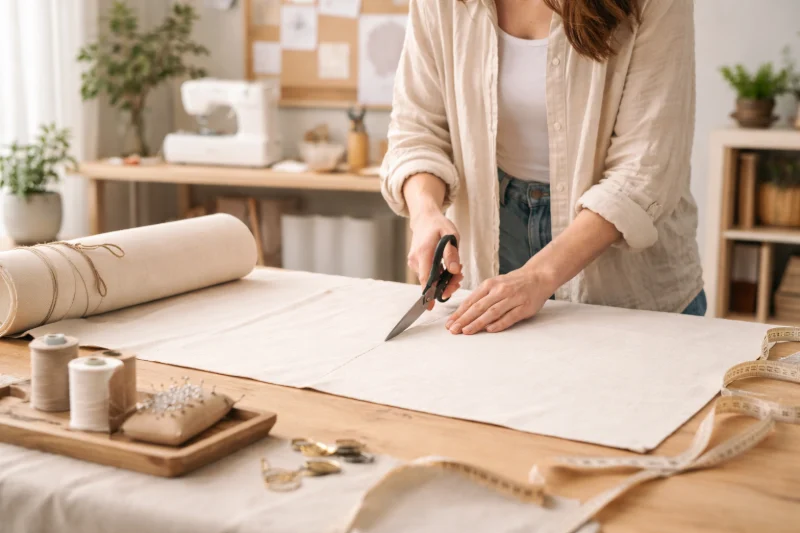
Woven fabric is what we usually call “woven cloth” in the factory. It is made by pulling the warp yarns1 straight as the framework, while the weft yarns move up and down through them, locking the whole structure together. Because it is literally “woven,” the fabric surface shows clear texture, stays stable, and is not easily stretched out of shape. The hand feel can range from very soft to quite firm, entirely depending on the yarn used and how it is woven.
This stable structure is the reason it holds its place in the world of eco bags and shopping bags. Whether a bag can truly be reused has nothing to do with slogans—it depends on whether it collapses the first time it is filled. Woven fabric is naturally abrasion-resistant and tensile-resistant, and when combined with different materials (cotton, linen, polyester, nylon) and different weights, it can cover everything from lightweight foldable bags to structured tote bags.
Put simply, the value of woven fabric doesn’t lie in the “definition of weaving” itself, but in the stability it gives a bag. Only when the structure is stable does “reusable” actually make sense. This is the fundamental reason it has become a mainstream material for eco-friendly bags.
For reusable bags, the key is not whether the fabric is thick or thin, but whether the structure can remain stable during daily folding, pulling, and carrying heavy items. The interlaced warp and weft of woven fabric act like a durable little grid that distributes force, so even lightweight 190T or 300D options resist stretching and deformation better than non-woven fabric of the same thickness.
But whether a bag ultimately “looks stable” is determined by both structure and material. The fiber type (cotton, linen, polyester), yarn thickness, fabric weight, and whether an inner coating is added all influence firmness and hand feel. This is why woven fabric can range from thin and foldable to thick and structured—allowing it to adapt to many different bag types.
Maintenance is also simple. Most woven bags can be wiped clean or washed and used again, and washing will not cause them to collapse in shape. When a bag is easy to care for and comfortable to use over time, users naturally continue using it, which is also why brands prefer it.
In the end, the advantage of woven fabric is not that it is “thick” or “hard,” but that its structure stays stable through long-term use. With the right material and weight, it can truly support a bag and make it durable enough for repeated use.

Reusable bags need to balance durability, practicality, and appearance. The physical structure of woven fabric allows it to perform well in all these aspects, which is why it has become a common material for this type of product.
Woven fabric forms a stable grid structure through the right-angle interlacing of warp and weft yarns. This structure effectively disperses stress when carrying weight, reducing localized abrasion and the risk of tearing, thereby extending the lifespan of the bag.
“Woven” refers to a weaving technique, not a specific material. It can be made with cotton, linen, polyester, nylon, recycled fibers, or even blended yarns. With such a broad material base, combined with variations in yarn thickness, fabric weight, and weaving method, its firmness, thickness, hand feel, and even functional properties (such as water resistance or breathability) can all be precisely designed to suit different bag types—from soft and casual styles to structured business totes.
The fabric’s neat woven texture provides an ideal base for printing and embroidery. Brand logos and graphics can appear clear and durable, maintaining good visual performance even after repeated use and washing, which supports long-term brand exposure.
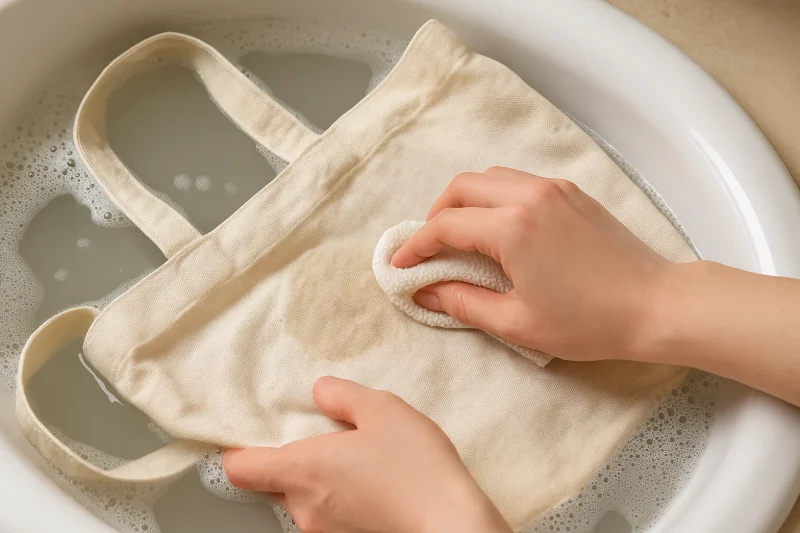
One advantage of bags made from woven materials is that they handle dirt well. When dust or stains accumulate during daily use, most of the time a simple wipe or light wash is enough to clean them.
A bag that is resistant to dirt and easy to maintain carries no burden for the user—when it gets dirty, you wash it, and after washing, you keep using it. This kind of practical convenience is what keeps “reusable” truly sustainable.
In summary, woven fabric, with its stable structure, broad material adaptability, strong branding capacity, and easy maintenance, is a reliable material choice that supports the long-term value of reusable bags.
The woven fabrics commonly used in bag products mainly include the following types. Because they are made from different materials, each type has its own characteristics and suitable application scenarios:
Made from natural cotton fibers, it is breathable, skin-friendly, and naturally soft to the touch. It takes dye well and can present soft, full colors. However, its abrasion resistance is weaker compared to synthetic fibers, and it creases easily. It is suitable for mid-to-high-end daily tote bags and shopping bags that emphasize natural texture, comfort, and dyeing performance.
Canvas, usually made from cotton or cotton–polyester blends, it uses thicker yarns and a tight weave, giving it a thick, durable, and structured feel. It is a classic choice for durable tote bags, shopping bags, tool bags, and casual fashion bags, and its rugged texture naturally carries a vintage style.
Polyester2 is one of the most widely used synthetic fibers. Fabrics woven from it are strong, abrasion-resistant, wrinkle-resistant, and colorfast, and they can easily undergo water-repellent finishing. With high cost effectiveness, it is very suitable for promotional bags, gift bags, lightweight backpacks, and commuter bags that require frequent use.
Woven from polyester or nylon fibers, its signature feature is the box-weave structure using “double warp and double weft,” which is tighter than plain or twill weaves. This makes it highly abrasion-resistant, tear-resistant, and firm in texture, with good water-repellent properties. It is the preferred material for tool bags, outdoor gear bags, luggage, and other applications requiring high durability.
Nylon is known for its extremely high strength and excellent abrasion resistance, while remaining lightweight. It is commonly used for ultra-light and high-strength outdoor sports bags, travel bags, foldable shopping bags, and tool bags that require frequent handling.
Jute, made from linen or other natural plant fibers. Its main characteristics are excellent breathability, quick moisture absorption and release, and a unique rustic texture with natural luster. However, it tends to wrinkle easily and has a slightly rough hand feel. It is suitable for artistic, natural, or high-end handcrafted eco bags and gift bags.
RPET is an eco-friendly material made from recycled plastic bottles and other recycled polyester sources. Its physical performance is close to virgin polyester, but it significantly reduces resource consumption and carbon emissions during production. It is an ideal choice for brands emphasizing environmental values and is widely used in eco-themed promotional bags and shopping bags.
PP (polypropylene) woven fabric is made using interlaced flat yarns, offering excellent abrasion resistance and water resistance. Its surface is smooth, and printing appears clear and vibrant. The material is highly durable and not easily damaged, making it widely used in budget-friendly shopping bags, eco bags, and specialty packaging bags, balancing practicality and visual impact.
From our experience in production, each type of woven fabric has its own traits. To show their core differences more clearly, the table below summarizes the materials and key characteristics of eight common fabrics:
Comparison of Common Woven Fabrics Used in Bags
| Fabric Type | Primary Material | Key Characteristics |
|---|---|---|
| Cotton | Natural cotton | Breathable, soft to the touch, wrinkles easily but dyes naturally |
| Canvas | Cotton / cotton-poly blend | Thick texture, durable, structured feel |
| Oxford Fabric | Polyester / nylon | Tight structure, abrasion- and tear-resistant, water-repellent |
| Polyester | Polyester fiber | Lightweight, colorfast, easy to maintain |
| Nylon | Polyamide fiber | Lightweight and strong, excellent abrasion resistance, maintains shape |
| Jute | Natural jute fibers | Highly breathable, distinctive texture, rustic appearance |
| RPET | Recycled polyester | Eco-friendly, performance similar to polyester |
| PP Woven Fabric | Polypropylene flat yarns | Abrasion-resistant, water-resistant, long-lasting |
In actual production, material selection must consider usage, budget, and specific requirements. The characteristics shown in the table can vary depending on weight, weave density, and finishing processes.
In the factory, we usually categorize fabrics into two types: those with a woven texture and those without. Woven fabric is made by interlacing warp and weft yarns, giving it a framework and visible texture. Non-woven fabric is produced by bonding fibers through heat or adhesives; it has no clear structure, looks smoother, but doesn’t recover as well when pulled. The question is never about which one is “better,” but which one suits your purpose.
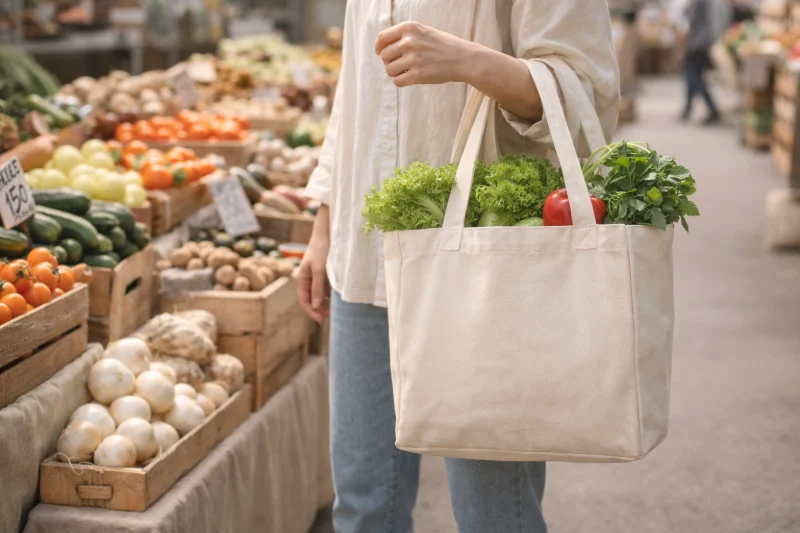
If the bag will carry heavy items, be folded repeatedly, and is expected to last dozens or even hundreds of uses, people almost always choose woven materials. Its structure spreads out the stress, and its shape stays consistent even after long-term use. This is especially important for branded bags, shopping bags, and retail packaging. Non-woven, on the other hand, is more like a short-term solution: light, inexpensive, and fast, making it ideal for conference bags, promotional bags, and one-off events.
When we help customers choose, we really only look at three things: How much is the budget? How long do you want the bag to last? What will it mainly carry? The answer is usually clear with just these questions.
At the end of the day, woven is for long-term relationships, and non-woven is for short-term collaborations. Using them in the right place is what really matters.
Brands choose woven fabric bags not only because the material is durable, but because these bags present a more orderly and stable appearance, making the brand look more professional. The structural feel of woven bags gives the entire design a sense of quality. In stores, events, or retail settings, they appear more refined and more aligned with the brand image3 they want to project. For many brands, this is a small detail that significantly enhances the customer’s first impression.
There’s also a practical advantage: woven bags stay in use longer, which naturally extends the brand’s exposure. Many brands invest in these bags not because of cost considerations, but because users will naturally carry them repeatedly as part of daily life. This kind of “mobile exposure” requires no extra advertising budget and continuously extends brand reach—a point many clients don’t explicitly mention, but value highly.
Additionally, woven fabric bags more easily support a brand’s sustainability narrative. Compared to single-use packaging, they truly get used, not discarded. For brands emphasizing sustainability, a long-lasting bag is one way to prove their environmental commitment to consumers. From what we’ve seen in the factory, what truly makes consumers remember a brand isn’t the slogan—it’s how long the bag stayed with them throughout their daily life.
Simply put, brands choose woven not because it excels in one specific performance, but because it delivers more predictable results in lifespan, long-term exposure, and environmental messaging. That kind of “predictable, stable performance” is exactly why brands are willing to invest in it.
In our years of making bags, our view of woven fabric has always been straightforward: it’s a stable material that works for most bag types and holds up over time. As long as the bag’s purpose, load requirement, and budget are clear from the start, this fabric rarely causes issues in actual use. Which material and weight to choose still depends on the specific project — you match it to the need, and that’s enough.
Get a free quote and expert consultation today. Let's bring your brand vision to life.
1 The TextileSchool reference on warp yarns identifies them as the longitudinal elements of woven fabrics, engineered for high tensile strength and dimensional stability under loom tension.
2 In the context of fiber technology, Wikipedia explains that polyester fibers maintain shape stability and resilience under repeated stress, making them essential in high-performance textiles.
3 The Branding Journal identifies brand image as the collective set of consumer perceptions and associations that reflect how a brand is viewed in the market.
Answer: Woven fabric is made by interlacing warp and weft yarns, and it can use many materials such as cotton, polyester, nylon, linen, or recycled fibers. The weaving method creates a visible texture that is suitable for reusable bags.
Answer: Woven fabric lasts longer because it handles repeated use, friction, and daily wear more effectively than many lightweight materials. It offers predictable performance for brand packaging, retail bags, and long-term reusable shopping bags.
Answer: Woven fabric is created by weaving yarns, while non-woven fabric is bonded through heat or chemicals with no visible yarn structure. Woven bags are preferred for long-term reusable applications, while non-woven bags are chosen for lightweight, low-cost promotional events.
Answer: Yes. Most woven bags—whether cotton, canvas, polyester, or RPET—can be spot-cleaned or gently washed without losing shape, making them ideal for long-term reuse.
Answer: Screen printing, heat transfer, dye sublimation print, digital print, and embroidery are commonly used. The choice depends on the artwork complexity, color coverage, and order quantity rather than the material alone.
Answer: Canvas is a type of woven fabric made from cotton or cotton-blend yarns. It is thicker and more textured, while “woven fabric” is a broader term covering polyester, nylon, cotton, linen, RPET, and many other materials.
Answer: RPET woven fabric is made from recycled plastic bottles and offers similar strength to regular polyester. Brands choose it to highlight sustainability and reduce environmental impact.
Answer: Woven fabric has minimal stretch because warp and weft yarns interlock at right angles. This helps the bag maintain shape during long-term use, even with frequent loading and unloading.

Order or no-order we are Always here to help you!
We will contact you within 1 working day, please pay attention to the email with the suffix “@yanxinbag.com”.
Order or no-order we are Always here to help you!
We will contact you within 1 working day, please pay attention to the email with the suffix “@yanxinbag.com”.