
Our Academy
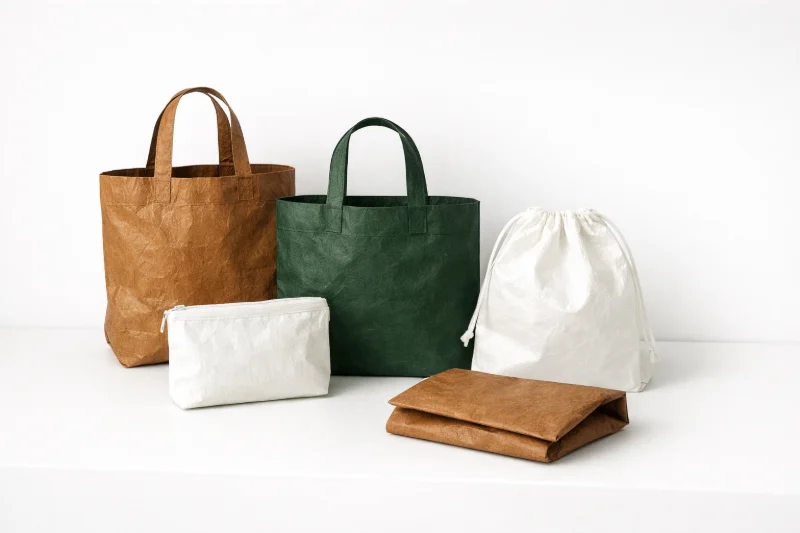
When choosing DuPont paper for bags, many brands run into the same situation: everything is labeled as Tyvek, yet prices, hand feel, and final appearance can vary widely, and it is not always clear why. In most cases, the issue is not caused by printing or production techniques, but by selecting the wrong material type or thickness at the very beginning.
What are the main types of Tyvek materials for bags? Tyvek is typically categorized by material type, including soft Tyvek, hard Tyvek, and laminated Tyvek. Different material types correspond to different visual styles and cost ranges. Within the same material type, thickness affects the bag’s structural firmness, while color appearance is mainly achieved through printing.
Even though the main Tyvek material types used for bags are already well known, they behave quite differently once they are made into finished bags. Reading further will help you see more clearly how soft Tyvek, hard Tyvek, and laminated Tyvek differ in hand feel, visual characteristics, and typical bag applications.
Tyvek is not a single material but includes several commonly used types based on material classification. The most widely used options are soft Tyvek, hard Tyvek, and laminated Tyvek combined with non-woven fabric, which together cover the majority of bag applications.
Different Tyvek material types show clear differences in visual style, user experience, and cost range. Soft Tyvek is closer to a textile state, with a soft, fabric-like feel that suits bags emphasizing lightness and foldability. Hard Tyvek has a flatter surface and a more paper-like appearance, making it suitable for designs that require clean lines and defined structure. Laminated Tyvek, created by bonding Tyvek with non-woven fabric, has an appearance and hand feel closer to leather and is often chosen for bag projects with higher expectations for texture and perceived value.
To make these differences easier to understand, the key characteristics of soft Tyvek, hard Tyvek, and laminated Tyvek are compared below.
| Material Type | Appearance & Texture | Common Focus in Bag Applications |
|---|---|---|
| Soft Tyvek | More fabric-like, soft to the touch, flexible | Focus on softness and foldability |
| Hard Tyvek | Smooth surface, paper-like feel, clear structure | Focus on structure and clean appearance |
| Laminated Tyvek | Leather-like appearance and texture, fuller feel | Focus on texture and premium perception |
In practical use, Tyvek selection for bags usually starts with choosing the material type, followed by further refinement based on specific project needs.
Soft Tyvek is a DuPont paper material with an appearance and hand feel closer to fabric, and it is often described as “fabric-feel Tyvek” in bag applications. It has a soft structure, folds easily, and feels more like a lightweight textile than paper.
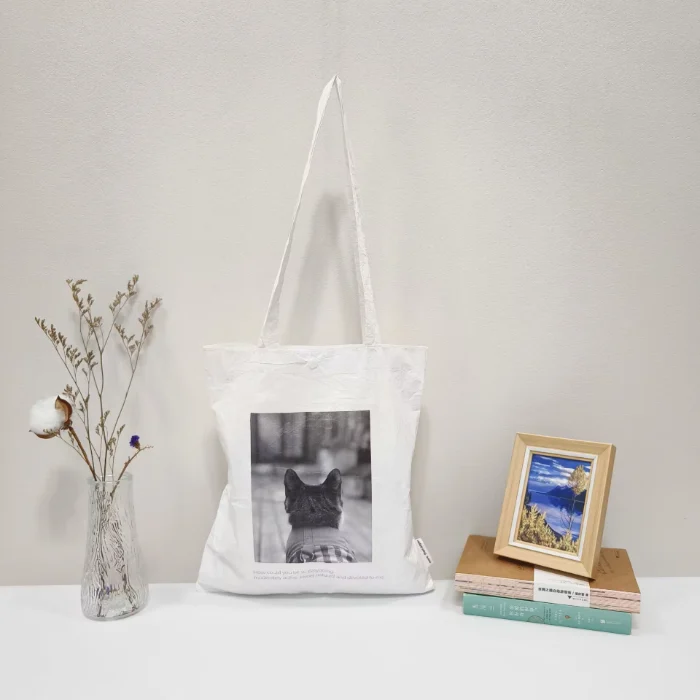
Soft Tyvek is available in different thickness and weight options, which is the main reason for price differences. Thicker options feel more substantial in hand and come with higher raw material costs, so the overall price increases accordingly. However, changes in thickness do not alter the core soft, fabric-like nature of soft Tyvek and mainly represent a trade-off between cost and material feel.
Soft Tyvek is commonly used for drawstring bags and foldable bags that need to bend easily and store compactly, where its softness is especially practical. That said, bag styles are not strictly limited, and the final choice often comes down to the client’s preference for appearance, hand feel, and price.
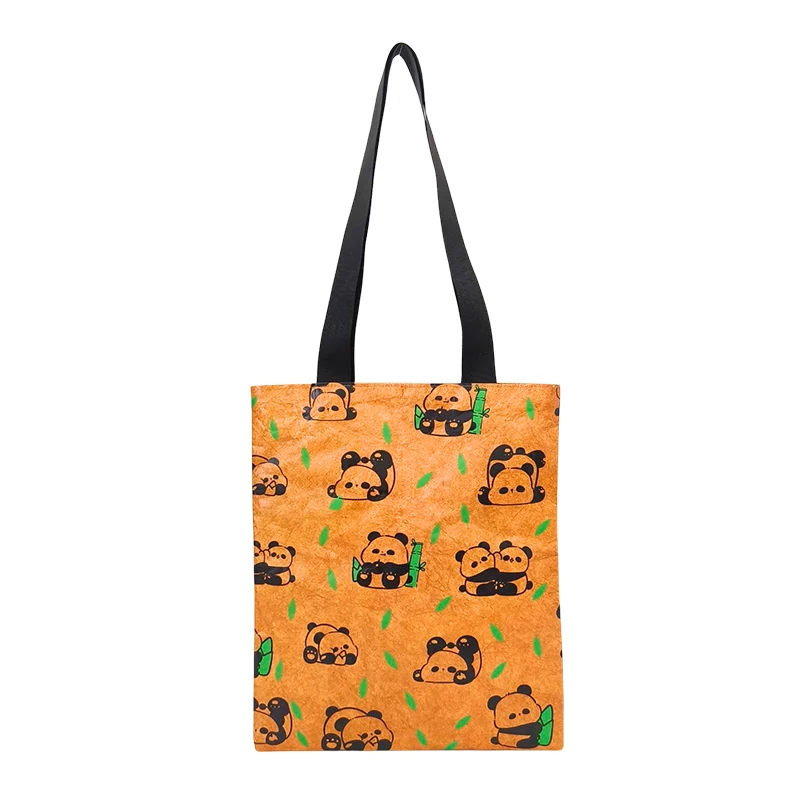
Hard Tyvek is a DuPont paper material with a flatter surface and a more noticeable paper-like feel, often referred to as “paper-feel Tyvek” in bag use. Compared with soft Tyvek, it is stiffer overall and maintains cleaner edges, allowing finished bags to hold clearer shapes.
With hard Tyvek, thickness is a variable that is easier to notice. Thinner versions result in a lighter outline, while thicker versions provide stronger support and a more structured look. Different thickness levels also come with different material specifications and price ranges, so thickness selection is usually aligned with product positioning and budget.
Hard Tyvek is often used for bag designs that emphasize structure and visual neatness, such as structured tote bags, gift bags, and branded packaging bags. These styles focus more on shape and presentation than on foldability. For projects where the bag needs to look stable and clean during display, hard Tyvek is a natural choice.
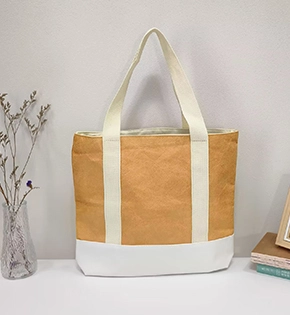
Lamination increases the overall thickness of the material and raises its cost. Compared with single-layer Tyvek, laminated Tyvek involves higher material and processing expenses, which pushes the price range upward. In practice, choosing lamination is closely tied to the intended product positioning and available budget.
Tyvek material is typically white at the base, and the color of finished bags is mainly achieved through printing. Depending on design requirements, full-background printing or localized logo and graphic printing can be used to meet branding needs. In some cases, pre-colored Tyvek materials are also available, and some clients prefer using these existing colors instead of creating a custom base color.
Tyvek can be printed using several established methods, including screen printing, heat transfer printing, and UV printing. These methods differ in visual effect, color coverage, and cost structure, but all are suitable for brand customization and graphic display. In actual projects, the printing method is usually selected based on order quantity, design complexity, and budget.
The ex-factory price of Tyvek bags is influenced by material type, thickness, printing configuration, bag style, and order quantity. Even for the same bag style and order volume, differences in print colors, printing methods, and graphic design can still lead to price variations.
Different factors affect Tyvek bag pricing in different ways. Below are the most common pricing dimensions in bag projects.
| Pricing Factor | Main Impact | Typical Form |
|---|---|---|
| Material type | Sets the base cost range | Differences between soft, hard, and laminated Tyvek |
| Thickness | Affects material specification and feel | Changes in firmness and material cost |
| Printing configuration | Affects processing complexity | Color count and coverage area |
| Order quantity | Affects unit price | Larger quantities, lower unit cost |
As a result, even when the bag style is the same, final pricing can vary noticeably from one project to another.
By understanding the differences in appearance and hand feel between soft Tyvek, hard Tyvek, and laminated Tyvek, it becomes much easier to see why Tyvek bags can look completely different. Although they are all commonly referred to as “DuPont paper,” the actual material states in use are clearly distinct, which is what allows Tyvek bags to achieve clear differentiation in design and positioning.
Get a free quote and expert consultation today. Let's bring your brand vision to life.
1 According to the DuPont Tyvek Converting Guide, laminating is a standard processing method in which Tyvek can be bonded with materials such as paper, film, or non-woven fabric to enhance its structural and tactile properties.
2 As outlined by DuPont’s materials science documentation, Tyvek lamination enables reinforced bag structures with smooth finishes and improved appearance, aligning with the functional and aesthetic standards of high-end brand packaging.
Note: Tyvek® and DuPont™ are trademarks or registered trademarks of Dupont or affiliated companies of DuPont. packaging.
Answer: A DuPont paper bag is made from Tyvek, a nonwoven material composed of high-density polyethylene (HDPE) fibers. Tyvek combines the appearance of paper with the strength and durability of fabric, making it suitable for reusable bags.
Answer: The main types of Tyvek materials for bags include soft Tyvek, hard Tyvek, and laminated Tyvek. Each type differs in surface feel, visual appearance, and typical bag applications.
Answer: Soft Tyvek has a fabric-like texture and flexible feel, while hard Tyvek has a smoother, paper-like surface with a stiffer structure. These differences affect how the bag looks, feels, and holds its shape.
Answer: Soft Tyvek is commonly used for drawstring bags, foldable bags, and lightweight tote bags. Its flexibility and cloth-like feel make it suitable for bags that need to bend or fold easily.
Answer: Hard Tyvek is often used for structured tote bags, gift bags, and packaging bags where a clean appearance and defined shape are important.
Answer: Laminated Tyvek is made by bonding Tyvek with non-woven fabric, resulting in a thicker material with a leather-like look and feel. It is commonly used for premium brand bags and high-end gift packaging.
Answer: Tyvek is water-resistant rather than fully waterproof. It can repel light moisture and splashes, making it suitable for everyday bag use, but it is not designed for prolonged water exposure.
Answer: Yes, Tyvek bags can be folded. Soft Tyvek folds more easily, while hard Tyvek may develop visible creases, which are often considered part of its natural paper-like aesthetic.
Answer: Tyvek thickness mainly affects the bag’s firmness and overall feel. Thicker Tyvek provides more structure, while thinner Tyvek results in a lighter and more flexible bag.
Answer: Tyvek is made from HDPE and is recyclable in facilities that accept polyethylene materials. Its durability and reusability also contribute to reduced single-use waste.

Order or no-order we are Always here to help you!
We will contact you within 1 working day, please pay attention to the email with the suffix “@yanxinbag.com”.
Order or no-order we are Always here to help you!
We will contact you within 1 working day, please pay attention to the email with the suffix “@yanxinbag.com”.