
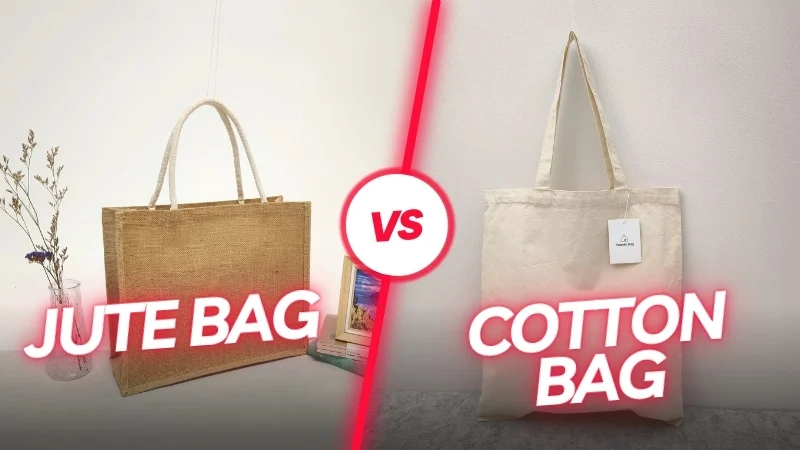
Jute and cotton are the most popular natural fibers used in eco-friendly bags. Both are plant-based, yet they differ greatly in texture, appearance, structure, and how they’re processed. Knowing these differences helps brands and buyers strike the right balance between design goals, budget, and brand style.
For export-focused bag manufacturers, the choice of material affects far more than just look and feel—it also determines printing quality, durability, and even shipping costs. Let’s take a closer look at how jute and cotton compare and where each one fits best.
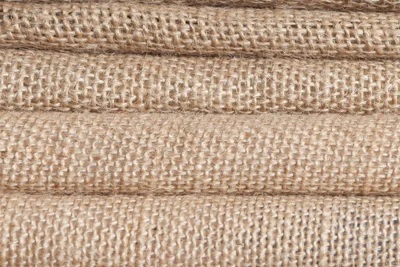
Jute is a natural fiber extracted from the stem of the jute plant, featuring a coarse texture and a natural sheen. Its core characteristics are high fiber strength, structural stability, and renewability, and it is fully biodegradable. Jute is commonly used in shopping bags, gift bags, and eco bags with a vintage or natural style.
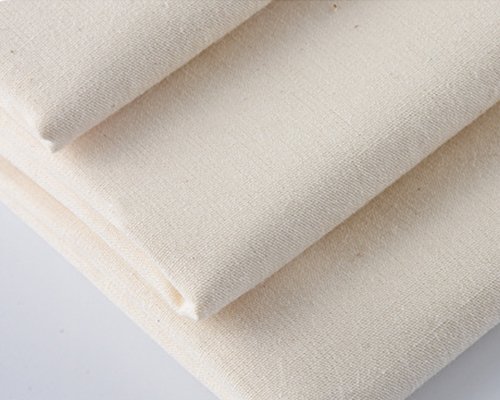
Cotton is a natural fiber obtained from the fruit of the cotton plant. It is soft in texture and smooth to the touch. Its main features include good breathability, easy cleaning, and excellent print performance, making it suitable for various processing techniques. Cotton is often used for canvas bags, garment bags, and gift bags designed for light to medium use.
Jute fibers are coarse and stiff, providing strong shape support for the bag. Cotton is lighter and softer, making it easy to fold and suitable for daily use on the go.
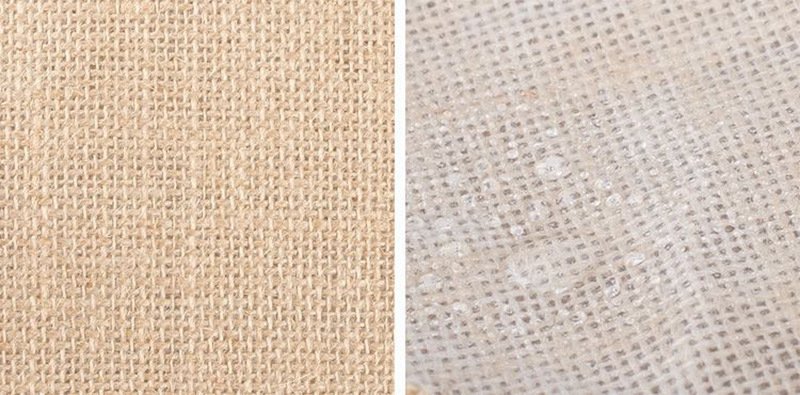
Jute itself is not water-resistant, but with a laminated PE layer, it can resist moisture and oil, extending its lifespan. Cotton absorbs water easily and is easy to clean, but it does not resist dampness.
The rough fiber surface of jute is not suitable for printing very detailed patterns or logos. Cotton’s smooth and even surface delivers clearer details, making it ideal for large-area printing and colorful designs.
Jute is highly durable and tensile, suitable for carrying heavy loads and repeated use, especially when laminated with PE. Cotton is lighter and softer, more suitable for light-duty daily use.
Jute requires little to no pesticides and uses minimal water, and it is naturally biodegradable. Cotton cultivation consumes more water, but organic cotton serves as a more sustainable alternative.
Both materials have distinct characteristics in structure, printing performance, and style.
The table below summarizes the key differences between Jute and Cotton across common performance dimensions for quick reference:
| Comparison Aspect | Jute | Cotton |
|---|---|---|
| Texture & Style | Natural coarse texture, rustic look | Smooth and fine, clean minimal style |
| Structure & Thickness | Coarse fibers, strong bag support | Light and soft, easy to fold |
| Water Resistance | Can be laminated for moisture and oil resistance | Highly absorbent, washable but not moisture-proof |
| Printing Performance | Not suitable for very fine patterns | Great for large, colorful prints |
| Durability | Strong load capacity, heavy-duty use | Lightweight, ideal for daily use |
| Environmental & Cultivation | Low water use, biodegradable | High water use, organic cotton is sustainable |
From the table above, jute stands out for its structure and firmness, while cotton offers greater flexibility in printing and design details. The choice depends on the brand’s desired look and functional needs.
With a thick structure and strong fibers2, jute bags can carry heavy loads without deforming, making them ideal for packaging heavy goods and repeated use.
Jute cultivation requires no pesticides and uses very little water. The fibers are naturally biodegradable, making it a highly sustainable natural material.
The fabric has a natural texture and a coarse, sturdy look that enhances a brand’s eco-friendly and natural image.
A PE layer can be added inside to provide moisture and oil resistance, extending the bag’s lifespan and maintaining its appearance.
The surface is coarse and not suitable for very fine or complex prints.
When using laminated or thick jute fabric, both material and shipping costs increase significantly.
The dyeing range is narrow, with fewer color choices compared to cotton.
Cotton fibers are fine and smooth to the touch, making them ideal for lightweight eco-friendly bags.
The flat, smooth surface allows clear multicolor printing and stable branding effects.
Can be hand-washed or machine-washed for easy maintenance, suitable for long-term repeated use.
Cotton bags are light in weight, lowering packaging and transport costs — especially suitable for exports and e-commerce orders.
Compared to jute, cotton may wear out more quickly under heavy use and is not ideal for carrying heavy loads.
Cotton fibers absorb water easily and can become damp or moldy in humid environments, requiring dry storage.
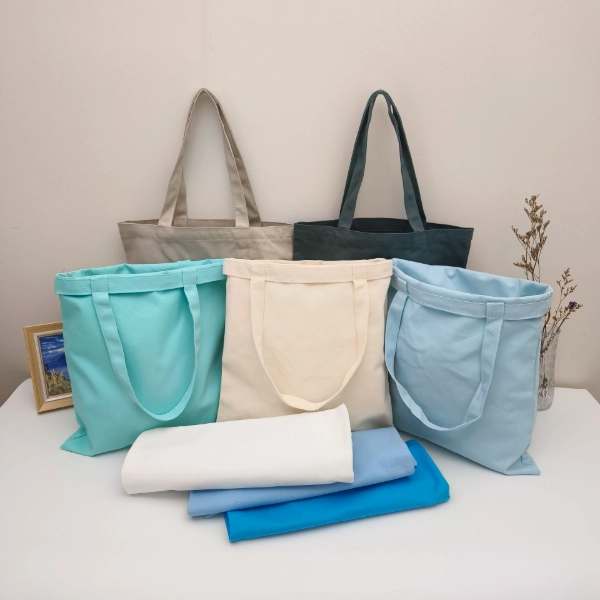
The table below summarizes the main differences between Jute and Cotton bags in terms of material characteristics, printing performance, and usage experience to help you compare at a glance:
| Comparison Aspect | Jute Bag | Cotton Bag |
|---|---|---|
| Touch & Style | Thick and structured | Soft and skin-friendly |
| Printing Performance | Not suitable for very fine prints | Clear, colorful, and detailed |
| Durability | Strong tensile strength and load capacity | Lighter, ideal for daily use |
| Water Resistance | Can be laminated for moisture and oil protection | Absorbent, not moisture-proof |
| Cleaning & Maintenance | Not suitable for washing | Machine washable and easy to clean |
| Cost & Shipping | Heavier fabric, higher freight | Lightweight, cost-effective for export |
| Color & Appearance | Fewer tones, natural rustic look | Rich colors, diverse styles |
Overall, jute bags emphasize structure and texture, while cotton bags offer more flexibility in printing, cleaning, and transport. Both have distinct advantages — the best choice depends on your brand’s positioning and budget.
At the finished product level, jute bags are not necessarily cheaper than cotton bags. Lightweight jute bags are mostly drawstring styles without lamination and have a simple structure, resulting in lower material and process costs. Laminated jute fabric, however, is mainly used for tote bags, which are thicker, more solid, and therefore have higher processing and shipping costs.
Cotton bag production is more standardized and stable in supply, making it suitable for large-scale customization and printed designs. It also offers greater advantages in export logistics and overall cost control.
The table below summarizes the main cost differences between the two materials for export projects:
| Cost Factor | Jute Bag | Cotton Bag |
|---|---|---|
| Material Structure | Can be laminated or made thicker for better support | Lightweight and soft, standardized production |
| Unit Weight | Heavier, resulting in higher shipping costs | Light, more economical for transport |
| Printing Adaptability | Performs well with basic prints | Clearer for colorful or large-area printing |
| Cost Balance | Slightly higher cost but better texture | Cost-efficient, ideal for mass export production |
Juco is a cotton–jute blended fabric that combines the strength of jute with the softness of cotton. Its surface is smoother than pure jute, offering more consistent printing results while maintaining a natural, organic look. Juco bags are often used for premium gift packaging, sustainable brand projects, and custom tote designs that aim to balance texture with practicality.
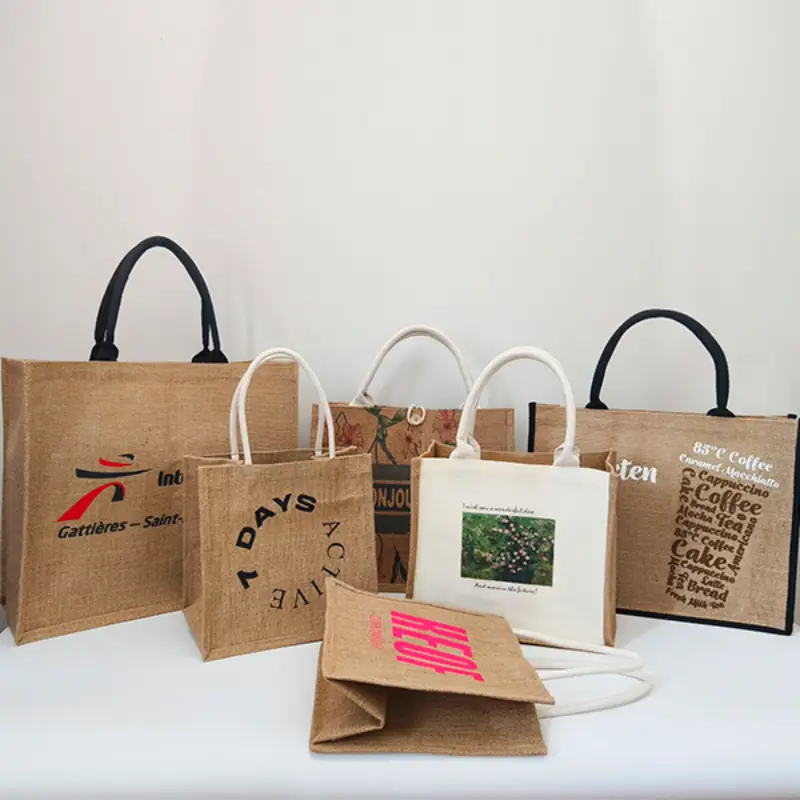
The difference between jute and cotton bags lies not in quality, but in expression. Cotton offers a finer, smoother texture that highlights prints and details, while jute is thicker and more structured, giving a natural, earthy visual effect. Each material reflects a different style direction.
In practice, there’s no absolute answer. Brands can choose materials based on the visual feel, texture, and budget they want to achieve. Understanding the characteristics of each fabric matters more than simply choosing one over the other. The key is to make the bag align with the brand’s personality, rather than letting the material dictate the design.
At YanxinBags, we specialize in manufacturing high-quality eco bags for export, including custom jute bags, cotton tote bags, and Juco blended bags. Whether you are a retailer, brand owner, or wholesale buyer, our team can help you choose the right material and bag structure that fits your market and design needs.
If you’re planning your next sustainable packaging project, get in touch with our team today. Contact us to discuss your custom eco bag requirements or request a free quote.
Get a free quote and expert consultation today. Let's bring your brand vision to life.
1 This resource page from the Ellen MacArthur Foundation, a leading authority on circular economy principles, examines the role of design in shaping aesthetics, behaviors, and systems for sustainable product lifecycles.
2 As outlined in ScienceDirect’s materials science overview, jute fibers are recognized for their high tensile strength and stiffness, qualities that define them as exceptionally strong natural fibers.
Answer: The main difference is that cotton bags have a smooth, fine surface that supports large-area printing and detailed or multicolor designs, while jute bags have a coarser fiber texture, making them less suitable for very fine or complex prints.
Answer: Yes. Jute bags are made from coarse, strong bast fibers that give high tensile strength, making them suitable for carrying heavy loads repeatedly, whereas cotton bags are softer and better suited for light or everyday uses.
Answer: Cotton bags are often more cost-effective for export projects because cotton production and processing are standardized with stable supply, allowing for large-volume orders with better cost and shipping efficiency; laminated or thick jute bags tend to be heavier and more expensive to ship.
Answer: Yes. Cotton bags can typically be hand-washed or machine-washed easily, whereas jute bags are less suitable for frequent washing and may lose structure or suffer wear if washed often or exposed to moisture.
Answer: Yes. Uncoated jute fabric is breathable, which can help air circulation, making jute bags a practical choice for items like groceries, produce, or clothing where ventilation is beneficial.
Answer: A waterproof-laminated jute bag improves moisture and oil resistance and extends lifespan, but the lamination may reduce biodegradability and slightly increase production cost and shipping weight.
Answer: Yes. Because cotton’s surface is smooth and flat, it supports detailed, multicolor printing, logo printing, and custom artwork more clearly than rough-surface materials like jute.
Answer: Yes. Cotton–jute blended fabric (Juco) can combine the strength and coarse texture advantages of jute with the softer feel and better printability of cotton — offering a middle-ground option for brands seeking balance.

Order or no-order we are Always here to help you!
We will contact you within 1 working day, please pay attention to the email with the suffix “@yanxinbag.com”.
Order or no-order we are Always here to help you!
We will contact you within 1 working day, please pay attention to the email with the suffix “@yanxinbag.com”.