
Our Academy
Jacky Zhou
May 20, 2025

Want to Boost Your Brand with Eco-Friendly Jute Bags but Worried About Poor Printing? Don’t Sweat It! Pick the Right Method, and Even a Small Bag Can Make a Big Brand Statement!
When choosing a printing method for jute bags, brands should focus on the design’s complexity, number of colors, budget, and desired texture. Screen printing is great for simple logos and large color blocks, heat transfer can handle complex patterns and photo-quality images, while digital printing offers natural color transitions, suits large print areas, and is more economical than heat transfer.
Jute bags, with their natural texture and eco-friendly appeal, have become a favorite for many brands as packaging and promotional items. But, based on my 13 years of factory experience, getting a clear, beautiful, and lasting brand message printed on rough jute isn’t always simple. From our shopping bag factory’s perspective, I’ll unveil the “ins and outs” of jute bag printing. I’ll help you sidestep common pitfalls and choose the best printing solution for your brand, turning every custom jute bag into a walking advertisement.
The material properties of jute bags are significantly different from common printing media like paper or plastic film. Its main natural features include: relatively coarse fibers, a surface that isn’t perfectly smooth but shows natural texture and grain, and fairly strong ink absorbency.
These material traits directly impact the final print results in several ways:
Our factory’s advice is: It’s crucial to fully consider these material traits during the design phase. For example, simplifying designs and avoiding overly intricate tiny details can better suit jute’s printing characteristics. Of course, you don’t need to worry too much. Yanxin Bag has an experienced design and production team. We’ll provide a professional assessment and optimization suggestions for your artwork, helping you find the best balance between design aesthetics and printing feasibility.
Let me detail a few mainstream jute bag printing methods, analyzing their pros, cons, and suitable scenarios.
Screen printing stands out as a traditional and effective method for customizing jute bags. Let’s explore its characteristics, ideal uses, and when alternative methods might be more appropriate.
Screen printing on jute bags is known for its thick ink layer, which results in rich colors and excellent coverage. This method ensures that patterns are clear and vibrant, even on darker jute materials. A significant advantage is the durability of the print; designs adhere firmly and are resistant to peeling, making them long-lasting. Furthermore, for large batch orders, screen printing offers a considerable unit cost advantage.
This technique is perfectly suited for printing single-color or few-color brand LOGOs, simple graphics, text messages, and large solid color block designs. Many classic brand logos achieve excellent, impactful results using screen printing on jute.
However, screen printing isn’t the best fit if your design involves many colors, intricate gradual color changes (gradients), or if you intend to print complex, photo-realistic images.
If your budget is limited and you want a classic, durable print, such as for supermarket shopping bags or exhibition giveaways, screen printing is an excellent choice. I remember an old client who orders a batch of screen-printed jute bags as annual meeting gifts every year – simple, elegant, and always effective.

Heat transfer printing, also known as thermal transfer, is a popular method for applying detailed and colorful graphics onto jute bags. This technique offers a distinct set of advantages for specific design needs.
The primary strength of heat transfer technology lies in its ability to perfectly reproduce high-definition, complex patterns. It excels in delivering rich color layers, delicate gradient effects, and even photo-quality images, offering a high level of detail reproduction.
This method is especially suitable for colorful, complex artistic designs, such as illustrations, cartoon characters, and photographic works. For small batch custom orders or brands seeking strong visual impact and a high-quality feel, heat transfer is an ideal choice. Many fashion brands, event souvenirs, or gift bags that need to display exquisite patterns often utilize heat transfer.
Heat transfer printing involves pre-printing the design on a special transfer film, which is then heat-pressed onto the jute surface. Consequently, the finished product will have a thin film layer on the printed area. If a brand has very high requirements for the jute bag’s breathability or particularly emphasizes the original feel of pure natural fibers, they might find this film slightly affects the texture.
Digital printing is a more contemporary technique that can be adapted for jute bags, offering unique benefits, particularly for intricate designs and smaller production runs.
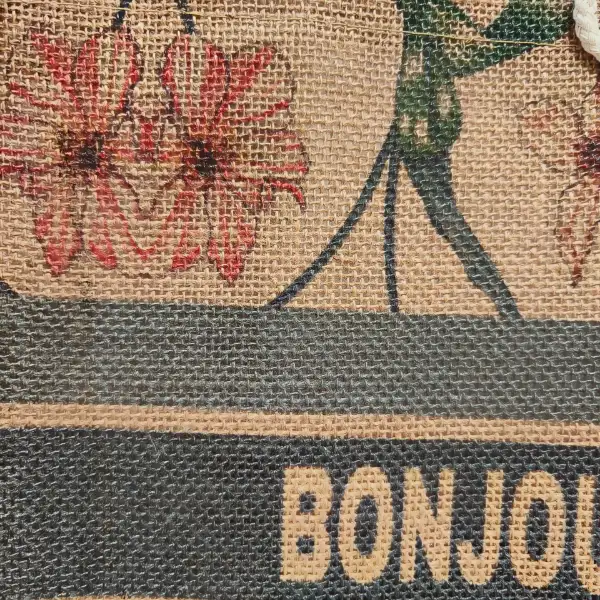
Digital printing technology operates without the need for printing plates. Professional printing equipment directly permeates and fixes eco-friendly ink into the jute fibers, functioning much like an office printer works on paper. This makes it highly efficient and flexible for complex designs and small batch orders. Digital printing is also known for producing natural, smooth color transitions.
Digital printing is well-suited for printing photos, artistic paintings, and various personalized designs. If clients specifically require eco-friendly inks, Digital printing typically uses them as a standard. This method is a strong contender if your print design is complex and covers a large area.
One potential challenge is that printing on dark-colored jute might affect the final result, potentially making colors appear less bright than on lighter materials. Additionally, the printed pattern on jute might not achieve the same level of fineness or sharpness as with heat transfer methods.
| Printing Method | Main Advantages | Ideal Applications | Limitations & Considerations |
|---|---|---|---|
| 1. Screen Printing | Thick ink layer with rich color Clear results even on dark jute Strong adhesion and long-lasting Cost-effective for large batches |
Single or few-color logos Simple graphics or text Large solid color blocks Supermarket bags, trade show giveaways |
Not suitable for multi-color or gradient designs Limited to simpler patterns |
| 2. Heat Transfer Printing | High-definition and colorful prints Excellent gradient and photo reproduction Strong visual impact |
Illustrations with rich colors Gift bags Small custom batches Fashion, souvenir, or premium bags |
Printed area has a thin film layer Slightly affects jute’s natural feel or breathability |
| 3. Digital Printing | No plate-making needed Smooth color transitions Eco-friendly inks available Efficient for small complex orders |
Personalized artwork Artistic or photo-style prints Large area, complex patterns |
Less vibrant on dark jute Lower sharpness than heat transfer Color accuracy may vary |
Great printing results start with great artwork. Based on my experience, here are a few tips for preparing designs for jute bags:
Our Factory’s Promise: You don’t need to worry excessively about the technical details of your design. We offer one-on-one professional design communication, allowing you to directly connect with our senior technicians. We’ll carefully review your artwork and, if any potential issues affecting jute printing are found, we’ll promptly communicate with you, offering professional optimization advice and assistance to ensure the final product achieves the best visual presentation.
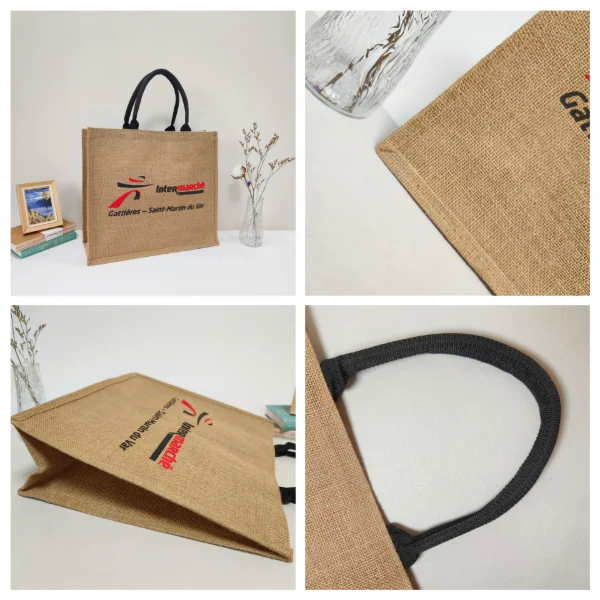
In summary, choosing the most suitable printing process for your jute bag project involves considering the design’s complexity, color needs, budget, and desired final look and feel. Crucially, partnering with an experienced, technically skilled, and responsible manufacturer is key.
Want your brand to stand out with custom jute bags? Yanxin Bag, a jute bag manufacturer and eco-friendly bag factory with 13 years of experience, masters various custom jute bag printing techniques, whether it’s screen printing, heat transfer, or digital printing. Contact us now for a professional quote! Tell us your brand story and design ideas, and let’s create impressive custom jute bags together!
Planning to print on jute bags? Start with the basics.
This article introduces what jute bags are, how they’re made, where they’re used, and how they compare with other bag types. It’s a useful primer before deciding on any print layout or structural customization. 《Everything You Need to Know about Jute Bags》
Confused about all the jute-related names?
This article clarifies the distinctions between jute, burlap, and hessian — explaining how these terms are used differently across regions and industries, and how that affects design or printing decisions. 《Jute vs Burlap vs Hessian: What’s the Real Difference?》
Want consistent printing results when ordering in bulk?
This article explains how bulk purchasing can improve print consistency, lower costs, and ensure brand alignment — making it easier to manage large-scale design orders across campaigns or markets. 《6 Reasons Why Buying Jute Bags in Bulk Is a Smart Move for Your Business》
Not sure where you can print on a jute bag?
This article breaks down six key customizable features — including dimensions, handles, lining, waterproofing, closures, and print zones — helping you align design files with structural constraints. 《How to Customize Jute Bags for Your Brand: A Step-by-Step Guide》
Choosing a bag style for your design? Structure matters.
The article categorizes various types of jute bags — such as totes, drawstrings, wine bags, gift bags, and shoppers — with clear descriptions of their shapes and functions, ideal for matching print to structure. 《Types of Jute Bags: A Complete Guide to Common Structures》
Get a free quote and expert consultation today. Let's bring your brand vision to life.
1 Explore the advantages of using internally laminated jute bags for sustainability and brand enhancement.
Learn about jute and its environmental benefits on the Wikipedia Jute article.
Find a comprehensive guide on jute fabric, including types and uses at Treasurie.
Learn about the properties, advantages, and uses of jute fromJute Guru
Learn about jute and its environmental benefits on the Wikipedia Jute article.
Find a comprehensive guide on jute fabric, including types and uses at Treasurie.
Australian Department of Climate Change, Energy, the Environment and Water: Learn about Australia’s policies on reducing plastic waste and promoting reusable bags on the department’s website.
Learn about the properties, advantages, and uses of jute fromJute Guru
Wikipedia: Learn about the history, manufacturing, and uses of canvas material on the Wikipedia Canvas page.
Answer: The best printing methods for jute bags with intricate or colorful designs are heat transfer printing and digital printing. Heat transfer offers photo-quality results with vivid gradients, while digital printing provides smooth color transitions and is ideal for small-batch custom jute bags.
Answer: Jute’s natural coarse fibers and uneven surface can lead to slightly subdued colors or blurred details in very fine designs. It’s recommended to simplify artwork and avoid tiny text for optimal print results on jute bags.
Answer: Screen printing is the most economical method for large quantities of jute bags. It produces bold, durable designs with strong ink adhesion, making it ideal for bulk custom orders such as promotional shopping bags.
Answer: Yes, photo images and detailed illustrations can be printed on jute bags using heat transfer or digital printing methods. These techniques provide high-definition results while maintaining the eco-friendly nature of the product.
Answer: PE laminated jute is jute fabric with a polyethylene film applied to the inner side for added waterproofing. This lamination can improve ink hold during printing, especially in screen and heat transfer methods, while also enhancing durability.
Answer: Uncoated jute is not waterproof, but PE laminated jute bags offer internal water resistance. However, the outer layer can still absorb moisture, so it’s important to consider the intended use and environmental exposure.
Answer: Vector file formats like AI, EPS, or PDF are ideal for jute bag printing. These formats ensure sharp, scalable designs that maintain quality during printing, especially for screen or digital processes.
Answer: Your choice depends on the artwork complexity, color count, batch size, and texture preferences. Screen printing suits bold logos and large runs, heat transfer handles complex, colorful designs, and digital printing excels in flexibility and eco-friendliness for detailed, smaller orders.
Answer: Laminated jute bags can easily carry over 10 kg due to jute fiber strength plus lamination reinforcement; standard thin plastic bags have poor load capacity, stretching or tearing under heavy or sharp items.
Answer: Laminated jute bags allow varied shapes, handle types, inner pockets, fabric weights/colors, multiple printing methods, and accessories, while plastic bags offer limited size, thickness, color, and printed pattern customization.

Order or no-order we are Always here to help you!
We will contact you within 1 working day, please pay attention to the email with the suffix “@yanxinbag.com”.
Order or no-order we are Always here to help you!
We will contact you within 1 working day, please pay attention to the email with the suffix “@yanxinbag.com”.
