
Our Academy
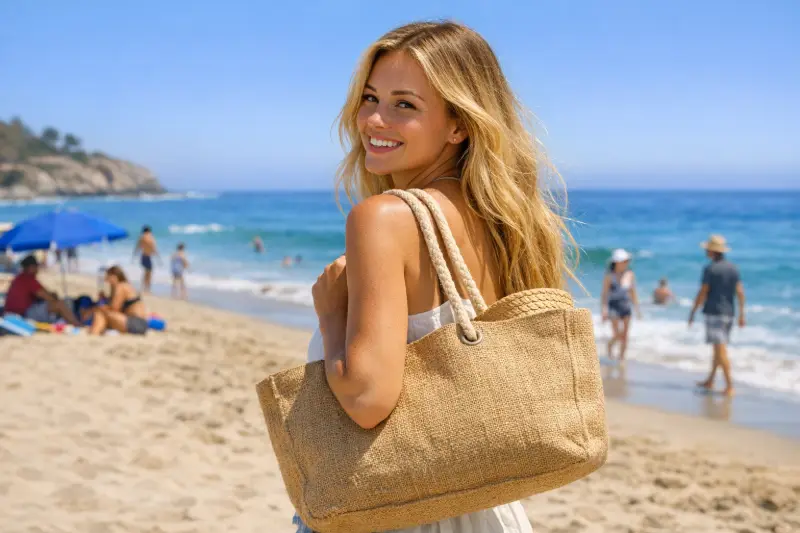
Jute beach bags are commonly used in summer and casual tote bag designs. However, when choosing a beach bag, many people also wonder whether this natural material1 is truly suitable for beach environments. Questions such as durability, practicality for carrying beach items, and overall usability are often considered. This article explains the key characteristics of jute beach bags and discusses their advantages, limitations, and suitable use scenarios.
Jute beach bags are natural fabric bags made from fibers derived from the jute plant. Compared with many cotton or synthetic fabrics, jute fibers are coarser, which gives the fabric a relatively sturdy structure. Because of its distinctive natural texture, jute beach bags are commonly used in summer-style or casual tote bag designs.
Jute fabric has a clearly visible natural fiber texture that can often be seen on the surface of the material. Compared with many smooth synthetic fabrics, this natural appearance fits well with beach, resort, and summer-style bag designs. For this reason, jute beach bags are commonly used in casual or vacation-style tote bags.
Jute fabric bags usually include a PE laminated lining inside, which helps the bag maintain a more stable structure during use. Even when carrying towels or other beach items, the bag is less likely to collapse or lose its shape.
Jute fibers are relatively coarse, which gives the woven fabric good load-bearing strength. In everyday use, jute beach bags can carry towels, sunscreen, books, and other beach essentials.
Jute bags are generally strong enough to be reused in different situations. In addition to beach use, they are often used as shopping bags or everyday tote bags.
Jute is a plant-based natural fiber that is widely used in many reusable bag products. Compared with bags made entirely from synthetic materials, natural fiber fabrics such as jute are commonly used in eco-style products.
Jute bags usually support logo printing or graphic designs, which makes them common in promotional bags and branded tote bags. Many companies use jute tote bags as promotional gifts or brand marketing products.
Compared with fabrics such as cotton or canvas, jute fibers are generally coarser. As a result, jute beach bags usually feel rougher to the touch. In some designs, the texture may feel less soft than cotton or canvas bags.
Jute fabric is usually thicker than many cotton fabrics, which means the overall bag weight can be slightly heavier. When the bag is filled with towels, water bottles, or other beach items, the weight may become more noticeable.
Natural jute fibers may be affected when exposed to moisture for long periods. For this reason, many jute beach bags include a PE laminated lining to help improve moisture resistance.
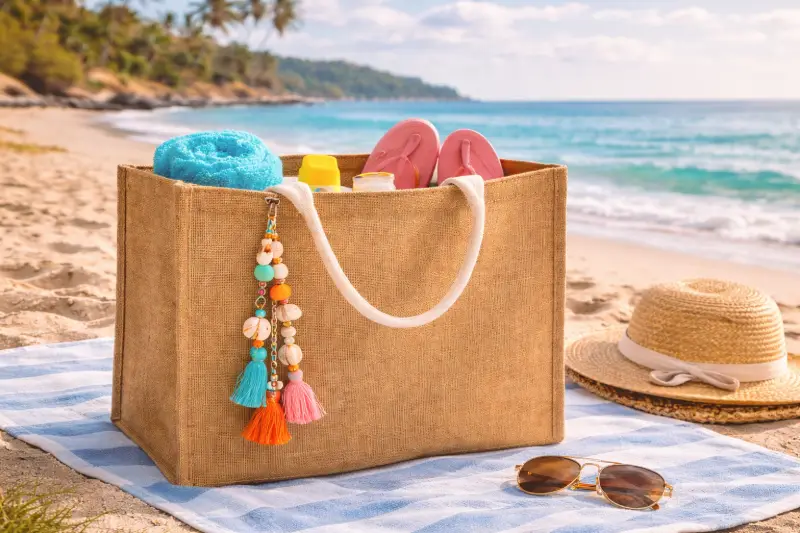

Jute and canvas are two commonly used materials for beach bags, which is why many people compare jute vs canvas beach bags when choosing a tote bag. Although both belong to the category of fabric bags, they differ noticeably in texture, visual style, and printing suitability. Understanding these differences can help clarify which material may work better for certain designs.
Canvas is typically made from cotton fibers2 and has a relatively smooth fabric surface. This gives the material a softer texture and makes it more suitable for printing logos or graphic designs. Because the fabric surface is more even, printed patterns on canvas bags often appear clearer and more consistent. In contrast, jute is a natural plant fiber with a more visible and textured surface, which gives the material a natural and rustic appearance. This texture makes jute beach bags common in resort-style or eco-style tote bag designs.
From a design perspective, canvas beach bags are often associated with clean or modern designs, while jute beach bags are more commonly used in natural or vacation-inspired styles.
When comparing canvas vs jute tote bags, people usually look at differences in fabric texture, visual style, and printing suitability. The following comparison helps illustrate how these two materials differ in design characteristics.
| Material | Fabric Characteristics | Visual Style |
|---|---|---|
| Canvas Beach Bags | Cotton fabric with a smoother surface and softer texture, suitable for logo printing and graphic designs | Clean, simple, or modern tote bag designs |
| Jute Beach Bags | Natural plant fiber with a visible coarse texture | Rustic, natural, or resort-style beach bags |
From a design perspective, canvas beach bags are often associated with cleaner or more modern styles, while jute beach bags are more commonly used in natural or resort-inspired designs. Because of this difference, the choice between the two materials often depends on the visual style a brand or user wants the bag to convey.
Jute beach bags are not suitable for every situation, but they can be a good option in certain scenarios. Because jute fabric has a natural texture and a structured appearance, this material is commonly used in summer-style or resort-style tote bag designs. Understanding the situations where jute works well can help determine whether this material is suitable for a particular beach bag.
Jute fabric has a visible natural fiber texture that creates a relaxed and organic look. This type of appearance is often associated with beach, resort, and vacation-style accessories.
Jute is a natural plant-based fiber, which is why it is often used in eco-style bag designs. Some brands choose jute materials when designing reusable bags or environmentally themed products.
Jute bags can usually support logo printing or graphic designs, which makes them common for promotional or branded tote bags. Many companies use jute tote bags as event gifts or brand promotion items.

In addition to beach use, jute beach bags are commonly used in several other situations. Because the material has a natural texture and a distinctive appearance, it is often seen in casual or vacation-style bag designs.
Jute beach bags are generally a good option for beach use. Jute fabric provides good structural strength and can carry towels, sunscreen, books, and other common beach items, while its natural texture fits well with beach and vacation styles. However, because natural jute fibers can be sensitive to moisture, many jute beach bags include a PE laminated lining to improve moisture resistance.
Jute beach bags are a popular choice for people who prefer beach bags with a natural texture and a distinctive summer style. The fabric provides good load capacity for carrying towels, sunscreen, and other beach essentials, while the rustic appearance makes it common in vacation or resort-style tote bag designs. However, because jute is a natural fiber, factors such as texture, durability, and moisture protection should still be considered when deciding whether this material is the right option for a beach bag.
Get a free quote and expert consultation today. Let's bring your brand vision to life.
1 Encyclopaedia Britannica describes how natural fibre provides strength, flexibility, and absorbency that enable textile materials to be spun into yarn and manufactured into fabrics and textile products.
2 Wikipedia identifies cotton fiber as a natural cellulose-based fiber obtained from the seed hairs of plants in the genus Gossypium and widely used as a raw material for textile production.
Answer: Yes, jute is generally considered a good material for beach bags. Jute beach bags have a strong woven structure that can carry towels, sunscreen, and other beach essentials. Their natural texture also matches well with beach and vacation-style accessories.
Answer: Jute beach bags offer several advantages, including strong load capacity and a distinctive natural texture. The woven jute fabric can carry common beach items such as towels or books. In addition, the natural fiber appearance makes jute tote bags popular for summer and resort-style designs.
Answer: Yes, jute beach bags are generally durable enough for regular use. The coarse jute fibers create a sturdy woven structure that can handle common daily items. Because of this strength, many jute tote bags are also used as shopping bags or reusable carry bags.
Answer: Jute beach bags are not naturally waterproof because jute is a natural plant fiber. However, many jute bags include a PE laminated lining that helps improve moisture resistance. This lining can help protect items from light moisture or splashes.
Answer: Jute and canvas beach bags differ mainly in fabric texture and visual style. Canvas is made from cotton fibers and usually has a smoother surface that works well for printed graphics. Jute fabric has a more visible natural texture, giving the bag a rustic or resort-style appearance.
Answer: Common beach bag materials include mesh, canvas, jute, EVA, PVC, and TPU. Fabric materials like mesh or canvas are breathable and flexible, while waterproof materials such as EVA or PVC provide better protection in wet environments. Each material offers different advantages depending on how the bag will be used.
Answer: Yes, mesh beach bags are often considered one of the best options for sandy beaches. The open mesh structure allows sand to fall through the bag instead of collecting inside. This helps keep the bag cleaner during beach trips.
Answer: Canvas beach bags are not naturally waterproof because canvas is typically made from cotton fibers. Cotton fabric can absorb water when exposed to moisture. However, some canvas bags may include coated linings to improve water resistance.
Answer: Yes, EVA beach bags are known for their durability and waterproof structure. EVA foam material does not absorb water and is resistant to sand sticking to the surface. Because of this, EVA bags are commonly used for beach, pool, and boating activities.
Answer: Yes, jute beach bags can hold relatively heavy items because the fibers create a strong woven structure. The material is often used for tote bags designed to carry groceries or daily items. This strength also makes jute suitable for carrying beach essentials.

Order or no-order we are Always here to help you!
We will contact you within 1 working day, please pay attention to the email with the suffix “@yanxinbag.com”.
Order or no-order we are Always here to help you!
We will contact you within 1 working day, please pay attention to the email with the suffix “@yanxinbag.com”.