
Our Academy
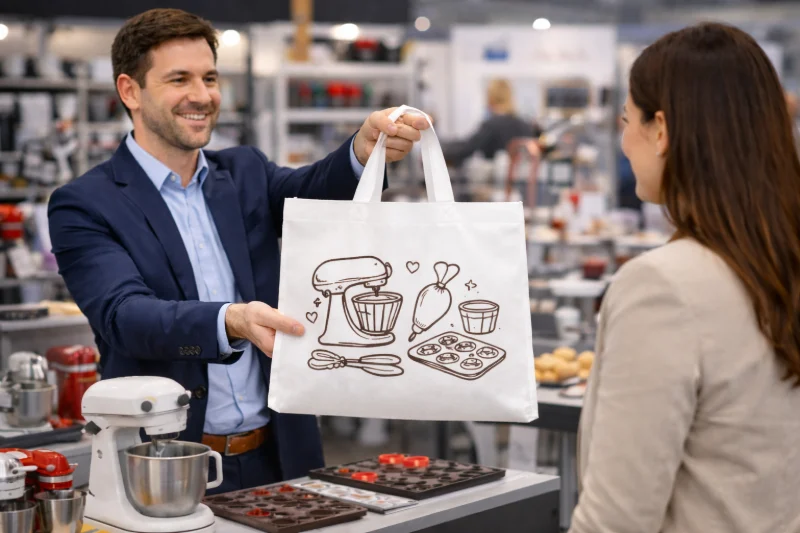
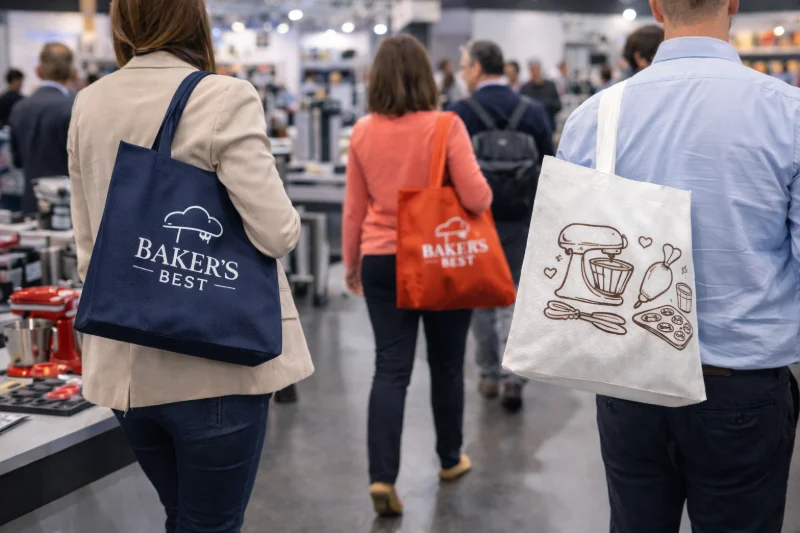
Exhibition non-woven bags are not disposable giveaways, but brand assets. When visitors carry the bag inside and outside the exhibition hall, it becomes continuous exposure, and the brand message does not stay only at the booth for a few minutes. The durability and texture of the bag directly influence brand perception and how long it continues to be used afterward.
For brand owners, what truly matters is not the lowest unit price, but the brand return of each individual bag. Fabric weight, construction, and printing method determine whether it serves as short-term material or a long-term brand carrier. For this reason, exhibition bag purchasing cannot be decided at the last minute; it must be planned in advance.
To plan effectively, it helps to break the process into clear, practical decisions. Each step influences cost, timing, and how your brand is ultimately presented at the event.
Before discussing the non-woven bag size and fabric weight, first clarify the core objective of the exhibition. Is it to collect a large number of potential leads, to strengthen brand exposure, or to support a new product launch? Different exhibition goals result in completely different positioning for the bag.
If the exhibition focuses more on lead generation, the priority is expanding reach; if it focuses more on brand image, then presentation quality becomes more important. The bag is only one part of the exhibition strategy, not the starting point of the decision. Define the strategy first, then discuss materials, so the planning does not drift away from the main objective.
Foldable bags naturally integrate into everyday scenarios such as shopping, commuting, and travel, rather than appearing only once on the event day. Once they enter daily life, the brand logo is repeatedly displayed through regular use1, creating more stable and continuous exposure.
If the bag is mainly used to attract traffic, quantity and cost control usually come first. Its purpose is to expand reach, so practicality and clear brand visibility are emphasized.
If the bag is meant to carry catalogs or materials, size, gusset width, and construction need to be designed around the actual contents. In this case, stability and carrying comfort matter more than simply choosing the lowest price.
When the bag is used for key clients or business meetings, texture and printing quality become critical. The bag itself becomes part of the brand experience, not just a container.
Once the bag’s purpose is clear, projects with smaller quantities or tighter budgets can directly choose ultrasonic heat-sealed non-woven bags in standard specifications. These products usually come in fixed sizes and support custom logo printing. Common fabric weights range from 50gsm to 70gsm, with slight variations depending on the style, making them suitable for basic distribution.
For regular sewn styles, 80gsm is the most common and stable fabric weight choice. It became the market standard not because it is the thickest, but because it strikes a balance between cost, stiffness, and production efficiency. For most exhibition distribution scenarios, this weight is sufficient to carry everyday brochures and samples.
If a more solid overall feel is preferred, the weight can be increased to 90gsm2 or 100gsm. The bag will feel sturdier and thicker. However, increasing the fabric weight not only raises the unit price, but also increases shipping costs. Whether to upgrade often depends on whether the bag serves as short-term distribution material or a brand presentation tool.
When the project involves laminated full-color printing, the fabric weight is usually higher. Single-side laminated printing is generally around 110–120gsm, while double-side laminated printing may reach 140–160gsm. Lamination increases stiffness and surface gloss, creating a look closer to retail packaging.
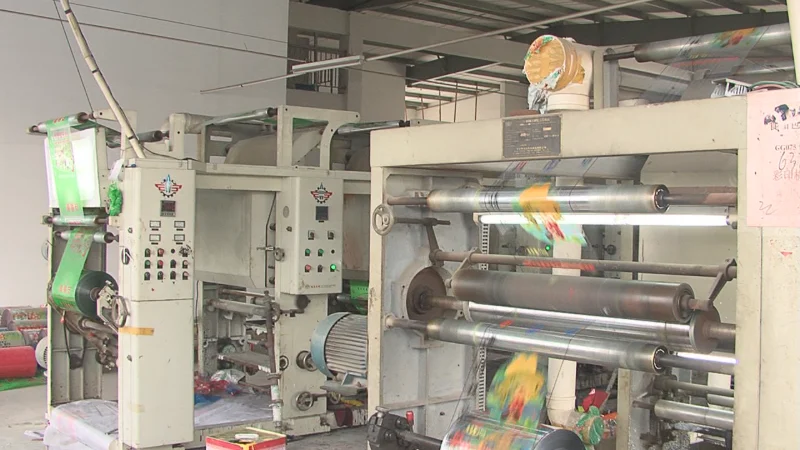
The choice of printing method usually depends on the design format and budget structure. Simple logos or text are commonly produced with screen printing, which is suitable for large quantities and offers relatively stable cost control. If the design includes gradients or detailed elements, especially when the print area is not large, heat transfer can better reproduce image details.
When a brand wants a more complete overall visual effect, or places greater emphasis on water resistance and surface texture, laminated full-color printing can be selected. Lamination allows full-surface artwork coverage, produces more vibrant colors, and creates a smoother surface, resulting in a look closer to retail packaging. Even if the design itself is not complex, some brands choose to upgrade to lamination to enhance the overall presentation level.
There is no absolute superiority among different printing methods; the key lies in project positioning and budget planning. In most cases, large-scale distribution prioritizes cost efficiency, while brand presentation or business settings tend to focus more on visual impact. Once the intended use is clear, the printing decision becomes more straightforward. In the end, choosing between screen printing and lamination is not only about design complexity, but about whether you want the bag to feel like a tool or like a gift.
Once the exhibition date is confirmed, the purchasing plan should be scheduled by working backward from the deadline. This is especially important for overseas exhibitions. If the time window is missed, the bags have no value, even if production is completed. The key to time planning is to calculate sampling, production, and transportation separately.
Sample timing usually depends on the printing method. Standard printing samples typically take about 3 to 6 days. If gravure printing3 is involved, the sampling time is usually 8 to 12 days due to the need for cylinder engraving. After the design is confirmed, sufficient time should be reserved for sampling. However, this only covers production time and does not include international courier transit. International shipping for samples generally takes 3 to 10 days, depending on the destination country and customs efficiency. After the samples are received, internal confirmation may also take several days. From sampling to final approval, the total cycle often ranges from 1 to 3 weeks. When planning the schedule, the full cycle should be considered, not just the factory’s sample production time.
Mass production typically takes 15 to 25 days, depending on order quantity and sewing complexity. Larger quantities require longer production scheduling. If the project involves special construction, special processes, or customized materials or accessories, the production timeline will extend accordingly.
Transportation time must also be calculated separately. Sea freight usually takes about 1 to 2 months or even longer, while air freight is faster but significantly more expensive. A more stable approach is to leave buffer time for customs clearance and logistics, rather than arranging delivery to arrive just before the exhibition.
Exhibition projects have only one time window. Breaking down each stage and planning backward is more important than simply pursuing the lowest price. When time planning is clear, the overall project risk becomes controllable. In most cases, delivery risks are not caused by slow production, but by overly optimistic time estimates.
Exhibition orders place greater emphasis on execution stability. The non-woven bags must not only arrive on time, but also maintain clear printing, solid construction, and an overall finish that matches the design expectations. Delivery standards are more concentrated and more specific than for routine replenishment orders.
Under these conditions, communication becomes the basic safeguard. Whether messages are answered promptly, and whether requirements are clearly understood and responded to accurately, will directly affect the project pace. From design confirmation to sample adjustments and production updates, clear information and a steady rhythm help avoid unnecessary back-and-forth. Smooth communication is not a formality, but the foundation for keeping the project on schedule.
Beyond communication, the way production is managed is equally important. A mature factory does not rely on a single final inspection before shipment, but distributes checks throughout the production process. Raw materials are inspected upon arrival for color consistency and fabric weight, printing defects are removed immediately after printing, and sewing stages include process inspections to prevent issues from accumulating.
This staged quality control not only ensures consistency, but also allows problems to be identified early. If quantity shortages or printing issues are discovered only at the end, rework is often required, and delivery timelines are inevitably affected. Process control itself is a safeguard for delivery stability.
On top of stable execution and controlled processes, a supplier’s ability to handle urgent situations also matters. In exhibition projects, last-minute quantity increases or expedited production are not uncommon. Whether urgent orders can be accommodated often depends on internal production scheduling and flexibility. Some factories can prioritize production within a reasonable range, helping avoid costly shifts to air freight or courier shipping. For overseas projects, this internal coordination can make a significant difference in controlling additional logistics costs.
Planning custom exhibition bags is not about selecting a product, but about managing a project. When strategy, specifications, timing, and execution are aligned, the bag becomes more than packaging — it becomes part of your brand presence at the event.
Get a free quote and expert consultation today. Let's bring your brand vision to life.
1 As described by Wikipedia, promotional merchandise functions as a marketing instrument distributed during events and trade shows to reinforce brand visibility and stimulate audience interaction.
2 The Wikipedia entry on grammage identifies gsm as the expression of mass per unit area in grams per square metre, establishing it as the standard metric used to quantify fabric weight in material specifications.
3 According to the historical and technical documentation compiled by PrintWiki, gravure printing integrates rotary cylinder engraving, doctor blade inking, and electroplated copper surfaces, forming a complex process that necessitates longer pre-production preparation.
Answer: Sample production typically takes 3–6 days for screen or heat transfer printing, and 8–12 days for gravure printing due to plate engraving. Bulk production usually requires 15–25 days depending on order quantity and bag construction, with additional time needed for international shipping.
Answer: Non-woven polypropylene (PP) bags are reusable and recyclable in many regions, making them more environmentally friendly than single-use plastic bags. Their long lifespan helps reduce waste, especially when used repeatedly after trade shows and promotional events.
Answer: Screen printing is ideal for simple logos and large-volume production with controlled costs, while laminated full-color printing provides vibrant graphics, water resistance, and a retail-style finish. Laminated bags often use higher fabric weights such as 110–160gsm for added stiffness and premium appearance.
Answer: Standard non-woven polypropylene bags offer limited water resistance, but laminated non-woven bags provide improved waterproof performance. Lamination adds a protective film layer, making the surface smoother and more resistant to moisture.
Answer: The cost depends on fabric weight, bag size, printing method, and order quantity. Screen printing is generally more economical for large runs, while heat transfer and laminated full-color printing increase the unit price due to higher material and setup costs.
Answer: To reduce delivery risk, plan production timelines by working backward from the exhibition date, allow buffer time for sampling and international shipping, and choose a supplier with stable production scheduling and quality control processes.
Answer: Ultrasonic non-woven bags are heat-sealed without stitching and are typically more economical for large promotional giveaways. Sewn non-woven bags offer stronger construction, better load-bearing capacity, and a more premium appearance.
Answer: Yes, custom non-woven exhibition bags can be tailored in size, fabric weight, handle length, gusset style, color, and printing method. Businesses often customize them to align with brand identity and marketing campaigns at trade shows.
Answer: Exhibition bags continue promoting a brand after the event as attendees reuse them in offices, hotels, and daily life. Their durability and print visibility turn them into mobile advertising tools, increasing long-term brand exposure beyond the exhibition booth.

Order or no-order we are Always here to help you!
We will contact you within 1 working day, please pay attention to the email with the suffix “@yanxinbag.com”.
Order or no-order we are Always here to help you!
We will contact you within 1 working day, please pay attention to the email with the suffix “@yanxinbag.com”.