
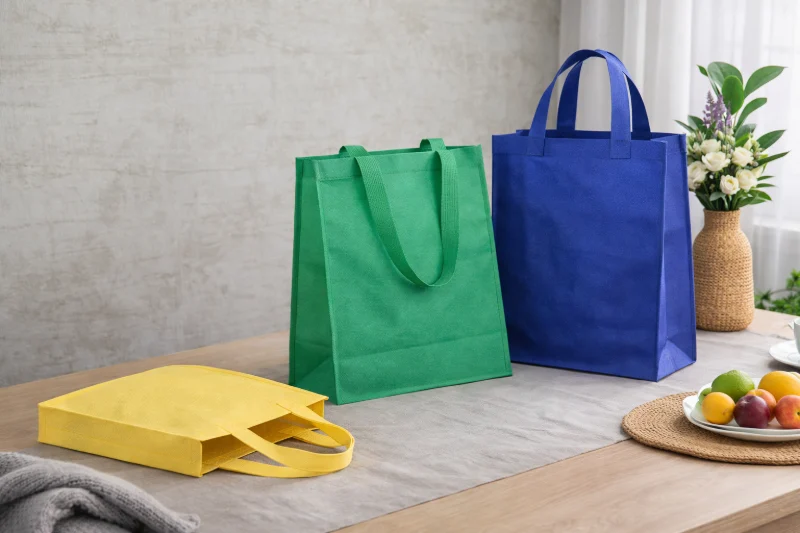
In non-woven bag customization and daily use, many sizing problems are not caused by manufacturing, but by differences in how size definitions and measurement methods are understood. Although many bag styles look similar at first glance, unclear measurement positions can easily lead to confusion about width, height, or bottom dimensions, which then affects product selection, pricing discussions, and actual performance.
To reduce these common sizing misunderstandings, the first step is to clearly understand the standard way non-woven bags are measured. The sections below explain how to measure finished non-woven bags correctly, covering width, height, and bottom or side gusset dimensions one by one.
Non-woven bags are relatively lightweight in structure, which makes size have a more noticeable impact on real-world performance. Once a bag is made larger, if the overall proportions are not well balanced, it can appear soft after loading, and stability during carrying may decrease. This is not a material issue, but a result of higher structural demands caused by increased size.
Size also directly affects loading efficiency and user experience1. A well-proportioned size allows the bag to maintain a natural shape when filled, making it comfortable and practical to use. In contrast, an ill-considered size may look larger but perform worse in actual use.
In addition, bag size is closely tied to overall cost and shipping volume. Larger dimensions require more material, packaging space, and transportation capacity. When the size exceeds real usage needs, unnecessary waste often follows. Proper size control helps meet functional requirements while keeping costs within a more reasonable range.
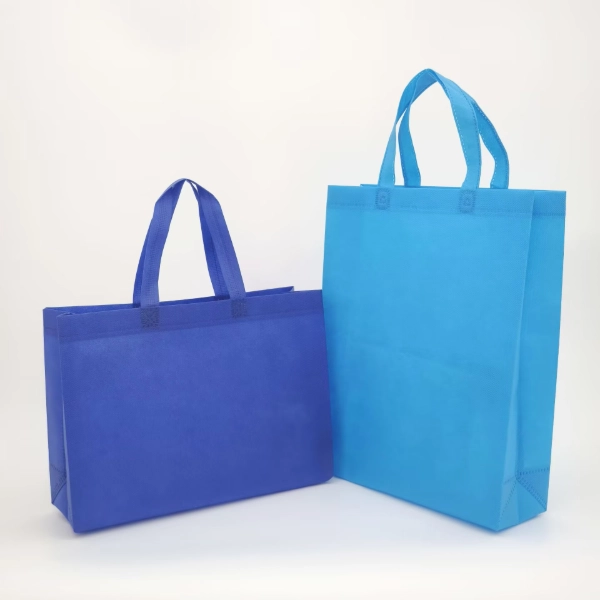
The finished size of a non-woven bag is usually defined by three key parameters: width, height, and the bottom or side gusset. Whether it is a heat-sealed non-woven bag or a sewn non-woven bag, the measuring logic is essentially the same.
When measuring, the bag should be laid flat naturally on a table and measured in its finished condition. The bag should not be stretched or folded, and fabric cutting sizes should not be used as a reference.
The width is measured from the left edge of the bag opening to the right edge. Handles are not included, and there is no need to open the bottom or side structure. This measurement refers only to the horizontal width of the bag body in its finished form.
The height is measured from the very bottom of the bag to the bag opening. This measurement does not include handles or hanging holes and represents the actual usable height for placing items inside the bag.
For non-woven bags with a bottom or side gusset, the depth must be measured after the bag is fully opened. The distance from the front panel to the back panel is the gusset or bottom depth, which directly determines the bag’s overall capacity.
As long as these three measuring positions are clearly defined, bag size will not be misunderstood even when different non-woven bag styles are involved.
To avoid any confusion, non-woven bag sizes should always be measured based on the finished bag condition, as shown in the diagram below.
| Term | Abbreviation | Measurement Description |
|---|---|---|
| Width | Width (W) | Measured from the left edge to the right edge of the bag body |
| Height | Height (H) | Measured from the bottom of the bag body to the top opening |
| Gusset / Bottom | Gusset (G) / Bottom (B) | Measured from the front panel to the back panel, indicating the bag depth |
As long as these three measurement points are clearly defined, size misunderstandings can be effectively avoided regardless of bag style.
Many sizing misunderstandings start with including the handle height as part of the bag height. For non-woven bags, height refers only to the usable bag body where items can be placed. Handles or hanging holes are not part of the finished bag dimensions, and including them often leads to situations where documents or products do not actually fit.
Another common issue is measuring the bottom or side gusset before the bag is fully opened. The bottom or side must be measured after the bag is naturally expanded; otherwise, the value only reflects the folded state and does not represent the true internal capacity.
A further frequent mistake is treating the fully opened bag opening as the bag’s width.
For non-woven bags with a bottom but no side gussets, the opening appears wider once unfolded because the bottom itself is a flat structure. In this case, the unfolded opening dimension actually includes both the length and the width of the bottom panel.
In such situations, relying on text alone often leads to misunderstandings. In practice, the most reliable approach is to confirm measurement positions using a diagram, clearly marking the width, height, and bottom depth, and using that diagram as the basis for ordering or sampling. This method effectively avoids size discrepancies and is commonly used by both factories and buyers.
Non-woven bags come in different structures, and each style requires slightly different reference points when measuring width, height, and bottom depth. Below are some of the most common non-woven bag styles. With the help of diagrams, each style’s standard measuring method is explained to make size confirmation clearer during ordering and communication.

For measuring this style of non-woven bag, simply stand it upright on the desk and position the front of the bag facing you.
Width(W): Measure from left to right
Height(H): Measure from top to bottom of the bag
Gusset(G): Measure from front to back

For measuring this style of non-woven bag, you just need to lay the bag flat on the table and position the bottom of the bag in front of you.
Width(W): Measure from left to right
Height(H): Measure from top to bottom of the bag
Bottom(B): Measure the bottom width

For measuring this style of non-woven bag, you just need to lay the bag flat on the table and position the bottom of the bag in front of you.
Width(W): Measure from left to right
Height(H): Measure from top of handle to bottom of the bag
Gusset(G): Measure the side width

For measuring this style of non-woven bag, you just need to lay the bag flat on the table and position the bottom of the bag in front of you.
Width(W): Measure from left to right
Height(H): Measure from top of handle to bottom of the bag
In practical use, there is no single standard size for non-woven bags. However, the market has long concentrated on several size ranges with the highest usage frequency. These sizes are widely adopted in promotions, retail, and everyday packaging because they fit common use scenarios well and have proven proportions that are easy for buyers to accept.
Taking non-woven bags with both bottom and side gussets as an example, the most common finished sizes on the market are usually concentrated in the following specifications:
① 25W × 35H × 10G cm, ② 30W × 38H × 10G cm, ③ 35W × 41H × 12G cm, ④ 35W × 25H × 10G cm, ⑤ 40W × 30H × 10G cm, ⑥ 45W × 35H × 12G cm.
These sizes cover the main use cases from promotional packaging to everyday shopping, which is why they appear so frequently in real applications.
For non-woven bags with a bottom only and no side gussets, common sizes are more often defined by a combination of the bag opening width and the bottom depth, such as 33W × 26H + 10B cm, 38W × 32H + 10B cm, and 45W× 36H + 10B cm.
Flat non-woven bags without bottom or side gussets are valued for their simple structure and controllable cost. Common sizes typically include 25W × 30H cm, 25W × 35H cm, 30W × 40H cm, 35W × 45H cm, and 40W × 50H cm, making them suitable for documents, lightweight products, or basic promotional use.
In T-cut bag (vest bag) structures, common specifications span multiple width ranges and are widely used in retail, supermarkets, and event scenarios. This bag type also has many well-established size options that can be selected directly, such as: 25W × 45H +12B cm, 30W × 50H + 14B cm, and 35W × 60H + 16B cm.
For heat-sealed non-woven bags, the commonly used sizes listed above are usually available as ready-made options, with a range of basic colors to choose from. Printing logos or designs on existing bags is often a practical choice for projects that require fast turnaround and better cost control.
The table below lists the most commonly used non-woven bag sizes, grouped by bag construction.
Bag Construction | Common Finished Sizes (cm)
| Bag Construction | Common Finished Sizes (cm) |
|---|---|
| Bottom & Side Gusset | 25W × 35H × 10G, 30W × 38H × 10G, 35W × 44H × 12G, 40W × 30H × 10G, 45W × 35H × 12G |
| Bottom Only | 33W × 26H + 10B, 38W × 32H + 10B, 45W × 36H + 10B |
| Flat (No Bottom, No Side) | 25W × 30H, 25W × 35H, 30W × 40H, 35W × 45H, 40W × 50H |
| T-cut / Vest Bag | 25W × 45H + 12B, 30W × 50H + 14B, 35W × 60H + 16B |
These size ranges are widely used because they balance capacity, usability, and production efficiency across common applications.
Get a free quote and expert consultation today. Let's bring your brand vision to life.
1 The Nielsen Norman Group explains that user experience reflects whether a product meets user needs smoothly and without unnecessary effort, which directly aligns with how bag size affects real-world usability.
Answer: The width of a non-woven bag is measured from the left edge to the right edge of the bag opening while the bag is laid flat. Handles and straps are not included, and the measurement refers to the finished bag width, not the cutting size.
Answer: To measure the gusset or bottom depth, the non-woven bag should be fully opened and expanded. The depth is the distance from the front panel to the back panel, and this measurement determines the bag’s carrying capacity.
Answer: The three basic measurements of a non-woven bag are width, height, and gusset or bottom depth. Together, these dimensions define the bag’s shape, capacity, and overall usability.
Answer: No, non-woven bags should never be stretched during measurement. The bag should be laid flat and measured naturally to reflect its actual finished size.
Answer: Manufacturers usually confirm non-woven bag measurements by preparing a size drawing that clearly labels the width, height, and gusset or bottom dimensions. In some cases, a simple 3D mockup or visual diagram is also used to help both sides better understand the bag structure and measurement positions, reducing the risk of misinterpretation before production.
Answer: Yes, the basic measurement logic for heat-sealed and sewn non-woven bags is the same. Width, height, and gusset depth are measured in the same way regardless of production method.
Answer: Non-woven bags with similar width and height may differ in capacity due to differences in bottom or gusset depth. Gusset size plays a major role in how much a bag can actually hold.
Answer: Yes, confirming non-woven bag size with images or drawings is strongly recommended. Visual confirmation helps ensure that width, height, and bottom depth are clearly understood by all parties involved.

Order or no-order we are Always here to help you!
We will contact you within 1 working day, please pay attention to the email with the suffix “@yanxinbag.com”.
Order or no-order we are Always here to help you!
We will contact you within 1 working day, please pay attention to the email with the suffix “@yanxinbag.com”.