
Our Academy
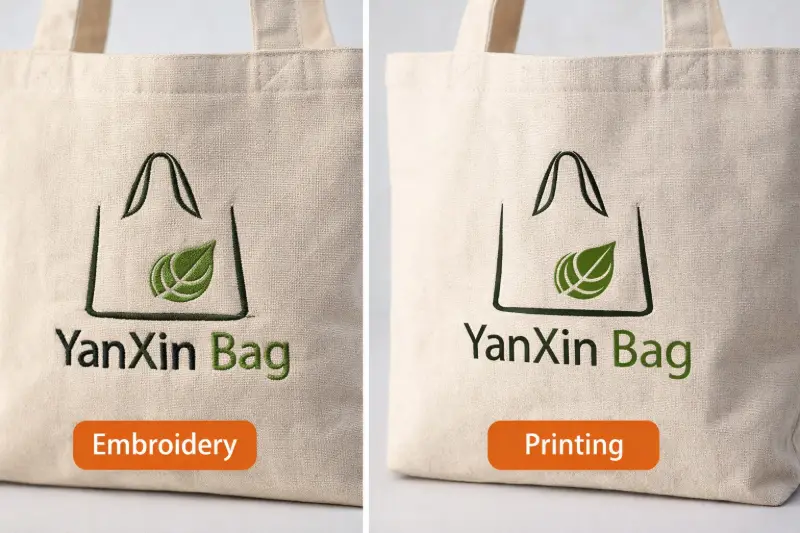
When customizing canvas bags, businesses often need to balance logo presentation, durability, and overall brand perception. A poor choice can affect how customers view the brand and diminish the bag’s practical value. Embroidery and printing are the two most common customization methods for canvas bags, each with its own strengths and ideal applications. Understanding the differences between them helps buyers make decisions that better align with their brand’s needs.
Canvas bags are made from thick, durable fabric that withstands daily wear and tear as well as heavy loads, which means the brand logo stays visible in customers’ hands for a long time. The material has a natural texture and a soft hand feel, creating an impression of simplicity and reliability that naturally transfers to the brand itself. Canvas bags are also highly versatile—through different printing or embroidery techniques, they can take on styles ranging from minimalist and artistic to refined and premium, making them adaptable to a wide range of brand identities.
Embroidery1 and printing are the two most common customization methods for canvas bags, each with its own strengths. Which one to choose depends on how the brand wants the bag to look, who will use it, and how long it is expected to last. Embroidery focuses more on texture and durability, while printing excels at color expression and pattern details. Let’s break down the characteristics of each process to help buyers make informed decisions.
Embroidery uses threads stitched directly into the fabric to create a raised, three-dimensional pattern. The biggest advantage of this process is its washability—logos remain crisp and clear even after dozens of washes, with no risk of peeling or fading. Visually, embroidery carries a natural sense of sophistication. The textured surface adds a tactile quality that customers can feel when they hold the bag. Embroidery is particularly suitable for premium gifts, VIP giveaways, or occasions where a brand wants to convey attention to detail. Customers receiving embroidered bags often feel a greater sense of brand appreciation, a psychological connection that printing does not always achieve. That said, embroidery has its limitations. It does not handle gradients well, and extremely fine or highly detailed logos may not translate clearly. The cost is also relatively higher compared to printing.
Printing applies ink to the surface of the fabric, with common methods including screen printing2, heat transfer, and direct-to-garment printing. The greatest strength of printing lies in its design flexibility—it can reproduce multi-color designs, gradients, and even photo-quality details with ease. This makes printing an ideal choice for large-volume campaigns such as trade show giveaways, promotional events, and employee gifting programs where budget is a key consideration. Printing also has a shorter production lead time, making it suitable for urgent orders or tight deadlines. However, printing does not match the durability of embroidery. Over time and with repeated washing, printed patterns may crack or fade. In terms of visual impact, printing produces a flat surface without the tactile texture that embroidery offers.
| Comparison | Embroidery on Canvas Bags | Printing on Canvas Bags |
|---|---|---|
| Durability | High, stays clear after repeated washing | Moderate, may fade with repeated washing |
| Design Capability | Best for simple logos with solid colors | Best for multi-color, gradient, or detailed designs |
| Visual Effect | Three-dimensional, textured feel | Flat surface, vibrant colors |
| Cost | Higher per unit | Lower per unit, cost advantage increases with volume |
| Best For | Premium gifts, VIP giveaways, long-term use | Events, bulk distribution, budget-conscious projects |
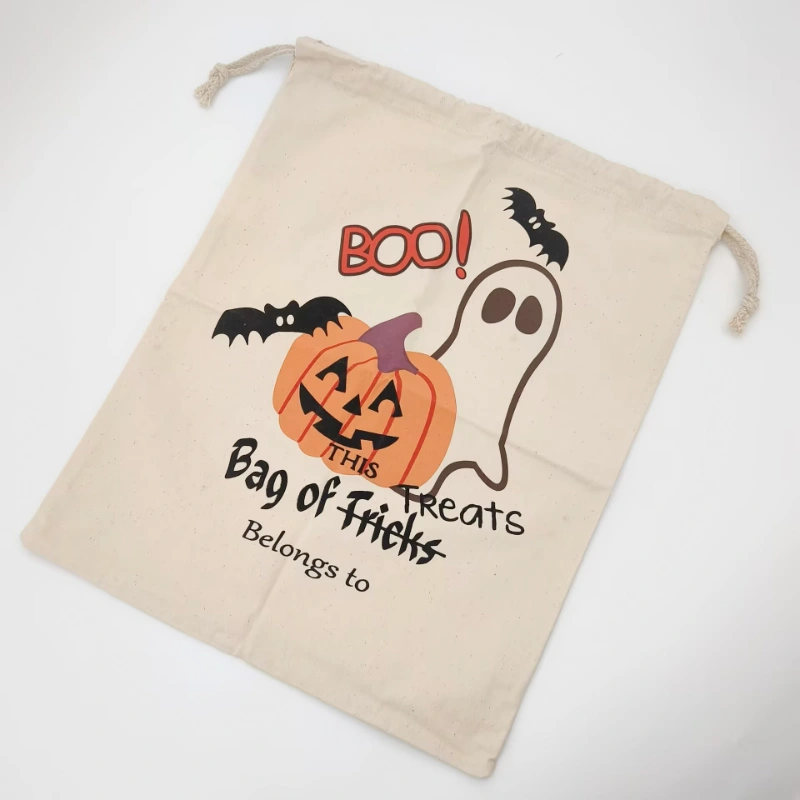
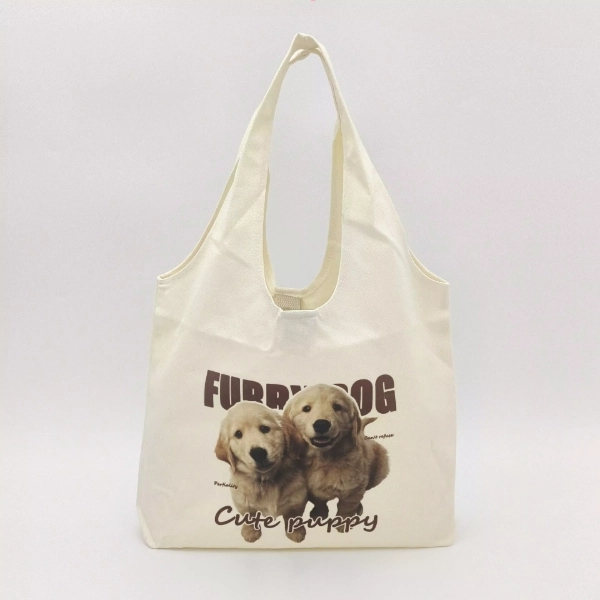
As the table shows, the main differences between embroidery and printing come down to durability, design capability, and cost. Embroidery offers better longevity and a premium feel but comes with higher cost. Printing delivers rich color reproduction and faster turnaround at a more accessible price point, though durability is comparatively lower. Buyers can choose between the two based on their priorities. If the goal is to create a bag that lasts and leaves a strong impression of quality, embroidery is the better fit. If the priority is to faithfully reproduce a complex design while staying within budget for larger quantities, printing is the more practical choice.
Procurement decisions are rarely about simply choosing between embroidery and printing. Instead, the key is to evaluate the brand’s actual needs and see which process better meets them. Budget, logo design, usage scenario, brand positioning, and long-term goals are the five dimensions that ultimately determine the direction.
Budget is often the first factor considered. Embroidery typically has a higher unit cost, but it also offers better durability. If a brand is willing to invest more upfront for long-term use, the overall cost of embroidery may not be higher than a printing solution that requires frequent replacement. Printing offers a clear cost advantage with larger volumes, making it suitable for projects with limited budgets but high quantity requirements.
The characteristics of the logo directly affect process feasibility. Embroidery works best with clean, simple logos that use solid colors, where stitching can create crisp and refined outlines. Printing is more accommodating to complex designs, handling gradients, fine text, and multi-layered artwork with ease, with almost no limitations.
Usage scenarios determine what kind of wear the bag needs to withstand. For premium corporate gifts, recipients tend to notice details and texture, and embroidery conveys a sense of thoughtfulness. For event giveaways or trade show bags, the primary goal is to reach a large audience quickly, and printing achieves this at a lower cost.
Brand positioning influences the final aesthetic. Brands positioning themselves at the high end often want every item bearing their logo to feel refined, and embroidery’s three-dimensional texture naturally fits that tone. For brands with tighter budgets or one-time campaigns, printing offers flexibility and vibrant color expression that can deliver excellent results without necessarily requiring embroidery.
The long-term investment perspective also matters. If canvas bags are meant to last for years, both processes can achieve that—the difference is in care. Embroidered logos are wash-resistant and durable, so customers can machine wash without worry. Printed bags need to be washed inside out and kept out of direct sun, which requires a bit more attention. Buyers can decide based on end-user habits. If the audience tends to use bags casually without special care, embroidery is the easier choice. If the brand provides clear care instructions, printing works just as well for long-term use.
Embroidery offers a three-dimensional, refined look that makes recipients feel the brand’s thoughtfulness, making it a good fit for occasions where budget allows and gift quality matters. Printing also works well for corporate gifts, especially when quantities are large or the design requires complex graphics, as it delivers customization at a more manageable cost.
For large-scale on-site distribution, printed canvas bags offer clear cost advantages and quick turnaround, meeting high-volume needs within short timeframes. If the event includes targeted gifts for key clients or important guests, embroidery is better suited for those curated giveaways, signaling a higher level of regard.
Embroidery adds a tactile dimension that makes brand logos stand out in both sight and touch, making it a strong choice for collaborations focused on brand identity. Printing works better for co-branded projects where rich design elements and the visual content of both brands need to be fully reproduced.
Embroidery brings an artisanal quality to canvas bags, adding a sense of craftsmanship and collectibility that appeals to audiences who value texture and meaning. Printing can deliver more vibrant and detailed imagery, making it a good fit for events that need to reproduce artwork or event key visuals with high fidelity.
For occasions such as galas and award ceremonies, the texture and premium feel of embroidered canvas bags align well with the tone of the event, encouraging recipients to keep and reuse them. Printing can also achieve a refined look through high-quality execution, with the key factor being whether the graphic presentation matches the overall style of the event.
Embroidery and printing are the two most common customization methods for canvas bags, each with its own strengths and ideal use cases. Embroidery excels in durability and texture—logos stay crisp over time, and the three-dimensional finish conveys a sense of refinement and attention to detail. It is well suited for premium gifts, VIP giveaways, and projects where long-term use matters. Printing stands out for its color versatility and cost efficiency, capable of reproducing complex designs, gradients, and even photo-quality details. It is a strong fit for large-volume campaigns, budget-conscious projects, or orders with tight deadlines.
Neither process is inherently better than the other. The right choice depends on how well the option aligns with the brand’s positioning, budget, and intended usage. Once buyers are clear on the message the brand wants to convey, how the bag will actually be used, and what the cost structure looks like, the decision between embroidery and printing becomes much more straightforward.
Get a free quote and expert consultation today. Let's bring your brand vision to life.
Answer: Embroidery uses thread stitched into the fabric to create a raised, three-dimensional pattern that is highly durable and wash-resistant. Printing applies ink to the fabric surface, which allows for more complex designs like gradients and fine details but may fade over time with repeated washing.
Answer: Embroidery is generally more durable for canvas bags. The stitched threads hold up well against repeated washing and daily wear without cracking or fading, while printed designs may show signs of wear over time.
Answer: Embroidery works best with logos that have clean lines and solid color blocks. The stitching creates crisp, refined outlines, making it ideal for simpler designs that don’t require gradients or extremely fine details.
Answer: Canvas bags are generally considered eco-friendly because they are made from natural cotton fibers and are reusable for years. Their durability reduces the need for single-use plastic bags, making them a popular choice for sustainable branding.
Answer: Standard canvas bags are not naturally waterproof, but they can be treated with wax or coated with a water-resistant finish. These treatments help repel water and protect the bag’s contents during light rain, though they are not fully waterproof like PVC or TPU materials.
Answer: Printing is generally better for large event giveaways because it offers lower per-unit costs and works well for high-volume distribution. Embroidery works well for smaller, more targeted giveaways where premium quality and long-term use are the priorities.
Answer: Canvas bags are suitable for beach use, though they are not naturally sand-resistant or waterproof. Their sturdy fabric handles beach essentials well, and the natural fibers give a relaxed, casual look that fits beach outings.
Answer: To clean a canvas bag with a printed logo, turn it inside out and wash in cold water on a gentle cycle. Avoid using bleach and let it air dry away from direct sunlight to prevent the print from cracking or fading.

Order or no-order we are Always here to help you!
We will contact you within 1 working day, please pay attention to the email with the suffix “@yanxinbag.com”.
Order or no-order we are Always here to help you!
We will contact you within 1 working day, please pay attention to the email with the suffix “@yanxinbag.com”.