
Our Academy

Many customers ask when sourcing cotton bags: what is the difference between regular cotton and organic cotton? How do these materials differ in cost, texture, and overall usability? This article takes a closer look at the key differences between cotton and organic cotton, helping buyers determine which material is best suited for their orders and applications.
Cotton is a fabric made from natural fibers1, characterized by its softness, durability, and ease of printing and processing. This material is commonly used to make tote bags, drawstring bags, and gift bags. Cotton bags are widely used in export-oriented eco-friendly bags, suitable for daily use, retail shipping, or promotional packaging.
Organic Cotton is a type of cotton grown organically without synthetic pesticides or chemical fertilizers. Its key feature is long, soft fibers with a superior feel. Organic Cotton bags are often used for high-end custom tote bags or gift bags, ideal for orders that emphasize quality or special purposes.
Conventional cotton may involve pesticides and fertilizers during cultivation and processing to ensure yield and stability. Organic Cotton is grown without chemical pesticides or GM seeds, using natural methods. For export-oriented bag sourcing, this means Organic Cotton is safer and better suited for premium custom orders.
Organic Cotton cultivation uses up to 91% less water than conventional cotton and reduces greenhouse gas emissions and chemical runoff. Regular cotton has a higher environmental impact. Buyers can consider this difference when evaluating sustainability or brand eco-claims.
Grown without pesticides and free from chemical treatments, organic cotton2 is naturally pure and gentle on sensitive skin. Conventional cotton, while widely used, may retain trace chemical residues that sensitive individuals should be mindful of. For most applications, conventional cotton fabric is more than adequate. However, when it comes to bags that come into direct contact with food, choosing organic cotton offers a clear and reassuring advantage.
Organic cotton typically features longer, more resilient fibers, and handpicking minimizes mechanical damage, resulting in bags with a refined texture and superior feel. That said, this quality comes with a higher cost. Conventional cotton fibers are slightly shorter, but for everyday tote bags, durability is more than sufficient, and it is well-suited for large-scale production. Buyers can choose the right material based on their product positioning and budget.
Conventional cotton offers a clear advantage in cost and flexible minimum order quantities, making it especially suitable for small test orders or budget-conscious projects—lower capital commitment, less risk. Organic cotton, on the other hand, comes with higher costs, typically larger MOQs, and longer production lead times, making it a better fit for premium positioning or projects where “organic” is a key selling point. It’s worth noting that shopping bags are fundamentally different from infant clothing in terms of usage scenarios and certification requirements. Unless a brand explicitly positions “organic” as a core value proposition, conventional cotton is more than adequate to meet the functional and quality needs of everyday shopping bags. Buyers can confidently choose based on their order volume, budget, and product positioning.
Conventional cotton requires no additional certification, making the procurement process simple and straightforward, with a wider range of suppliers to choose from. Organic cotton, on the other hand, typically requires suppliers to provide GOTS or other recognized organic certifications to verify that the fabric meets organic standards. For buyers, this means an extra step in supplier evaluation—verifying that the supplier holds valid organic certification. If “organic” is a core part of the brand’s value proposition, this verification is essential. For everyday shopping bags, however, the simplicity and efficiency of conventional cotton often make for a more hassle-free choice.
For quick reference, the key differences above are summarized in the table below:
| Feature | Organic Cotton | Conventional Cotton |
|---|---|---|
| Chemical Use | Natural methods only | Synthetic fertilizers/pesticides |
| Water Usage | Lower (up to 91% less) | High usage |
| Environmental Impact | Low pollution | Polluting |
| Skin Friendliness | Gentle / Non-toxic | Possible irritants |
| Fiber Quality | Long and soft | Slightly shorter |
| Cost | Higher | Lower |
| Certification | GOTS or other organic certification | None required |
As the table shows, each material has its own strengths. The right choice depends on your order requirements and product positioning. Next, let’s take a closer look at cost and minimum order quantity—two key factors that directly impact procurement decisions.
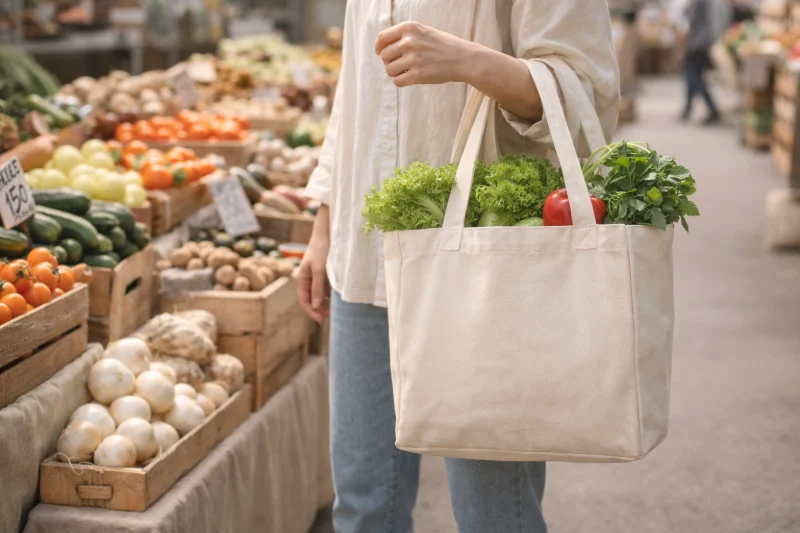
The price of Organic Cotton is usually higher than regular cotton, mainly due to labor-intensive handling and certification costs. The higher cost makes small-batch orders less economical. Buyers need to consider whether Organic Cotton fits their budget or large-scale production.
The minimum order quantity for Organic Cotton is usually higher than regular cotton, so buyers need to consider order size and budget before placing an order. For large orders, this is usually manageable, but small orders may not be suitable.
When considering cost and minimum order quantity, regular cotton remains the practical choice for most orders, especially for bulk production and retail shipping. Organic Cotton is more suitable for orders emphasizing quality or premium positioning, particularly for clients with strict material requirements, such as European or North American brands. Buyers should plan material usage according to budget, order volume, and client needs.
Get a free quote and expert consultation today. Let's bring your brand vision to life.
1 Encyclopaedia Britannica identifies natural fibre as any hairlike raw material directly obtainable from an animal, vegetable, or mineral source.
2 Wikipedia identifies organic cotton as cotton grown without synthetic agricultural chemicals from non-genetically modified plants.
Answer: Yes, organic cotton cultivation uses up to 91% less water than conventional cotton. This makes it a more sustainable choice for buyers looking to reduce environmental impact in their bag orders.
Answer: Organic cotton typically has longer, more resilient fibers, giving it a superior feel and refined texture. However, conventional cotton offers sufficient durability for everyday tote bags and is better suited for large-scale production.
Answer: Organic cotton costs more due to labor-intensive farming methods, lower yields, and the use of natural pest control instead of synthetic chemicals. These factors make small-batch orders less economical compared to conventional cotton.
Answer: Yes, organic cotton typically requires suppliers to provide GOTS or other recognized organic certifications. Conventional cotton requires no additional certification, making the procurement process simpler.
Answer: It depends on your brand positioning. If “organic” is a core selling point or the bags are for high-end custom orders, organic cotton is worth the investment. For everyday shopping bags, conventional cotton offers practical cost-effectiveness.
Answer: Conventional cotton may use synthetic pesticides and fertilizers during cultivation to ensure yield and stability.
Answer: Organic cotton typically has a higher minimum order quantity than conventional cotton. Buyers should consider order size and budget before choosing organic cotton for their bag projects.
Answer: Yes, cotton fabric is excellent for promotional tote bags. It is soft, durable, easy to print on, and widely used for retail packaging, giveaways, and custom orders.
Answer: Conventional cotton is generally better for large-scale bag production. It offers lower cost, flexible minimum order quantities, and no certification requirements, making it more efficient for bulk orders.
Answer: Yes, organic cotton fibers are typically longer and softer due to handpicking methods that reduce mechanical damage. Conventional cotton fibers are slightly shorter but still provide adequate quality for most bag applications.

Order or no-order we are Always here to help you!
We will contact you within 1 working day, please pay attention to the email with the suffix “@yanxinbag.com”.
Order or no-order we are Always here to help you!
We will contact you within 1 working day, please pay attention to the email with the suffix “@yanxinbag.com”.