
Our Academy
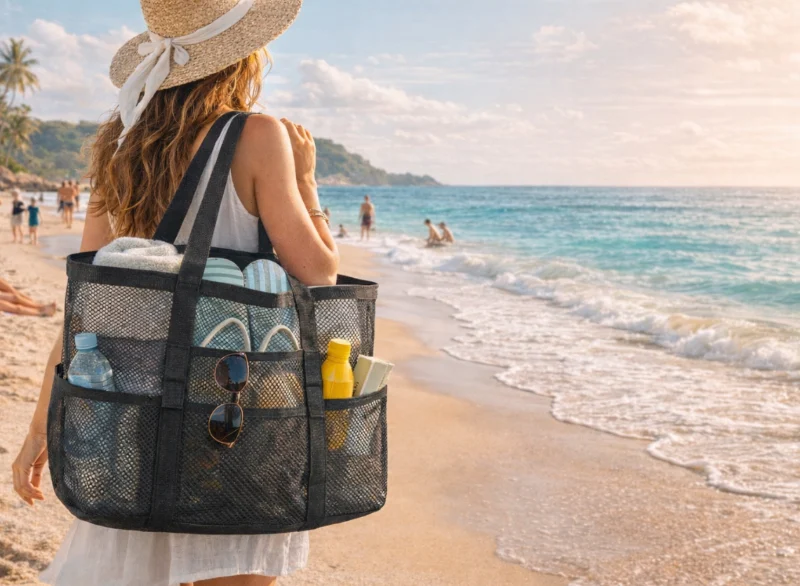
The material of a beach bag directly affects its performance in beach environments. Different materials vary significantly in durability, water resistance1, weight, and how well they handle sand, all of which influence the overall user experience. Because of these differences, understanding the characteristics of common beach bag materials is important when selecting the right bag. This article introduces several commonly used beach bag materials and explains how to choose the most suitable material based on different usage needs.
Beach bags can be made from a variety of materials, and the choice of material affects their functionality and user experience. In general, these materials can be divided into two main categories: fabric materials and waterproof structural materials. Common materials used for beach bags include mesh, canvas, jute, as well as waterproof materials such as EVA and PVC or TPU.
Fabric materials are the most commonly used materials for beach bags because they provide a good balance between functionality and comfort. These materials are typically lightweight, breathable, and easy to fold, making them convenient for everyday beach use. Common fabric materials used for beach bags include mesh, canvas, and jute.
Mesh beach bags are made from open-weave fabrics, commonly including polyester, nylon, or cotton mesh. The open mesh structure allows sand and water to drain easily, which helps reduce sand buildup and moisture inside the bag. Because of these features, mesh beach bags are widely used for beach trips, swimming pools, and various water-related activities.
Sand drainage
The open mesh structure allows sand to fall through the fabric naturally, which helps prevent sand from accumulating inside the bag. This makes mesh bags especially practical for beach environments where sand is unavoidable.
Breathability
Mesh fabric allows air to circulate freely, helping wet towels, swimsuits, or other damp items dry more quickly.
Lightweight
Mesh materials are generally lightweight, making the bag easier to carry and more comfortable for extended use.
Easy cleaning
Because sand and water do not easily remain trapped in the mesh structure, mesh beach bags can usually be cleaned simply by rinsing them with water.
Small items may fall out
The relatively large openings in mesh fabric may allow small items to fall out of the bag, so items like keys or small accessories may require additional storage.
Lower structural support
Compared with thicker fabrics, mesh materials provide less structural support and shape stability, making them less suitable for carrying very heavy items.
Limited privacy
Because of the open mesh structure, the contents inside the bag may be visible from the outside, which can provide less privacy for personal belongings.
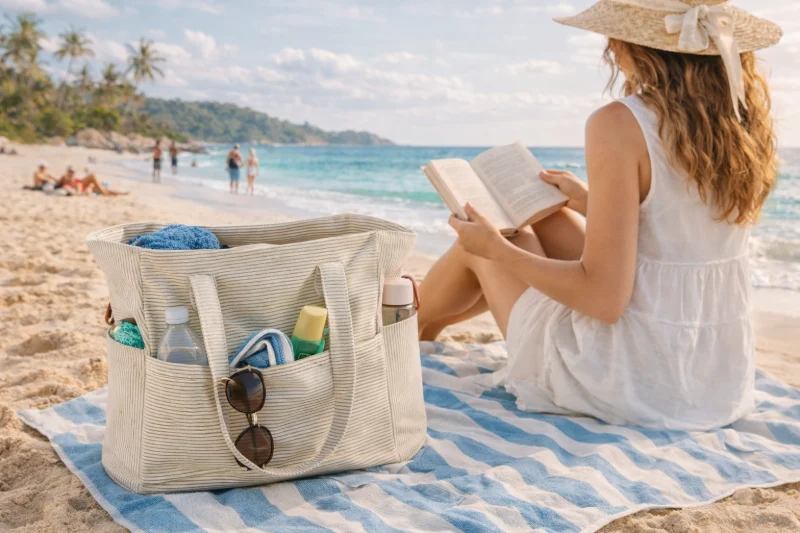
Canvas beach bags are made from thick cotton canvas fabric. Canvas is a durable textile woven from cotton fibers with a relatively dense structure. Because of this structure, canvas bags offer strong durability and load capacity, which is why they are commonly used for large beach tote bags and promotional bags.
High durability
Canvas fabric has a dense and stable woven structure that provides strong resistance to wear and tear. Even with frequent use in outdoor environments or when carrying heavier items, canvas bags usually maintain good structural stability.
Strong load capacity
Because the fabric is thick and sturdy, canvas beach bags can easily carry towels, clothing, sunscreen, and other beach essentials without losing their shape or tearing.
Large printable surface
Canvas beach bags typically have a wide and flat surface that is ideal for large printed graphics or brand logos. Compared with many other beach bag materials, canvas provides clearer and more visually appealing printing results, which is why it is widely used for customized promotional bags.
Long service life
Under normal use conditions, canvas bags can last for many years. With proper care, their lifespan is often longer than many lightweight fabric bags.
Absorbs moisture
Cotton fibers naturally absorb water, which means canvas fabric may take in moisture when exposed to seawater or humid environments. As a result, canvas beach bags usually dry more slowly compared with some synthetic materials.
Heavier weight
Compared with mesh or certain synthetic fabrics, canvas material is thicker and denser. Because of this, canvas beach bags are generally heavier than lightweight fabric bags.
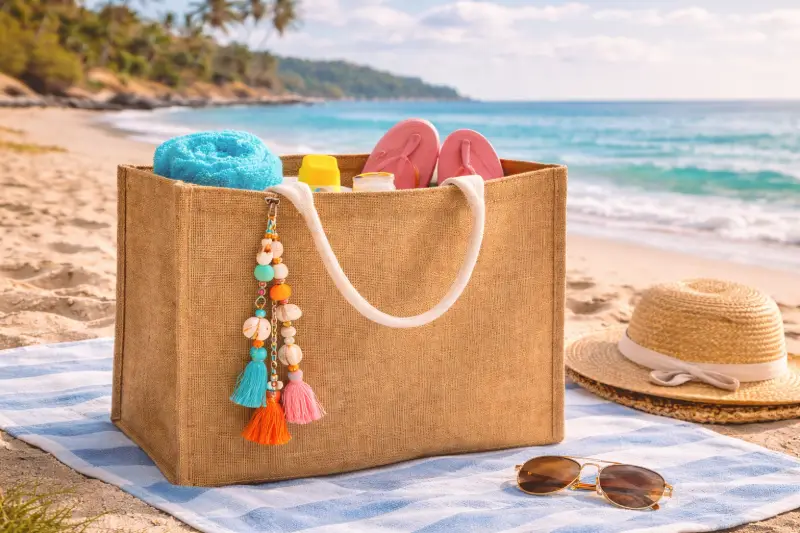
Jute beach bags are made from natural fibers derived from the jute plant. Jute is a plant-based fiber that is woven into a coarse but durable fabric. Because of its natural texture and eco-friendly characteristics, jute is commonly used for eco-friendly beach tote bags and sustainable packaging products.
Eco-friendly material
Jute is a natural plant fiber that is biodegradable and considered an environmentally friendly material. For brands that emphasize sustainability or eco-conscious packaging, jute bags are often a popular choice.
Strong structure
Jute fibers are relatively thick and strong, giving jute fabric good structural strength. This allows jute beach bags to carry items such as towels, clothing, and other beach essentials.
Natural appearance
Jute fabric has a distinctive natural fiber texture and earthy color tone. This natural appearance fits well with beach, vacation, and summer-themed designs.
Heavier weight
Compared with many lightweight fabrics, jute material is generally heavier, which can make jute beach bags slightly heavier to carry.
Rough texture
Compared with cotton or other softer fabrics, jute fibers are coarser, which gives the material a rougher texture.

Some beach bags are made from waterproof structural materials rather than traditional fabrics. These materials provide stronger water resistance and help prevent water from entering the bag, making them especially useful for beach or pool environments. Common waterproof materials used for beach bags include EVA2, as well as plastic materials such as PVC or TPU.
EVA beach bags are made from molded EVA (ethylene-vinyl acetate) foam material. This material is typically produced through a foaming process and has a texture similar to common EVA slipper material, offering slight flexibility and good durability. Some EVA beach bags feature small perforations on the sides of the bag. These holes make the bag look lighter and also help improve air circulation. If water gets inside the bag, the openings can also help it drain out more easily, allowing the bag to stay dry.
Waterproof
EVA material does not absorb water, which gives the bag strong waterproof performance. This makes it suitable for beach and pool environments.
Sand resistant
The surface of EVA is usually smooth, making it difficult for sand to stick to the material. This helps keep the bag cleaner in sandy environments.
Stable structure
Because EVA beach bags are made with molded foam structures, they can maintain their shape and do not easily collapse.
Easy cleaning
The smooth and non-absorbent surface of EVA makes cleaning very easy. In most cases, the bag can simply be rinsed with water.
Not foldable
EVA beach bags typically have a rigid foam structure and cannot be easily folded for storage.
Heavier than fabric bags
Compared with fabric materials such as mesh or canvas, EVA is thicker and may make the bag slightly heavier.
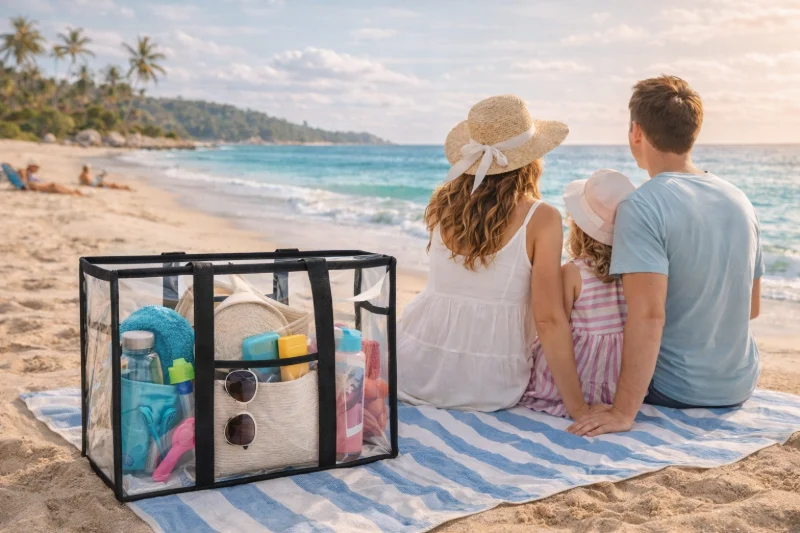
PVC or TPU beach bags are typically made from waterproof plastic materials that form a sealed and water-resistant bag structure. Unlike fabric materials, PVC and TPU can effectively prevent water from entering the bag, making them practical for wet environments. Because these materials can also be produced in transparent or semi-transparent designs, they are commonly used for beach, pool, and water-related activities where waterproof protection is needed.
Excellent waterproof performance
PVC and TPU provide strong waterproof protection and help prevent water from entering the bag, making them suitable for beach or pool environments.
Transparent design options
These materials can be manufactured in transparent or semi-transparent designs, allowing users to easily see the contents inside the bag.
Durable and flexible
PVC and TPU offer good flexibility and durability, which helps the bag resist damage during everyday use.
Easy cleaning
The smooth surface of these materials prevents sand and dirt from sticking easily, so the bag can usually be cleaned simply by rinsing it with water.
Lower breathability
Because of the sealed material structure, PVC or TPU beach bags generally have lower breathability compared with fabric bags.
Less natural texture
Compared with natural fabrics such as cotton or jute, these plastic materials may feel less natural in texture.
Different materials vary significantly in structure, water resistance, and weight. The following comparison shows the key differences between several common beach bag materials.
Quick Comparison of Beach Bag Materials
| Material | Advantages | Limitations |
|---|---|---|
| Mesh | Breathable, allows sand to fall through easily, lightweight | Small items may fall out through the mesh, lower structural support |
| Canvas | Thick fabric, durable, strong load capacity, large printable surface | Absorbs moisture and dries more slowly, heavier overall weight |
| Jute | Natural plant fiber with distinctive texture and strong structure | Rough texture and relatively heavier weight |
| EVA | Waterproof, does not absorb water, stable structure, easy to clean | Not foldable and takes up more storage space |
| PVC / TPU | Fully waterproof, smooth surface, resistant to sand buildup, easy to clean | Lower breathability and a more synthetic feel |
With these differences in mind, the next section looks at how to choose the right beach bag material based on different needs.
When choosing a beach bag, the material is an important factor because different materials vary in durability3, waterproof performance, weight, and sand handling. The right material not only affects the user experience but also determines how practical the bag will be in different environments. Some materials are better suited for sandy beaches, while others perform better in wet environments such as pools or boating activities. Therefore, selecting the right beach bag material usually depends on how and where the bag will be used.
If the bag will mainly be used on sandy beaches and you want to reduce sand accumulation inside the bag, mesh beach bags are usually a good option. The mesh structure allows sand to fall through the openings naturally, which helps keep the bag cleaner. This is why mesh bags are very common for beach trips and pool activities.
If you need a beach bag that can carry heavier items and withstand frequent use, canvas is often a good choice. Canvas fabric is thick and durable, providing strong structural support and load capacity. This makes it suitable for carrying towels, clothing, and other beach essentials.
If you prefer bags made from natural fibers, both canvas and jute beach bags are common choices. Canvas is typically made from cotton fibers and offers a softer texture with good durability, while jute is made from plant-based fibers and features a distinctive natural appearance. Both materials are often used in casual or eco-style beach bag designs.
If strong waterproof protection is required, such as for poolside or water activities, EVA PVC or TPU beach bags are usually the most suitable option. These materials help prevent water from entering the bag and are also easy to clean, making them practical for wet environments.
Beach bags can be made from several different materials, and each material offers its own advantages depending on how the bag will be used. Mesh bags are ideal for sandy environments because sand can easily fall through the fabric, while canvas bags provide stronger structure and durability for carrying heavier items. Natural materials like jute offer a distinctive look, while EVA, PVC, or TPU bags are better suited for wet environments where water resistance and easy cleaning are important.
Understanding these material differences makes it easier to choose the right beach bag for different situations, whether you are planning a beach trip, a pool day, or other outdoor activities.
Get a free quote and expert consultation today. Let's bring your brand vision to life.
1 In industry standards, water resistance functions as a material performance indicator used to evaluate a fabric’s ability to prevent liquid penetration in outdoor equipment and bags.
2 CAMEO Materials Database identifies EVA as a thermoplastic elastomeric copolymer composed of ethylene and vinyl acetate units.
3 Sustainability Directory identifies material durability as the capacity of a material to withstand degradation and maintain its functional properties over time.
Answer: The best material for a beach bag depends on how the bag will be used. Mesh beach bags are ideal for sandy environments because sand can fall through the mesh fabric. Canvas, jute, and waterproof materials such as EVA, PVC, or TPU are also common beach bag materials, each offering different benefits in durability, appearance, and water resistance.
Answer: Yes, mesh beach bags are considered one of the best options for sandy beaches. The open mesh structure allows sand to fall through the fabric instead of collecting inside the bag. This design helps keep the bag cleaner after beach use.
Answer: Canvas beach bags are not fully waterproof because canvas fabric is made from cotton fibers that can absorb moisture. However, some canvas beach bags include waterproof linings or coatings to improve water resistance. Despite this, canvas remains a popular beach bag material because of its durability and strong load capacity.
Answer: Jute is a natural plant fiber that is commonly used for eco-style beach tote bags. Many jute beach bags include a PE laminated lining inside the bag to improve moisture resistance and help prevent water from penetrating the fabric. Jute bags are valued for their natural texture and environmentally friendly appearance.
Answer: Yes, EVA beach bags are generally durable because they are made from molded EVA foam material that holds its shape well. The material is waterproof and resistant to sand sticking to the surface. This makes EVA bags practical for beach trips, pools, and boating environments.
Answer: Mesh fabrics made from polyester or nylon typically dry the fastest. Their open structure allows water and air to pass through easily, helping wet towels or swimwear dry more quickly. This is why mesh beach bags are often used for pool and water activities.
Answer: Waterproof beach bags are not always necessary, but they can be very useful in wet environments. Bags made from EVA, PVC, or TPU materials help protect items such as phones, clothing, or electronics from water exposure. They are especially practical for pools, boats, and rainy conditions.
Answer: A good beach bag should be durable, lightweight, and large enough to carry beach essentials such as towels, sunscreen, and clothing. Materials that are easy to clean and resistant to sand buildup are also preferred. Strong handles and stable structure are additional useful features.
Answer: Mesh beach bags and canvas beach bags serve different purposes. Mesh bags are better for sandy beaches because sand can fall through the mesh fabric. Canvas bags, on the other hand, provide stronger structure and are better for carrying heavier items.
Answer: Large beach tote bags are often the most practical size for beach trips. They can easily carry towels, clothing, sunscreen, and other beach essentials. Many beach bags are designed with wide openings to make packing and access easier.

Order or no-order we are Always here to help you!
We will contact you within 1 working day, please pay attention to the email with the suffix “@yanxinbag.com”.
Order or no-order we are Always here to help you!
We will contact you within 1 working day, please pay attention to the email with the suffix “@yanxinbag.com”.