
Our Academy
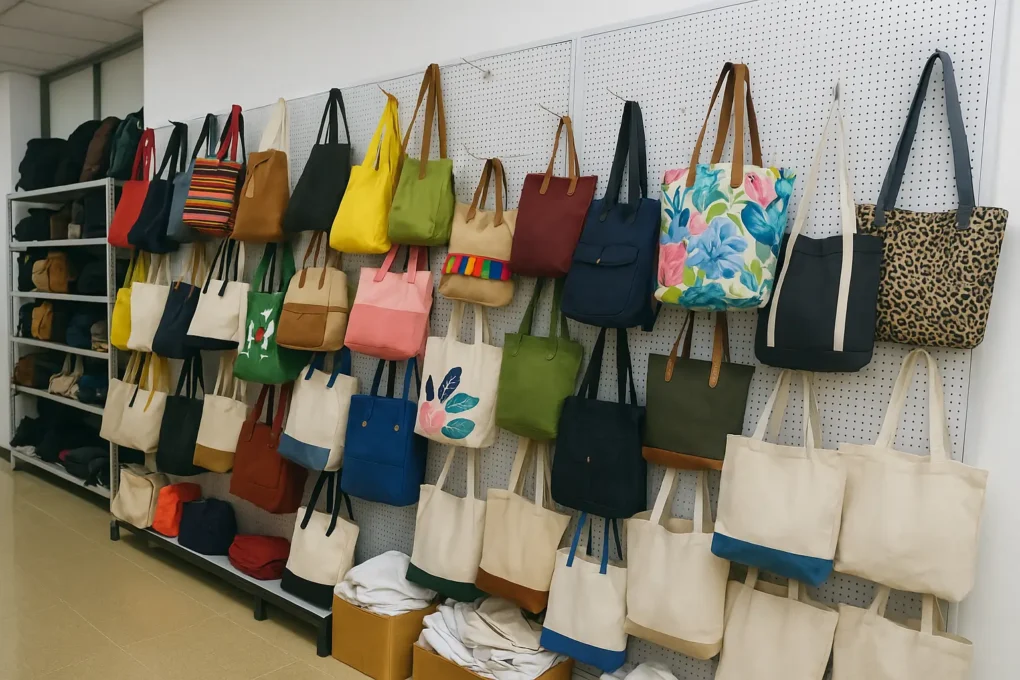
In the production of shopping bags and custom bags, the closure method is a basic but very important part. Different closure structures directly affect user experience and cost control. In actual factory production, we usually choose feasible closure structures based on the bag’s use and material. The following are some common and production-ready closure types.
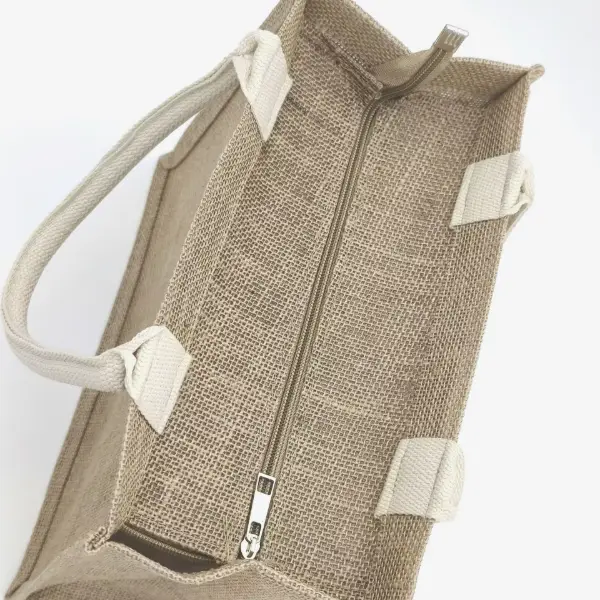
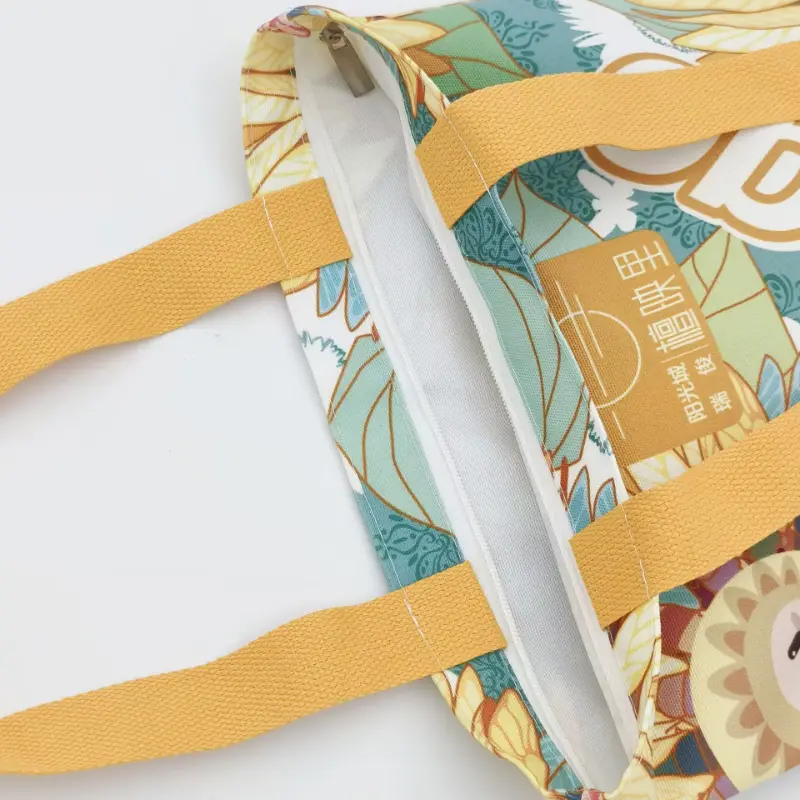
Zipper closure is a common closure method in shopping bags. Depending on different materials, it is mainly divided into nylon zippers, metal zippers, and waterproof zippers. Nylon zippers are lightweight. Metal zippers are more durable but heavier. Waterproof zippers are used for bags that require moisture resistance or insulation.
This zipper structure is widely used in shopping bags, commonly found in canvas bags, non-woven bags, RPET eco-friendly bags, nylon bags, and insulated bags. In B2B customization, it is usually used for bags that require higher closure security or to prevent items from falling out.
In factory production, there are three methods. One is to directly sew the zipper onto the bag opening. Another is to sew two rectangular fabric pieces together with the zipper tape separately; this structure leaves some openings on both sides, allowing the interior items to be seen. The third is to first sew the two zipper tapes together along the edges, and then attach them to the bag body; with this structure, the inside is basically not visible when the zipper is closed.
Zippers increase the overall cost, mainly in two aspects. One is the increased labor cost due to additional production steps, and the other is the impact on shipping costs due to the added weight of the zipper itself. In actual use, zippers may have issues such as sticking, uneven sliding, or wear after long-term use. This is more common in low-quality zippers or high-frequency usage scenarios.
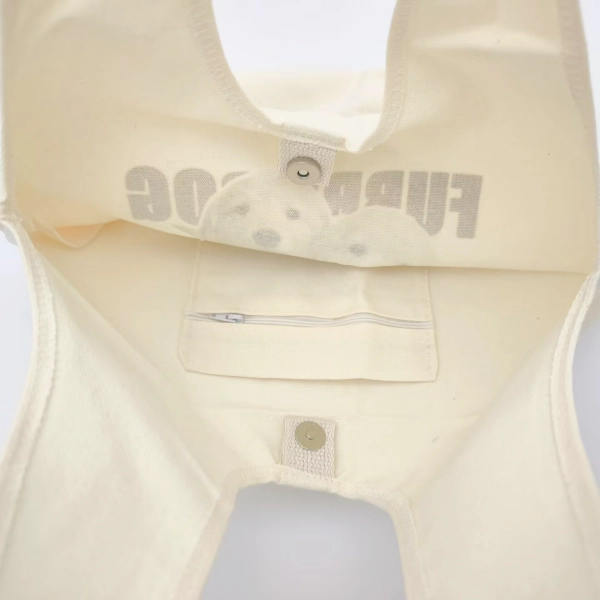
Magnetic snap closures1 are divided into two types: exposed magnetic snaps and hidden magnetic snaps. Exposed magnetic snaps are structures where the snap position is visible on the surface of the bag, and the magnetic point is more direct and easy to see. Hidden magnetic snaps are built inside the material, so the snap position is not easily visible from the outside, giving a more concealed appearance.
This type of magnetic snap structure is widely applicable and can be used for almost all types of bags. Bags made from different materials can also be combined with this closure method.
The main limitation is that under heavy load, the magnetic snap may open automatically. If the weight of the contents exceeds the magnetic holding force, the closure stability will decrease. In this case, its safety is lower compared to zipper closures.
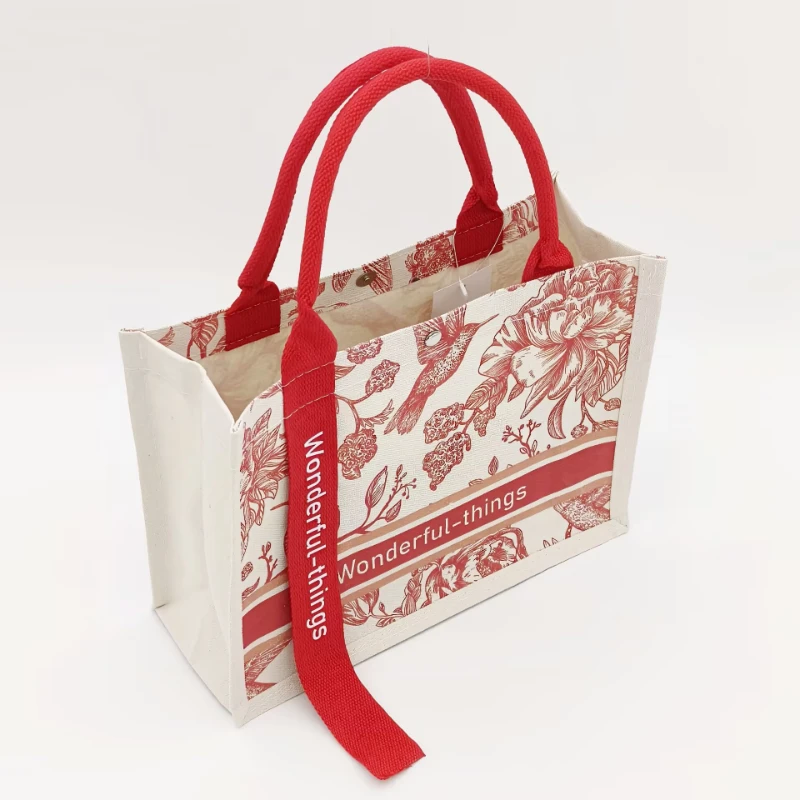
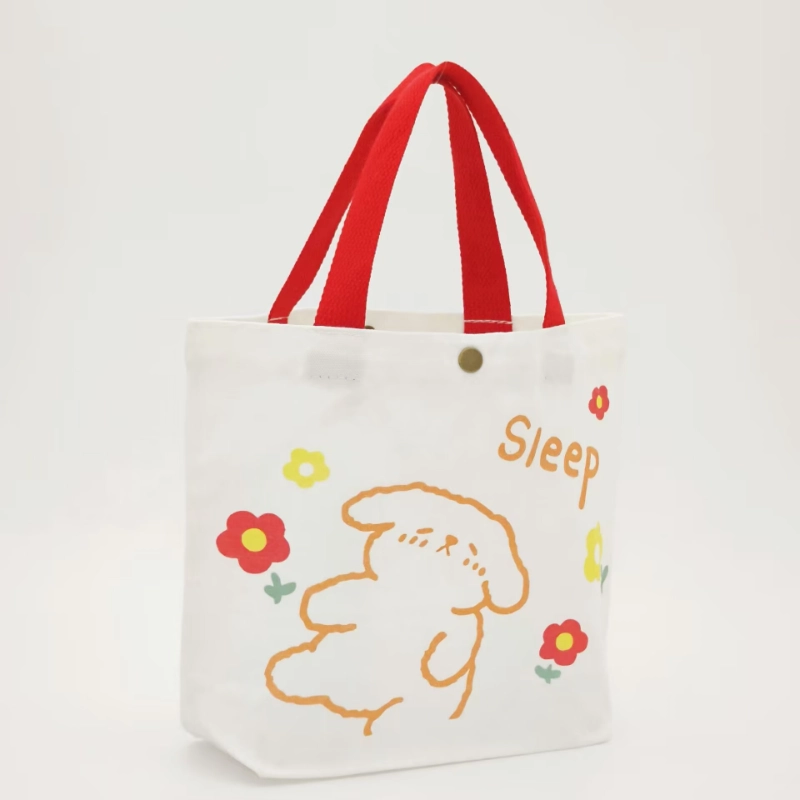
Snap button closures are divided into two materials: metal snap buttons and plastic snap buttons. Metal snap buttons have a relatively more rigid structure and provide stronger stability under force. Plastic snap buttons are lighter in weight and are more commonly used in lightweight bag styles. In terms of applicability, this closure can be used on almost all types of bags. Bags made from different materials can be adapted to this closure based on structural design. In actual use, the choice of snap button usually depends on the bag’s purpose and positioning.
The thickness of the fabric needs to match the snap structure. If the fabric is too thin, the fixation will not be strong enough. If the fabric is too thick, the closing feel after installation will be affected. At the same time, the positioning accuracy of the snap is relatively high; any misalignment will affect the fastening performance.
Common issues include snap loosening during use, especially after repeated opening and closing. Metal snap buttons may develop oxidation marks after long-term use. Plastic snap buttons may show slight wear over time.
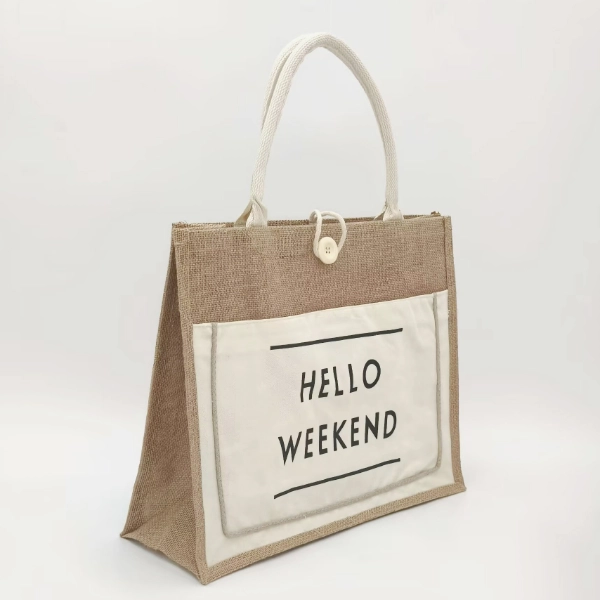
Button and loop closures are usually used on structured jute bags. The button is fixed on the front side of the bag opening, while a cord loop or fabric loop is fixed on the back side. The bag is closed by looping the strap over the button. This type of closure is mainly used for basic fastening rather than full sealing. It controls how widely the bag opening can spread and prevents it from staying fully open during use. It provides a basic level of stability and also has some visual function. However, the closure strength is limited and is not suitable for heavy load conditions or situations where preventing items from falling out is required.
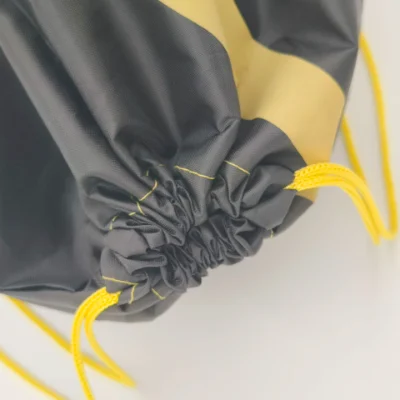
Drawstring closures are divided into two structural types: single cord and double cord. A single cord structure uses one drawstring to complete the closure, with the tightening force concentrated in one direction, making the structure relatively simple. A double cord structure has one drawstring on each side, and the closure is achieved by pulling both sides, resulting in a more balanced tightening process.
This structure is used in several types of bags, including drawstring bags, drawstring cooler bags, and drawstring backpacks. In drawstring bags, it is commonly used for daily storage products. In drawstring cooler bags, it is used for temporary insulation and closure. In drawstring backpacks, it replaces traditional zippers as the opening and closing method.
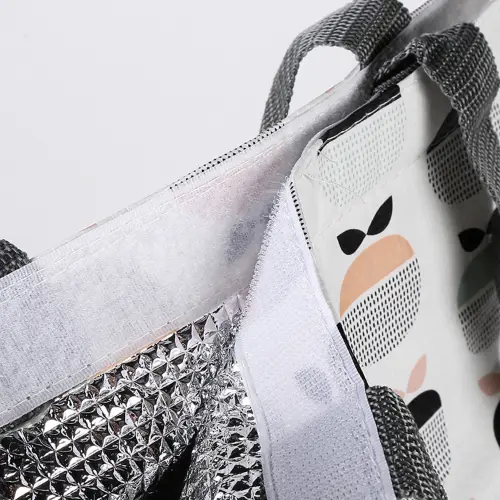
Velcro2 closures are divided into short patch types, long strip types, and three-sided wrap types. The short patch type is usually a small square or small rectangular piece, with wide application. The long strip type is commonly used in cooler bags, where a larger closure surface is required. The three-sided wrap type is also often used in cooler bag products, increasing the closure coverage through a three-sided binding structure. In terms of applicability, Velcro structures can be used on almost all types of bags made from different materials.
Common issues include surface pilling. After long-term repeated use, the Velcro fibers gradually weaken, and detachment becomes more common. After many opening and closing cycles, the adhesion strength gradually decreases. In addition, the Velcro surface easily attracts dust, and accumulated dust can reduce the overall bonding performance.
Roll top closures are mainly used for insulated bags, backpacks, and roll-style cosmetic bags. This structure closes the bag by repeatedly rolling down the opening. After rolling, it is usually secured with Velcro or a cord to keep the rolled section in place, prevent it from unfolding, and also improve a certain level of sealing and portability. Common materials include DuPont paper, laminated RPET, and canvas. Different materials show different performance when used in roll top structures. This closure method is generally a relatively modern structural design, and in bag applications it is more focused on a combination of functionality and appearance.
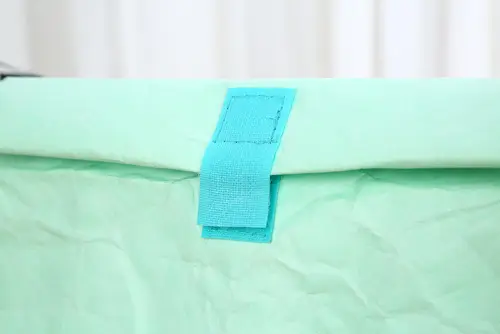
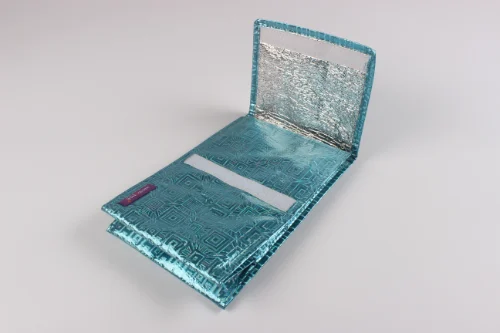
Flap closures are divided into three types: magnetic flap, buckle flap, and Velcro flap. The magnetic flap uses magnetic force for opening and closing, with a relatively smooth operation. The buckle flap uses a snap-lock structure for fastening, which is more mechanically locked. The Velcro flap uses surface adhesion to complete the closure, with a more direct opening and closing method.
This structure is suitable for cooler bags, business bags, and high-end custom bags, and is typically used in designs where a flap covers the bag opening. During use, alignment issues may occur with the flap, mainly where the flap and the bag body do not line up properly, affecting both the closure performance and overall visual neatness.
The selection of different closure types in shopping bags mainly depends on the usage scenario and product positioning. Bags with higher security requirements usually prefer zipper structures to prevent contents from falling out or the opening from accidentally opening. Products that require fast opening and closing more commonly use magnetic closures, Velcro, snap buttons, button-and-loop structures, and flap closures, which are better suited for frequent-use scenarios. In products with stronger cost control, snap buttons are more widely used to achieve basic closure functions. In higher-end display-oriented products, magnetic closures or zippers are more common to enhance overall texture. In visually driven designs, magnetic snaps and button-and-loop closures are more frequently used, while roll top structures are more often applied in more specialized design types.
Get a free quote and expert consultation today. Let's bring your brand vision to life.
1 As defined by Richarms, a magnetic snap includes various types such as basic round snaps, flat invisible snaps, pronged snaps, and sew-in snaps, each suited for different applications.
2 Wikipedia defines Velcro as a hook-and-loop fastening system consisting of two complementary strips with hooks and loops that attach through mechanical interlocking.
Answer: The main closure methods include zipper closures, magnetic snap closures, snap buttons, Velcro, drawstrings, and flap structures. Each type is selected based on usage scenario, cost, and product positioning.
Answer: Zipper closures provide higher security and prevent items from falling out, while magnetic snaps are faster to open and close but less secure under heavy load. Zippers are more suitable for safety-focused bags.
Answer: Metal snap buttons are more rigid and durable, making them suitable for stronger structures. Plastic snap buttons are lighter and more commonly used in lightweight bag designs.
Answer: Yes, zipper closures are generally considered the most secure closure type for shopping bags. They physically lock the opening, reducing the risk of items falling out during transport.
Answer: Exposed magnetic snaps are visible on the surface of the bag, while hidden snaps are embedded inside the material. Hidden versions offer a cleaner and more minimal appearance.
Answer: Magnetic snaps are not ideal for heavy loads because they can open under excessive weight. They are better suited for light to medium usage bags with moderate contents.
Answer: Common materials include canvas, laminated RPET, and DuPont paper. These materials perform differently depending on flexibility and durability requirements.
Answer: Velcro closures work by using hook-and-loop surfaces. The two sides stick together when pressed and peel apart when pulled open.

Order or no-order we are Always here to help you!
We will contact you within 1 working day, please pay attention to the email with the suffix “@yanxinbag.com”.
Order or no-order we are Always here to help you!
We will contact you within 1 working day, please pay attention to the email with the suffix “@yanxinbag.com”.