
Our Academy
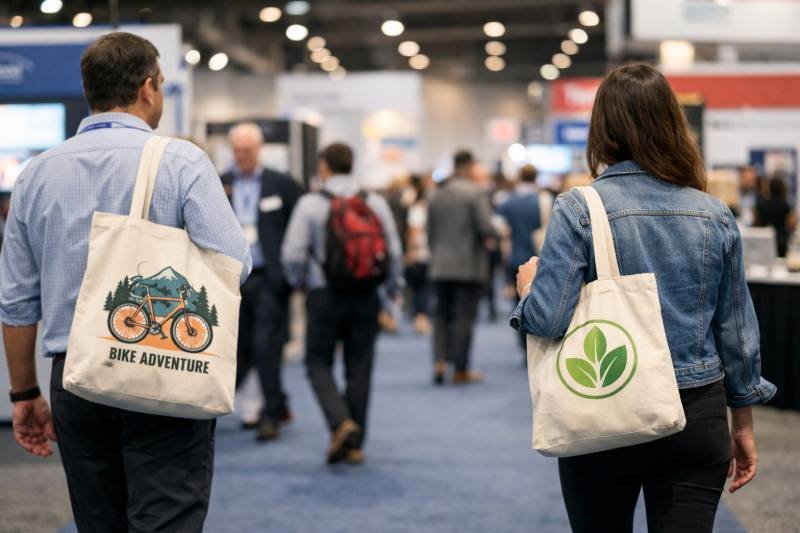
Choosing the right canvas1 bag style is essential for business events, corporate giveaways, and product packaging. Different styles not only affect carrying capacity, but also have a direct impact on visual presentation and budget control. In real projects, selecting the right style ensures the bag is both practical and effective in representing your brand, helping enhance the overall experience.
The key to selecting a canvas bag lies in its intended use, rather than just its appearance. Different types of projects have different priorities. For example, promotional giveaways usually focus on cost control and large-volume distribution; corporate gifts emphasize quality, structure, and presentation; while product packaging needs to balance capacity, structural stability, and practicality.
In general, defining the usage scenario first and then selecting the structure and features accordingly makes the decision process clearer and more effective.
With a simple structure and relatively low production cost, this style is ideal for large-scale projects. It is commonly used for carrying brochures or lightweight items, and is widely seen in trade shows or events. It is especially suitable for scenarios that require quick distribution and strict budget control, making it a reliable and practical base option.
By adding a bottom gusset to the flat structure, this style provides more capacity while maintaining a tote-like shape that is convenient for everyday use. It offers a good balance between cost and usable space, making it practical without significantly increasing the budget.
It is commonly used for scenarios such as event kits or basic product packaging, where a bit more capacity is needed without increasing overall cost too much.
By adding both bottom and side gussets, this style creates a stable three-dimensional structure with increased capacity, allowing it to accommodate items of different sizes more effectively. Compared to flat or bottom-only styles, the internal space is more complete and less restricted when loading items.
In practice, it performs better when carrying larger or structured items such as boxed products, shoe boxes, or bulkier product sets. The three-dimensional space allows items to fit more naturally, making them easier to place without repeated adjustment.
Overall, this style is more suitable for projects that require clear capacity and better space matching.
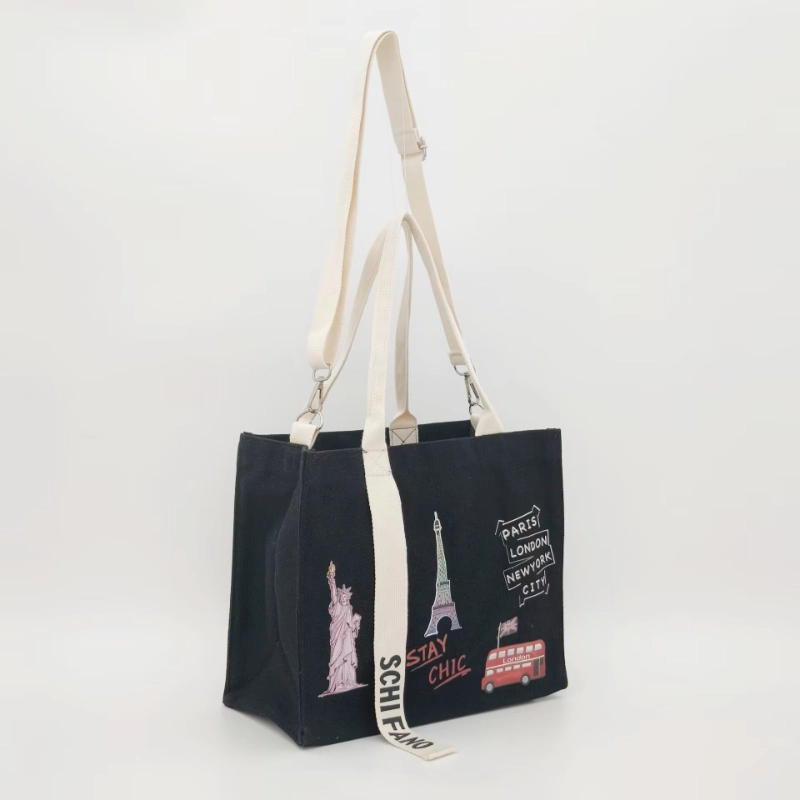
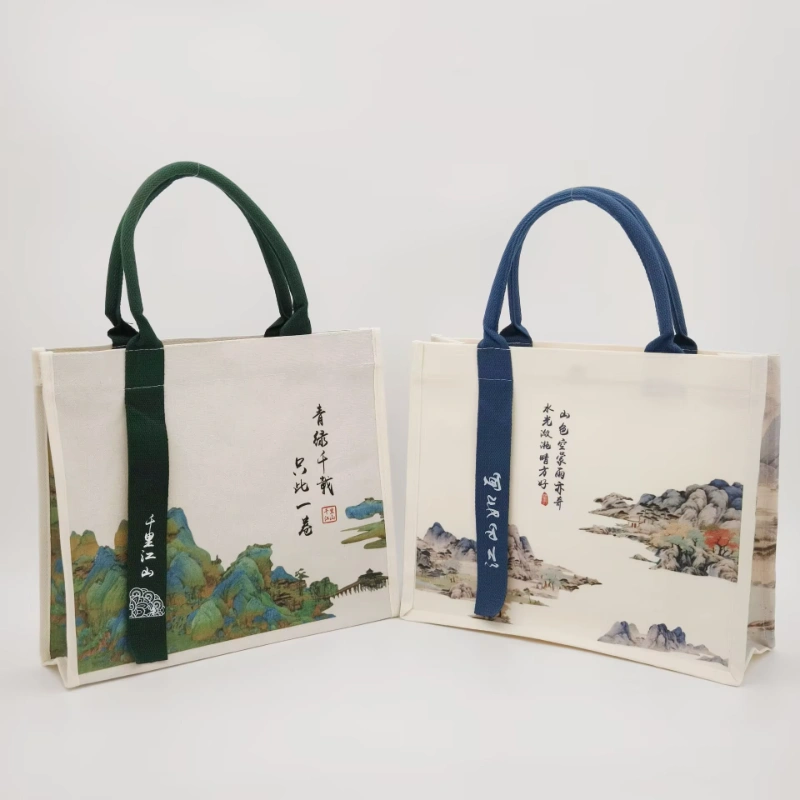
This type of canvas bag also features a bottom-and-side gusset structure, but differs significantly from standard versions in both craftsmanship and overall appearance. From material thickness to detailing and construction, everything is more refined, resulting in a look that is closer to a finished handbag rather than a simple packaging bag.
Compared to regular structured styles, these bags involve more complex construction and a higher level of finishing, giving them a more complete and premium feel. In terms of materials, some versions use coated canvas with an inner lamination, which helps the bag hold its shape better and improves durability in daily use.
They are often designed with features such as padded handles, snap closures, and shoulder straps, and may also include decorative elements like scarves for added style. Similar designs can be seen in some branded products, offering a more refined appearance that can even function as an everyday bag.
These canvas bags can usually be folded and zipped into a compact, standalone pouch, making them easy to carry or store inside another bag without taking up space. Compared to common non-woven, polyester, or nylon foldable bags, the canvas material is thicker, providing a better overall feel and higher quality impression.
In practice, these bags retain the portability advantages of foldable designs while avoiding the cheap feel often associated with thinner materials. When unfolded, they offer full usable space to meet daily carrying needs and are more likely to be reused over the long term.
For scenarios that require a balance between portability and quality, this style is a well-rounded choice.
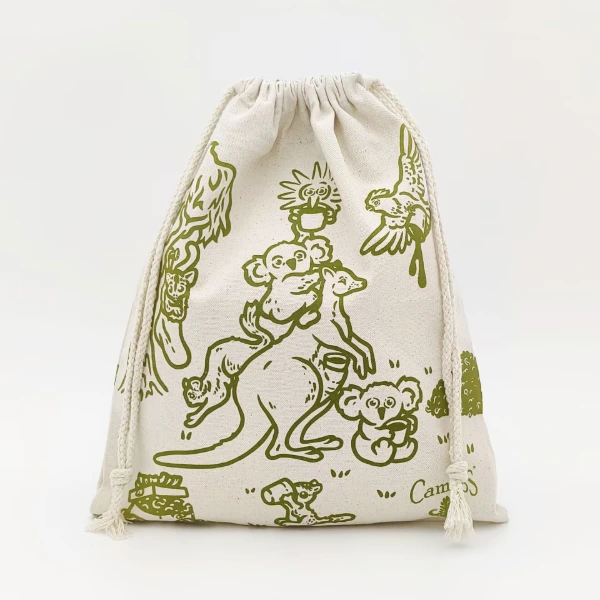
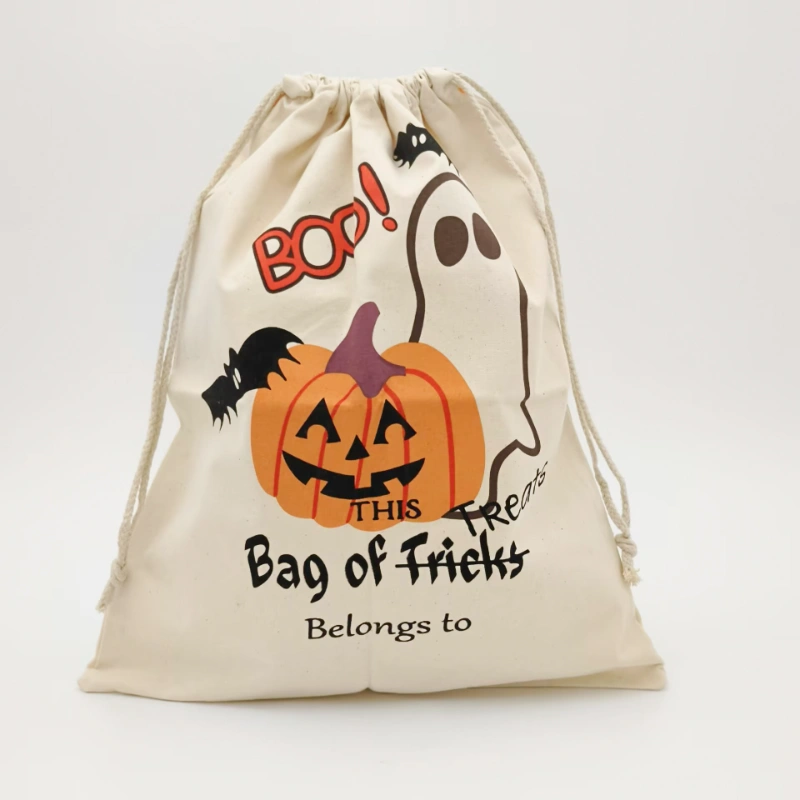
Canvas drawstring bags feature a simple structure with a cord closure that allows the opening to be tightened easily, providing convenience and a certain level of security for storage. Depending on the design, they can be made with or without handles to suit different usage preferences.
This style comes in various structures, including no-bottom, round-bottom, square-bottom, or with a bottom, each offering different capacities and ways to load items. Highly versatile, these bags are suitable for organizing daily essentials, lightweight products, or sets. They are also ideal for events, training centers, or for children, making them convenient for carrying small items across a wide range of scenarios.
This style is based on a standard drawstring bag, where the side drawstrings also function as shoulder straps, allowing it to be worn like a backpack. Tightening the strings closes the bag while securing it on the back, making it simple and easy to use.
Compared to regular drawstring bags, it maintains a lightweight design while adding a more convenient carrying method. It is suitable for carrying a small number of items, such as for casual outings, trips to the park, or weekends. It is also a practical option for children, and is commonly used by training centers or event organizers for distribution.
When choosing a canvas bag style, the key is not which one is more popular, but how your customer will use it and what type of project it is for. For example, in event distribution where budget control and large quantities are required, flat styles are often preferred; for product sets or gift bundles that need more space, bottom or fully structured bags are more suitable; for corporate gifts or brand presentation, more refined structured styles work better; while foldable or drawstring bags are ideal for lightweight use, portability, or as supplementary packaging.
Overall, different projects require different solutions. The key is to match the bag with how it will actually be used, while balancing cost, capacity, and usability.
In real projects, once the style is selected, small adjustments can significantly affect the final result. For example, in event distribution, fabric weight and cost are usually prioritized to suit large quantities; for corporate gifts, thicker materials and added features such as padded handles, closures, or inner pockets are often preferred to create a more complete feel; while in product packaging, the focus is more on matching the bag size with the product to ensure a proper fit.
A canvas bag is not just a packaging tool, but also a carrier that extends the connection between a brand and its customers. Choosing the right style not only affects immediate usability, but also determines whether the bag will be kept and reused over time.
In real projects—whether for events, corporate gifts, or product packaging—selecting the right style and refining the details ensures the bag serves its purpose effectively, while also creating longer-lasting brand exposure.
Get a free quote and expert consultation today. Let's bring your brand vision to life.
1 In industry standards, canvas functions as a durable textile material that supports load-bearing capacity and repeated use in packaging and bag production.
2 Wikipedia identifies zippers as fastening devices consisting of two flexible strips of fabric with interlocking metal or plastic teeth closed or opened by a slider.
Answer: The most common styles include flat canvas bags, gusseted bags, structured bags, foldable bags, and drawstring bags. Each style serves different purposes depending on capacity, budget, and usage scenario.
Answer: For corporate gifts, structured or premium canvas bags are usually preferred. They offer better presentation and are more likely to be reused, which helps extend brand exposure.
Answer: Flat canvas bags are cost-effective and easy to produce in large quantities. They are ideal for quick distribution at events where budget and volume are key factors.
Answer: A gusseted canvas bag provides extra space by adding a bottom or side panel. This makes it more suitable for carrying bulkier or structured items compared to flat bags.
Answer: Drawstring canvas bags are commonly used for lightweight items, event giveaways, or packaging sets. Their simple structure makes them easy to use and highly versatile.
Answer: Standard canvas bags are not fully waterproof, as cotton fibers can absorb moisture. However, coated canvas or laminated versions can offer better water resistance.
Answer: Coated canvas refers to canvas fabric with a laminated or coated layer inside. It helps the bag hold its shape better and improves durability and water resistance.
Answer: Materials like PVC, TPU, and vinyl are considered fully waterproof. They do not absorb water and are often used for outdoor or heavy-duty waterproof bags.

Order or no-order we are Always here to help you!
We will contact you within 1 working day, please pay attention to the email with the suffix “@yanxinbag.com”.
Order or no-order we are Always here to help you!
We will contact you within 1 working day, please pay attention to the email with the suffix “@yanxinbag.com”.