
Our Academy
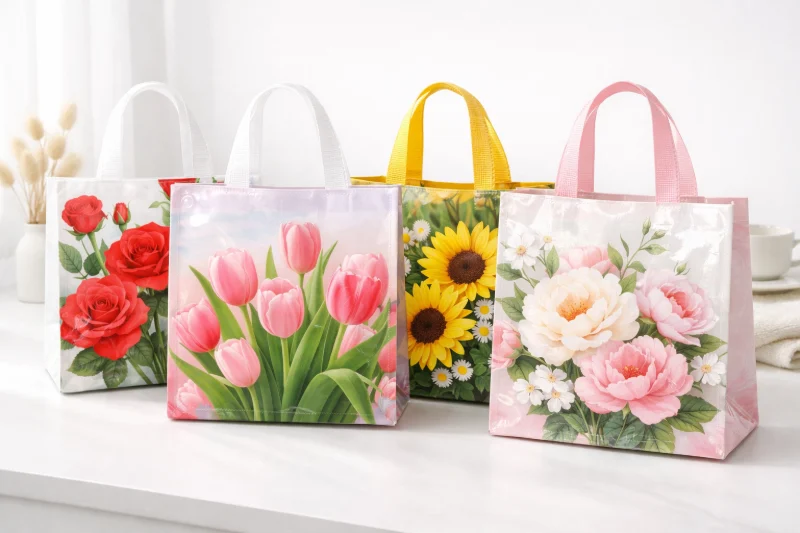
Laminated bags are very common in the retail and promotional sectors. Compared to ordinary reusable bags, they are more durable, have a smoother surface, and offer more vibrant printing results. Many brands prioritize laminated construction when producing large-area full-color designs.
A laminated bag is a reusable bag made by bonding a printed film layer onto the surface of a fabric base material. Common base materials include nonwoven polypropylene, woven polypropylene, and RPET, which are then laminated with an outer layer of OPP or BOPP film. This structure makes the surface of the bag smoother while enhancing moisture resistance and durability.
The graphics on laminated bags1 are not printed directly onto the fabric. Instead, they are first printed on a layer of plastic film. Because the film surface is smooth and non-absorbent, colors spread more evenly and fine details appear sharper. This is why laminated bags achieve more uniform color transitions and cleaner edges when used for large full-color designs or gradient artwork.
After printing, the film is bonded firmly to the base material through a heat lamination process. High temperature and pressure allow the two layers to adhere closely, forming a stable composite structure. This bonding method not only improves surface abrasion resistance but also enhances overall strength and moisture resistance.
Once lamination is complete, the entire roll of composite material is cut according to the required order dimensions. The cut panels then move to the sewing stage, where handles are produced and the bag structure is assembled. Depending on the bag style, the bottom, side gussets, and reinforcement are completed at this stage, resulting in a reusable bag with a smooth surface and stable structure.
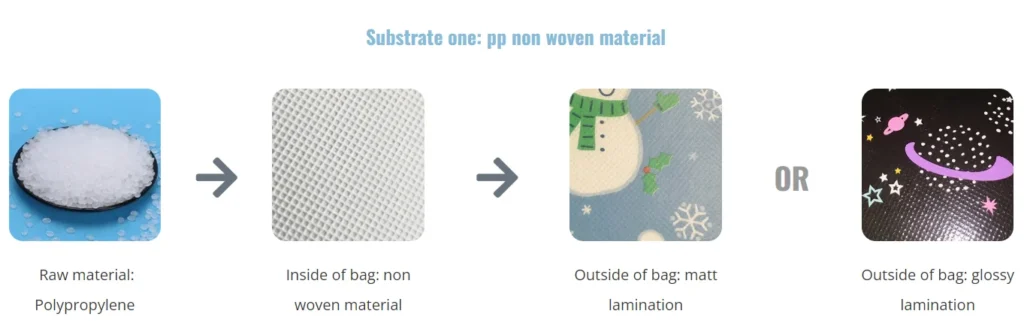
Laminated nonwoven bags use polypropylene nonwoven fabric as the base material. After lamination, the surface becomes smoother and printing results are more stable. At the same GSM, nonwoven fabric generally appears thicker and feels softer, so some brands prefer this more substantial touch. It is suitable for medium load requirements and is more easily accepted in projects that favor a thicker feel and a certain level of structure.
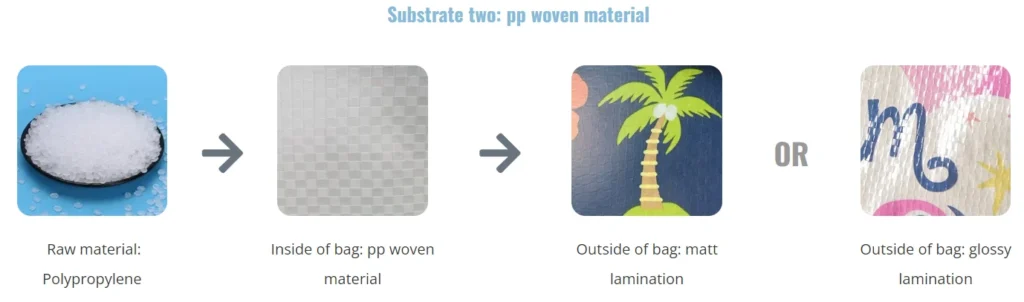
Laminated woven bags are based on a flat yarn woven structure, which provides high inherent strength. At the same GSM, woven material is typically thinner than nonwoven fabric, making it more advantageous for controlling volume and freight costs in large-scale shipping or export projects. After lamination, the surface becomes smoother while maintaining strength and improving print quality. For projects that emphasize durability or aim to save space during transportation, laminated woven construction is a more practical choice.
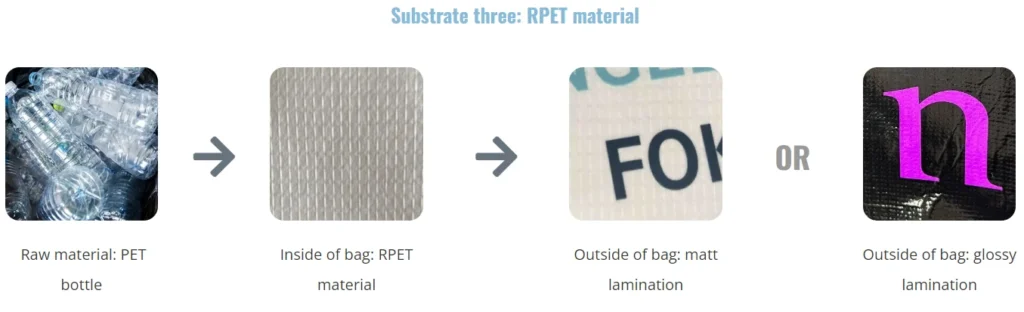
Laminated RPET uses recycled PET bottles2 that are processed into regenerated fibers as the base material, highlighting its environmental attributes. Its strength and durability are comparable to woven structures while meeting brands’ needs for sustainable material expression. The laminated layer ensures clear printing and moisture resistance, allowing a balance between environmental image and everyday performance. For brands that require environmental certification or wish to emphasize sustainability, this type of construction carries stronger expressive value.
The laminated structure bonds the base material and film together, making the overall construction more stable and less likely to tear or deform under weight or repeated folding. Compared to non-laminated nonwoven bags, the surface is more abrasion-resistant, and printed graphics are less likely to wear off over time. In applications that require long-term use or higher load capacity, this structure offers greater stability.
The outer film creates a relatively sealed surface that helps block moisture penetration during everyday use. Compared to standard non-laminated fabric bags, it is less likely to absorb water or become soft in humid conditions. This makes it more practical for supermarket shopping or daily food-related scenarios.
Graphics are printed on the film rather than directly on the fabric, resulting in more saturated colors and sharper details. Compared to direct screen printing on nonwoven material, large full-color designs appear more even. For projects that emphasize brand visual presentation, this printing method is more likely to maintain color consistency in mass production.
The film surface is relatively smooth and less likely to attract or absorb stains. In daily use, dust or light oil marks can usually be wiped off with a damp cloth. Compared to non-laminated fabric, it is easier to maintain a clean appearance.
After lamination, the material has better stiffness, allowing the bag to retain its shape more easily. Compared to softer non-laminated bags, the overall appearance is more structured and better suited for displaying brand graphics, giving the bag a more refined look.
Although some base materials can be made from recycled content, the laminated layer is typically a plastic film structure, so the overall product is not fully biodegradable. For projects that require purely natural or compostable materials, alternative options may need to be considered. This is more a matter of material characteristics than a question of performance.
The lamination process adds both material and production steps, so the overall cost is generally higher than that of non-laminated nonwoven bags. However, this added cost brings improved print quality and greater durability. Whether to choose lamination depends on how much importance the project places on visual presentation and service life.

Glossy lamination has a smooth surface with a noticeable reflective effect, making colors appear more vibrant and saturated. Graphics look clearer under light, with stronger contrast, making it suitable for large full-color designs or brands that emphasize visual impact. For projects that need to highlight logos or create high-visibility promotional materials, glossy lamination is often more eye-catching.
Matte lamination features a fine, frosted texture with lower reflectivity, resulting in a softer overall appearance. Colors appear more restrained, and tonal transitions remain more stable without glare from strong lighting. Many food packaging applications or brands positioned at a more premium level prefer matte finishes to achieve a more subtle and composed visual effect.
Laminated bags are commonly used in retail shopping environments as branded reusable shopping bags. The laminated structure improves abrasion resistance while allowing brand graphics to appear clear and complete, making them suitable for long-term use. Whether in shopping malls, brand stores, or supermarket promotions, laminated bags balance practicality with visual presentation.
At trade shows or promotional events, laminated bags are often used as literature bags or giveaway bags. Large full-color printing remains stable and can fully present a brand’s visual system. For occasions where brand exposure is important, this structure supports strong graphic presentation and repeated use.
Laminated bags are also common in supermarket shopping and daily life. The outer film helps reduce the impact of moisture, while the surface is easy to clean, making them suitable for carrying groceries or everyday items. In environments that require a certain level of moisture resistance, this structure offers practical benefits.
Laminated bags are frequently used for event gift bags or branded merchandise packaging. The bag maintains a structured shape and a neat overall appearance, enhancing the completeness of the packaging. For occasions that require structure and strong brand presentation, laminated construction helps maintain a consistent visual look.
If the design includes gradients, high-resolution images, or large background colors, laminated construction is generally more stable. Since the graphics are printed on film, the edges appear sharper and the color distribution more even. For brand projects that value visual completeness, this structure makes it easier to maintain design consistency in mass production.
In daily shopping or outdoor use, bags are likely to come into contact with humidity or light moisture. The laminated layer helps reduce the impact of moisture on the base material while protecting the surface graphics from damage. For scenarios that require a certain level of moisture resistance, laminated construction is more suitable.
If the project aims to encourage repeated consumer use, abrasion resistance becomes more important. The laminated structure enhances surface stability, making it less likely to fuzz or fade during repeated folding and use. For designs that emphasize service life, this structure offers a clear advantage.
Laminated bags have a smoother surface, allowing graphics to appear more complete and the overall visual effect more cohesive. For projects that emphasize brand recognition or aim to create a unified visual image in retail environments, this structure helps maintain consistency. In brand-driven promotional contexts, laminated bags provide stronger visual expression.
Get a free quote and expert consultation today. Let's bring your brand vision to life.
Answer: A laminated bag is a reusable bag made by bonding a printed plastic film, usually OPP or BOPP, to a fabric base such as nonwoven polypropylene, woven polypropylene, or RPET. This laminated structure improves durability, moisture resistance, and print quality compared to non-laminated reusable bags.
Answer: Laminated bags offer high durability, improved moisture resistance, clearer full-color printing, and easier cleaning. Compared to non-laminated bags, laminated reusable bags maintain their structure and brand graphics better during long-term use.
Answer: Laminated RPET bags are considered more eco-friendly because the base fabric is made from recycled PET bottles. Although the lamination film is not recycled, the overall product supports sustainable packaging initiatives.
Answer: Glossy lamination provides a shiny surface with stronger color contrast, making full-color printing more vibrant. Matte lamination offers a softer, frosted finish with reduced glare, often preferred for premium brands.
Answer: Properly manufactured laminated bags use heat bonding to create a permanent seal between the film and fabric. Under normal usage conditions, high-quality laminated bags do not easily peel or delaminate.
Answer: Yes, laminated grocery bags are popular because they are strong, reusable, and moisture-resistant. The laminated surface also makes them easier to clean after carrying food or household items.
Answer: Laminated bags are ideal for full-color custom printing because graphics are printed on the film layer before lamination. This allows gradient designs, detailed logos, and high-resolution brand artwork.
Answer: In most cases, laminated reusable bags are more durable than non-laminated nonwoven bags. The film layer adds abrasion resistance and helps maintain structural integrity during repeated use.
Answer: Businesses should choose laminated promotional bags when they need strong brand visibility, full-color printing, moisture resistance, and long-term reuse. Laminated bags are especially suitable for retail shopping bags, trade show giveaways, and branded packaging projects.

Order or no-order we are Always here to help you!
We will contact you within 1 working day, please pay attention to the email with the suffix “@yanxinbag.com”.
Order or no-order we are Always here to help you!
We will contact you within 1 working day, please pay attention to the email with the suffix “@yanxinbag.com”.