
Our Academy
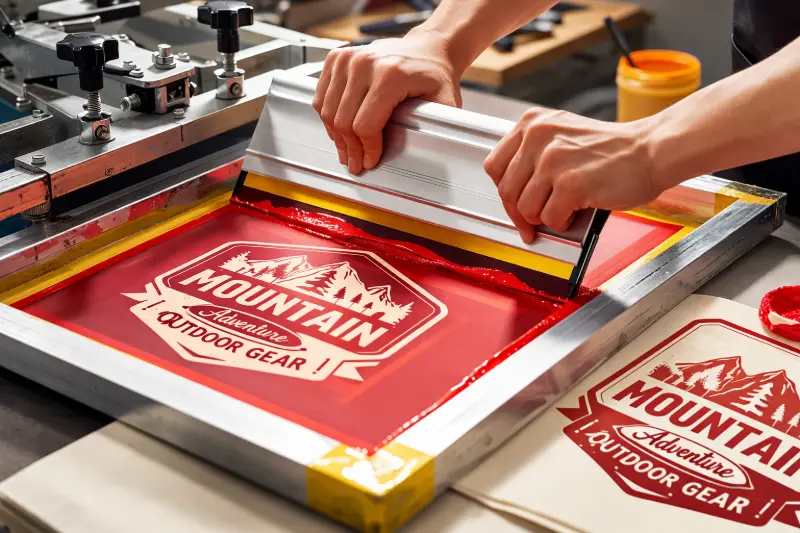
Tyvek itself is highly suitable for printing. Its surface is smooth and its structure is stable, allowing it to present clean and sharp graphic results. Made from high-density polyethylene fibers, it offers tear resistance and water resistance while also providing good support for ink adhesion. When used for custom Tyvek shopping bags, selecting the appropriate printing method helps ensure that the graphics remain stable even after repeated folding and daily use.
Tyvek is a high-whiteness material that provides a clean and bright base surface. This pure white background enhances ink contrast, making printed colors appear more saturated and vivid. Compared with canvas or fabrics that may have base color variations, UV printing on Tyvek usually delivers clearer and brighter visual results.
Tyvek has an even and smooth surface structure, which allows ink to adhere1 more uniformly. Whether using screen printing or UV digital printing, graphic edges can appear relatively sharp. For brand logos or large solid color blocks, the overall visual effect tends to look cleaner and more refined.
The fiber structure of Tyvek is stable and does not easily stretch or deform, which helps maintain accurate print positioning. In bulk production, graphic registration2 is easier to control, resulting in better overall consistency. For large-volume custom shopping bags, this stability helps reduce production risks.
Screen printing is more suitable for projects with simple designs and a limited number of colors, especially when the artwork is mainly single-color or two-color logos. When order quantities reach a certain scale, screen printing usually offers better unit cost control, particularly when the bag’s base color is white, where it tends to provide higher cost performance.
If a customer wants to print directly on existing dyed stock material and the design area is not large, screen printing is also a stable and controllable option. In bulk production, screen printing allows spot inks to be mixed according to specified Pantone color codes3, making it easier to match the customer’s brand standard colors.
Screen printing is a surface ink-layering process, meaning the printed graphic forms a certain thickness on the surface. Visually and tactically, it creates a more dimensional effect. For brands that emphasize texture, this effect often feels more prominent compared to UV printing.
If the base material already has a color, or if the printing area is relatively large, even for a single-color design, the cost advantage of screen printing may decrease. In such cases, the final decision should be recalculated based on the specific print area and order quantity.
In Tyvek shopping bag projects, UV printing is the most commonly used option. Whether it involves multi-color designs, gradient effects, or large-area graphic coverage, UV can complete the printing in one process, offering high efficiency and stable visual results.
Even for single-color designs, when the printed area is relatively large, UV often makes more sense in terms of overall production efficiency. Especially for small to medium batch orders, UV does not require plate making, resulting in lower setup costs. In actual projects, when the design approaches full-surface coverage, UV is usually the more efficient solution.
Tyvek itself has a smooth surface, and after UV ink is cured, the color saturation is high and the graphic contrast is clear. The overall visual effect appears clean and modern, making it particularly suitable for retail, exhibitions, or branded event bags.
UV printing is a flat curing process, with a smooth surface feel and no obvious ink thickness buildup. Visually it looks sharper and more refined, though it does not have the slight dimensional effect that screen printing provides.
In actual production, if the order quantity is not large or the graphic structure is relatively complex, UV printing is generally more flexible. Only when the logo size is small, the design is single-color, and the order quantity is relatively large does screen printing usually offer a better unit price advantage.
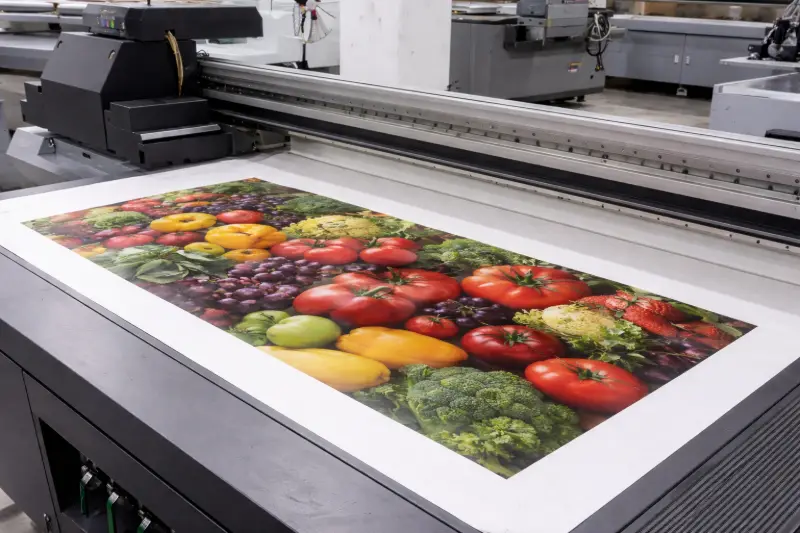
Heat transfer is more suitable for projects with complex graphics, multiple colors, or designs that require fine detail presentation. Especially in small to medium batch orders, when customers want gradient effects or detail-rich artwork, heat transfer can reproduce the original design more accurately. When the printed area is not large but the detail requirement is high, heat transfer is often a more flexible choice.
When applied to Tyvek, heat transfer can achieve photo-level image presentation, with natural color transitions and clear detail reproduction. For brand projects that emphasize visual completeness and image precision, heat transfer is a more expressive option.
If the print area is small and the design requires high detail accuracy, heat transfer can be prioritized. If the graphic coverage is large, UV printing is usually more appropriate. As the printed area increases, the cost advantage of heat transfer gradually decreases.
In actual project evaluation, we do not simply focus on whether the visual effect looks good, but instead consider the graphic structure, print area, and order quantity together. Below is a brief comparison of the three main printing methods based on key decision variables.
| Printing Method | More Suitable For | Not Recommended For |
|---|---|---|
| Silk Screen Printing | Single- or two-color logos, small to medium print areas, projects with strict logo color requirements | Gradient or photo-style graphics, full-surface large coverage designs |
| UV Digital Printing | Multi-color designs, gradient effects, large or full-coverage graphics | Designs that emphasize obvious raised ink texture |
| Heat Transfer | Small-area complex graphics, photo-level detail reproduction | Large full-surface coverage designs |
From practical production experience, the choice of printing method is more about structural compatibility. Print area, color complexity, and order quantity are the primary variables we consider during evaluation.
Tyvek itself provides a strong foundation for printing, but different printing methods are suited to different graphic structures and order volumes. Projects with single-color logos and larger quantities are generally better suited for screen printing; large-area coverage or multi-color gradient designs are more appropriate for UV digital printing; when the print area is not large but requires high detail accuracy, heat transfer becomes a more flexible option.
The most suitable process is not a fixed answer, but a decision made by evaluating print area, color complexity, and order quantity together. Confirming design details in advance and matching the correct printing method can help control costs while ensuring consistent finished results.
If you are planning to customize Tyvek shopping bags, it is advisable to evaluate the printing solution after finalizing your artwork. Choosing the appropriate process is often more important than simply comparing prices.
If you need further evaluation of printing methods, you can send us your design file along with the estimated quantity, and we will provide recommendations based on your specific project.
Get a free quote and expert consultation today. Let's bring your brand vision to life.
1 DuPont identifies ink adhesion as the ability of printing inks, coatings, and adhesives to bond effectively to corona-treated Tyvek® surfaces with elevated surface energy levels.
2 Wikipedia identifies graphic registration as the precise alignment of multiple printed color layers to form a coherent multicolor image without positional misalignment.
3 Wikipedia describes how Pantone color codes enable designers and manufacturers in different locations to reproduce the same color without direct physical comparison.
Note: Tyvek® and DuPont™ are trademarks or registered trademarks of Dupont or affiliated companies of DuPont.
Answer: The best printing method for Tyvek bags depends on the design structure and order quantity. Screen printing is ideal for single-color logos and bulk orders, UV digital printing works well for large-area and multi-color designs, and heat transfer printing is suitable for small, detailed graphics.
Answer: Yes, Tyvek bags can be screen printed. Screen printing works especially well for simple logos, and spot colors, particularly when accurate Pantone color matching is required.
Answer: Yes, UV digital printing performs very well on custom Tyvek shopping bags. It delivers high color saturation, sharp contrast, and efficient production for gradient designs and full-coverage artwork.
Answer: DuPont Tyvek bags are made from high-density polyethylene (HDPE) fibers formed into a nonwoven material. Tyvek is lightweight, tear-resistant, water-resistant, and highly suitable for custom printing applications.
Answer: High-quality UV printing and properly cured screen printing on Tyvek are durable and resistant to fading. For outdoor or long-term use, UV-cured inks offer better color stability.
Answer: Heat transfer printing is suitable for Tyvek bags when the design requires photo-level detail, gradient effects, or complex artwork.
Answer: Yes, Tyvek bags can be printed with full-color designs using UV digital printing or heat transfer printing, both of which support multi-color and gradient artwork.
Answer: Tyvek often provides brighter and sharper print results than canvas because of its pure white base and smooth surface, which enhance ink contrast and color vibrancy.
Answer: Yes, Tyvek material remains water-resistant after printing. Properly cured UV or screen printing does not compromise the material’s waterproof properties.
Answer: The main cost factors include print area size, color complexity, printing method (screen printing, UV digital printing, or heat transfer), and total order quantity.

Order or no-order we are Always here to help you!
We will contact you within 1 working day, please pay attention to the email with the suffix “@yanxinbag.com”.
Order or no-order we are Always here to help you!
We will contact you within 1 working day, please pay attention to the email with the suffix “@yanxinbag.com”.