
Our Academy
Custom bags are not only packaging tools in commercial settings, but also part of a brand’s image1. Whether for trade show events, retail stores, corporate gifts, or e-commerce shipments, a well-designed bag will influence a customer’s first impression of the brand.
However, many companies tend to focus only on style and color when purchasing, while overlooking key details such as whether the size is appropriate and whether the finished product may differ from the design draft. By the time issues are discovered after bulk production, it is often too late to make adjustments.
Understanding the common questions about custom bags is not about learning complicated technical knowledge, but about avoiding common pitfalls in advance. In the following sections, we will go through the most frequently overlooked aspects in real procurement scenarios, helping you clarify the key points before confirming your order so that the final product aligns more closely with your expectations.
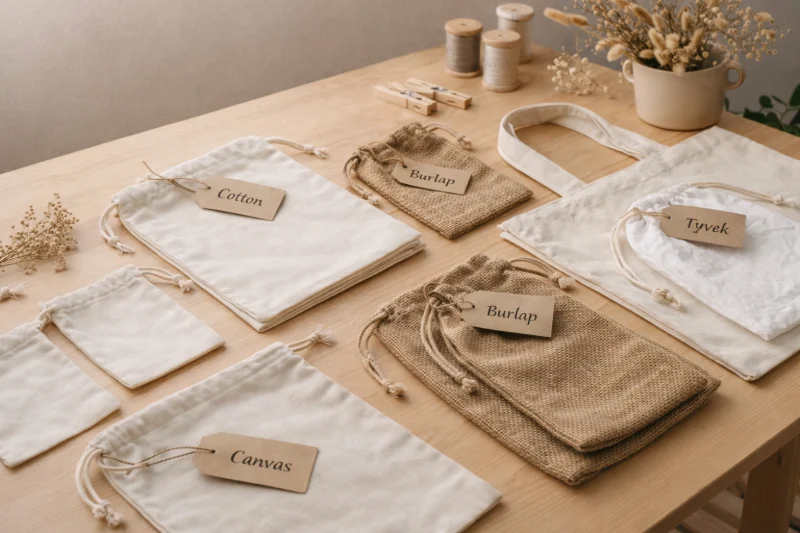
When selecting materials for custom bags, the key is not to compare material names, but to first clarify the actual load the bag needs to carry and how frequently it will be used. In real factory operations, we often see clients overlook this point, focusing only on appearance while neglecting practical use. Different projects have different requirements for load-bearing capacity, repeated usage, and structural stability, so material selection must be evaluated based on these conditions.
If the bag only needs to carry lightweight items and will be used for a limited number of times, cost-controlled fabrics can be considered; if it needs to carry heavier items or be reused over a long period, materials with more stable weaving and higher strength should be prioritized.
Non-woven is suitable for projects with lower load requirements and limited budgets; Cotton has a natural touch, but its long-term load-bearing capacity is limited; Canvas uses thicker yarns and denser weaving, offering greater structural stability and making it more suitable for heavier loads or long-term use; Polyester is a woven fabric with stable yarn density and good abrasion resistance; Nylon provides higher strength and stronger tear resistance; PP Woven adopts a woven structure with high tensile strength, and its surface is usually laminated for water resistance; RPET offers structural stability while also carrying environmental attributes; Mesh provides breathability; transparent materials such as PVC, TPU, and EVA offer waterproof properties; soft Tyvek is more flexible, with a texture closer to fabric; hard Tyvek has an appearance and feel closer to paper. When laminated with non-woven fabric, it becomes thicker overall, and the surface texture is closer to a leather-like effect; Washable Kraft Paper is a paper-based material that naturally develops visible creases and texture variations during use, presenting a vintage, worn-in character.
Finally, transportation and overall project efficiency must also be considered. Different fabric thicknesses and weights affect the weight of each bag and the number of units packed per carton, which in turn influences logistics costs. For export projects, selecting a reasonable fabric weight is more important than simply pursuing heavier materials. The truly suitable material is one that balances usage requirements, visual effect, and transportation efficiency.
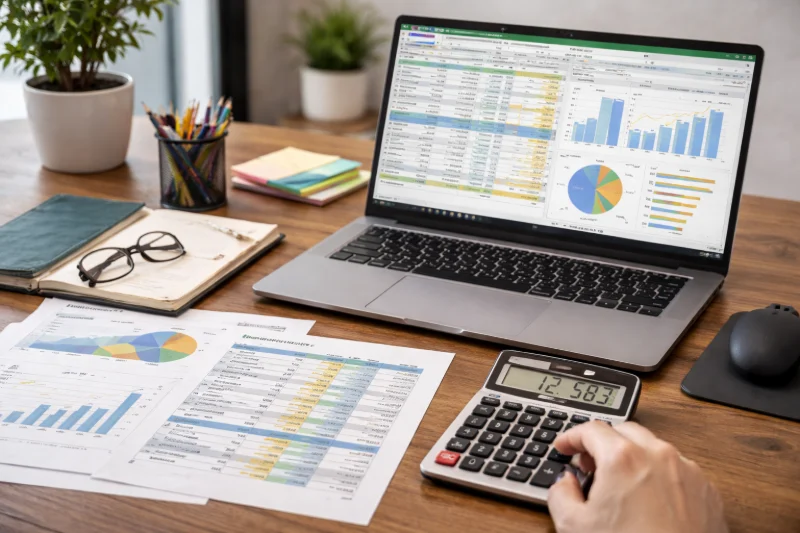
When requesting a quote for custom bags, a common situation is that clients only send a logo file or a reference image and then ask for a price. Since the cost of custom bags depends on factors such as size, material, printing method, and structural details, suppliers find it difficult to provide a stable quote based solely on the design or appearance reference.
When dimensions, fabric thickness, or printing methods are unclear, different suppliers may estimate the cost based on their own understanding. In our experience, we often encounter clients who only provide a logo file and ask for a quote, but the production team cannot determine the full cost structure based solely on the design. Some suppliers may calculate based on thinner specifications, while others may estimate higher specifications; some may default to simpler processes, while others consider more complex approaches. When the initial conditions are unclear, any subsequent adjustments to details will naturally change the price. This is one of the main reasons why many projects require multiple rounds of confirmation.
Before requesting a quote, it’s helpful to clarify the bag’s size range, what it will carry, how much weight each bag needs to support, and the order quantity. Providing these details will result in a quote that is much closer to the actual cost. If the bags have zippers, inner pockets, lamination, or special structures, these should also be mentioned upfront. The clearer the intended use, the more stable the quote and design will be.
Custom bags themselves are not complex, but they rely on clear usage conditions. Clearly outlining your core requirements usually helps reduce the back-and-forth during the confirmation process.
In custom bag production, orders below 500 units typically fall into a higher price range. In our years of quoting experience, we’ve found that orders of around 100 units are often more difficult to process, as the final quote tends to differ significantly from what customers expect. Many projects only see more reasonable pricing as the order quantity increases.
The reason for this is that some key costs cannot be effectively spread over small quantities. For example, small-batch fabric purchases come at a higher unit cost, and there are fixed setup fees2 for printing and cutting, which don’t change whether you’re making 100 or 500 bags. Additionally, labor costs are harder to calculate on a per-piece basis for smaller orders, and material waste during the printing process increases the unit cost for small orders.
Shipping methods also amplify this cost disparity. Smaller orders typically need to be shipped via express courier, which is more expensive than using sea freight. The per-unit shipping cost can be several times higher. As the order quantity increases, these shipping costs can be spread out more evenly.
The choice of printing method is usually influenced by three factors: material structure, artwork format, and order quantity. Under different combinations of these conditions, the cost structure can vary significantly, so these factors need to be considered together when making a decision.
For non-woven materials, screen printing is generally a more economical option. For fabric bags, screen printing is usually done using a platen method, which involves certain setup and adjustment costs at the beginning. Once the order quantity reaches a certain scale, this method becomes more cost-effective.
If the artwork contains multiple colors or requires richer color presentation, heat transfer or digital heat transfer can be considered for smaller quantities. These methods are more suitable for complex designs, but the unit printing cost is relatively higher.
For polyester fabrics, sublimation is a common choice, especially for high-coverage or full-surface designs. The artwork bonds with the fabric, resulting in a more natural overall appearance. When the material itself is not suitable for sublimation, UV printing can be considered. UV printing is compatible with a wider range of materials and can be easier to apply on certain fabrics or special surfaces, although its visual effect differs from sublimation.
For laminated materials such as PP Woven, PP Non-Woven, or laminated RPET, gravure printing is typically used when the quantity is large, making it suitable for full-surface artwork production. When the quantity is smaller, digital laminated printing that does not require separate plate making can also be chosen. This method delivers more vibrant colors, but the unit printing cost is relatively higher.
Embroidery is suitable for text or logo-based graphics on fabric bags, emphasizing a three-dimensional texture, and is not ideal for large, complex artwork.
In actual projects, it is not necessary to determine the specific printing method in advance. As long as the artwork effect, printing area, material type, and order quantity are clearly defined, suppliers will usually recommend a more suitable solution based on these conditions.
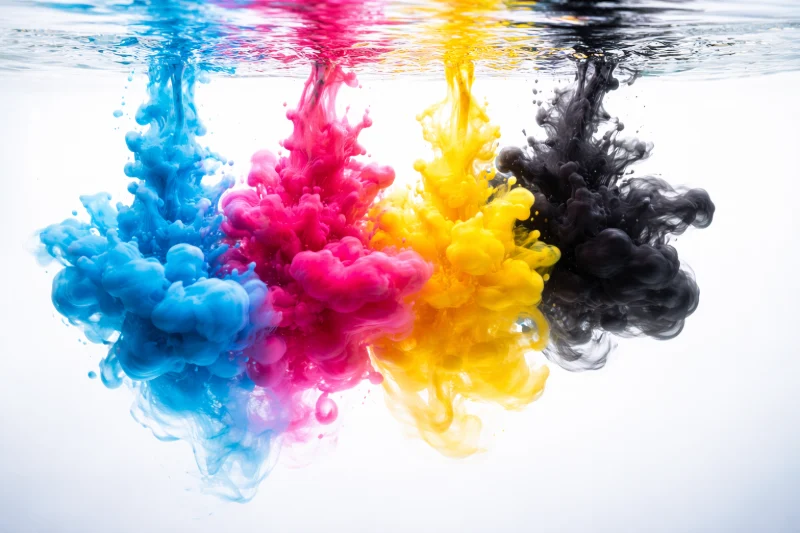
In custom bag production, it is common for there to be slight differences between the finished product and the design file. Design files are typically based on screen display, while actual production involves printing processes, and the color systems used in each are not the same.
Design files are usually displayed on screens in RGB mode, whereas printing uses the CMYK color system. These two modes have different color gamuts, which means some colors that appear bright or highly saturated on screen may not be fully reproduced in print. Even when the same color values are used, the final result can still look different.
The fabric itself also affects how colors appear. Different materials absorb ink differently, and factors such as base color, weaving density, and surface texture can all influence the final visual effect. The same color printed on white canvas and beige cotton will not look exactly the same.
Even when Pantone color codes are used as a reference, slight variations may still occur between different batches of ink and fabric. In bulk production, these differences are usually kept within a reasonable range, but it is difficult to achieve absolute consistency.
To reduce expectation gaps, it is recommended to confirm a physical sample before mass production. Checking colors and details through an actual sample is more reliable than relying solely on a screen design. The goal of custom production is to get as close as possible to the design effect, rather than to replicate the screen display exactly.
The delivery time for custom bags is influenced by multiple factors, including production cycles, sample approval, logistics, and holidays. To ensure timely delivery, each stage of the process must be carefully scheduled.
Firstly, once the production date is confirmed, sample production typically takes 3 to 6 days. If gravure printing is involved, the sample time will extend to 8 to 12 days. After sample approval, shipping time must also be considered. International shipping usually takes 3 to 10 days, depending on the destination and customs clearance efficiency. The cycle from sample approval to final production typically takes 1 to 3 weeks.
Mass production usually takes 15 to 25 days, depending on order quantity and production processes. For larger orders or complex designs, production time may need to be extended. Shipping method also impacts delivery time. Sea freight typically takes 1 to 2 months, while air freight, though faster, is more expensive. Therefore, the appropriate shipping method should be chosen based on the specific situation, and enough time should be reserved for logistics and customs clearance.
The key to ensuring delivery time is to plan each stage in advance and avoid overly optimistic time estimates. Confirming production and shipping times with the supplier ahead of time and allowing for buffer periods for unforeseen factors can effectively reduce the risk of delays.
In the custom bag procurement process, understanding common issues in advance and avoiding common procurement pitfalls is crucial. From clarifying usage requirements and maintaining clear communication with suppliers, to properly scheduling production and delivery, every detail impacts the final result. Through the answers provided in this article, we hope to help you better understand key factors such as material selection, production processes, and printing methods before making your purchase, reducing the occurrence of issues later on.
Always remember, custom bags are not just packaging tools; they are also part of your brand image. A well-designed and thoughtfully procured custom bag not only enhances your brand’s visibility but also elevates its value and influence.
Good communication with your supplier and proactive planning for key details will help ensure your project runs smoothly and is delivered on time.
Get a free quote and expert consultation today. Let's bring your brand vision to life.
1 Wikipedia describes how brand equity enables firms to generate price premiums and competitive advantage through recognition and trust effects.
2 AccountingTools identifies setup cost as the expense incurred to configure equipment and prepare resources for a production run, classified as a fixed cost of the associated batch.
Answer: Before requesting a quote for custom bags, it’s important to confirm the bag’s size range, what the bag will carry, the approximate weight it needs to support, order quantity, and any special features like zippers, inner pockets, or lamination. This helps suppliers provide a much more accurate and stable price.
Answer: In custom bag production, smaller orders like around 100 pieces usually result in higher unit prices because some costs — such as material procurement and setup fees — cannot be spread over few pieces. As order quantity increases, these costs can be better distributed, often leading to more reasonable unit pricing.
Answer: Custom reusable bags are often made from materials like non-woven polypropylene, cotton canvas, jute, polyester, recycled PET (rPET), and other fabrics chosen for durability, sustainability, and branding effectiveness.
Answer: The minimum order quantity for custom bags varies by manufacturer and complexity, but standard MOQs range from around 100 to 1,000 pieces depending on setup costs, materials, printing, and design features.
Answer: Yes. Most custom bag manufacturers offer full customization options, including bag dimensions, shape, gusset style, handle length, and color to meet branding or packaging needs.
Answer: Materials differ in ink absorption, texture, and weave, which can change how colors look after printing. For example, printing on canvas may differ from printing on smooth polyester or laminated surfaces.
Answer: Yes, many suppliers offer custom samples based on your artwork and specifications before bulk production, often with a sample fee and shipping cost.
Answer: Common techniques include screen printing, heat transfer, digital printing, embroidery, sublimation, and UV printing, each suited to different materials, artwork complexity, and order quantities.
Answer: Custom bag projects include stages like inquiry, sample approval, bulk production, and international shipping; overall timelines can range from several weeks to a few months depending on the order and shipment method.
Answer: Yes, custom bags can be made from sustainable materials such as rPET, organic cotton, jute, and recyclable polypropylene, offering eco-friendly alternatives to single-use plastic bags.

Order or no-order we are Always here to help you!
We will contact you within 1 working day, please pay attention to the email with the suffix “@yanxinbag.com”.
Order or no-order we are Always here to help you!
We will contact you within 1 working day, please pay attention to the email with the suffix “@yanxinbag.com”.