
Our Academy

When customers ask about polyester bags, one of the most frequent questions we hear is: “What Denier fabric is suitable for this bag?”
There’s no quick answer to that. The choice of thickness (Denier)1 affects cost, shipping weight, hand feel, and the product’s lifespan. If the fabric is too thin, the bag feels soft and collapses easily, making it look cheap. If it’s too thick, the cost rises sharply, and the bag becomes heavy and less practical.
The goal of this article is not to list specifications, but to share insights drawn from over a decade of production experience and thousands of actual orders. We’ll explain what those numbers really mean under different needs, and how we usually guide our clients to make the right decision.
Let’s correct a common misunderstanding first: the Denier number refers to the thickness of the yarn. It measures how many grams a 9,000-meter-long fiber weighs. Therefore, 600D doesn’t mean “twice as thick as 300D” — it means the yarns are coarser, resulting in fabric that is more durable and structured.
Common thickness levels and how they actually feel in the factory:
190T/210D: Lightweight category. The fabric surface is soft and easy to fold, offering a cost advantage.
Suitable for event bags or short-term promotional totes where portability and low cost matter more than load-bearing capacity. Note: 190T is softer and thinner, while 210D is slightly stiffer — they are the most common choices for lightweight bags in today’s market.
300D/420D: Balanced category. The fabric feels noticeably firmer, with an initial sense of structure. This is our most frequent recommendation for branded gift bags, medium-size shopping totes, and conference bags.

Key advice: Always match fabric thickness with the bag type. The same 300D fabric can feel very structured in a small drawstring pouch but may seem softer in a large tote. Structural support should be considered early in the design stage.
To help you visualize the differences in texture and cost between each level, we’ve prepared a quick reference chart based on common factory standards.
Table 1: Polyester Fabric Thickness and Common Applications (190T – 600D)
| Thickness Level | Texture & Stiffness | Suggested Load Range | Typical Applications | Relative Cost Index (210D = 1.0) |
|---|---|---|---|---|
| 190T | Very soft, thin, without structure | < 3kg | Promotional bags | 0.8 – 0.9 |
| 210D | Soft, slightly structured, easily foldable | 2 – 5kg | Promotional bags, shopping bags, drawstring pouches, trade show totes | 1.0 |
| 300D | Noticeably firmer with an initial “framework feel” | 5 – 8kg | Branded gift bags, business conference bags | 1.3 – 1.6 |
| 420D | Durable and flexible, moderately stiff, structured but not bulky | 8 – 10kg | Entry-level load-bearing fabric for backpacks and tool bags | 1.8 – 2.2 |
| 600D | Thick, abrasion-resistant, highly durable | 10kg+ | Professional backpacks, heavy-duty tool bags | 2.5 – 3.5 |
Note: The above “relative cost index” refers to approximate material cost ratios under the same manufacturing process.
When customers consult with us, we usually narrow down the direction through the following questions:
“What’s the maximum weight and the typical contents to be carried?”
Under 5 kg, light items: 210D is usually sufficient, while 300D provides a more premium feel.
5–10 kg, regular weight: 300D is the starting point. For better shape retention or frequent use, we recommend 420D.
Above 10 kg or for tools and equipment: Consider 600D or thicker fabrics, with structural reinforcement at critical points such as handles and the bag bottom.
“What’s the expected usage scenario and lifespan?”
Short-term promotion: 210D is the economical choice. There’s no need to pay for performance that won’t be used.
Daily reusable application: 300D is the sweet spot for cost-performance. It handles wear well and maintains brand appearance.
Long-term, high-frequency use (such as employee bags or tool bags): Invest in 600D or higher. The higher unit cost is offset by a longer service life, making it more economical overall.
“How important is structural stiffness?”
If you want the bag to stand upright even when empty and maintain its visual form, 420D is the minimum starting point. Bags made with 210D tend to collapse when empty.
If you want a stronger, sturdier hand feel, or if the bag design includes multiple compartments and accessories, we recommend starting from 600D.
The thickness of the fabric directly determines the bag’s durability and appearance. Thicker fabrics offer stronger load-bearing capacity, better structure, and higher resistance to deformation. Thinner fabrics, on the other hand, are lighter and easier to fold, making them ideal for daily use or as a secondary, portable option. Thick materials are more reliable for frequent use or heavy loads2, thanks to their higher abrasion and tear resistance.
In terms of touch and feel, thinner bags are soft and smooth but may wrinkle or stretch when carrying heavy items. Thicker bags feel firm and solid — even when fully loaded, they retain their shape and resist sagging. Greater thickness also means better tear resistance and abrasion durability, making it suitable for products that need to last or bear substantial weight.
In summary, choosing the right thickness is about finding balance between weight and strength. For brand clients, this choice affects not only the bag’s user experience but also the overall sense of quality and the product’s lifespan.
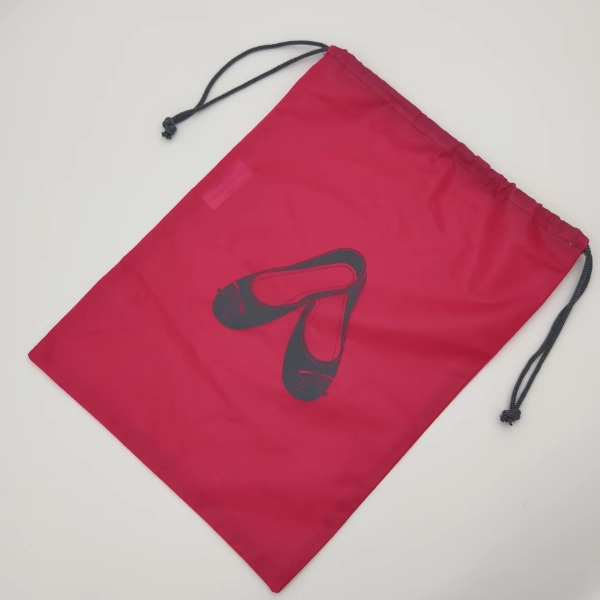

Different thickness levels of polyester fabric can cause slight variations during printing, but overall, all are well-suited for sublimation, screen printing, or heat transfer processes. Common fabrics such as 190T, 210D, 300D, and 600D can all produce clear and vivid printed results. The main differences lie in the surface texture of the fabric and the fineness of the printed image.
Fabrics like 190T and 210D have smoother surfaces, allowing printed patterns to show finer details. Thicker fabrics, such as 300D or 600D, have more noticeable weave textures, giving the print a slightly more textured look. Fabrics with PU or PVC coatings are generally better matched with screen printing or heat transfer methods.
In summary, polyester fabrics of all thickness levels can meet printing requirements; the difference mainly lies in the visual texture after printing. Customers can decide on the printing method based on the bag’s intended use, design style, and budget, ensuring that the overall presentation looks coordinated and natural.
As fabric thickness increases, so do material costs and shipping weight. However, cost-effectiveness always depends on usage. Thinner fabrics are cheaper but have limited load capacity, while thicker fabrics are more durable yet come with higher unit prices and transportation costs.
210D is currently the most common and versatile choice, offering a balance between lightness and basic durability. It’s a stable, cost-effective option for most shopping bags and branded promotional totes.
420D and 600D have thicker, more abrasion-resistant surfaces, making them ideal for travel bags, laptop sleeves, or tool carriers that require strong support and long-term use. Although more expensive than 210D, the investment pays off for projects that prioritize quality and longevity.
In the sustainability field, RPET polyester fabric3 is becoming increasingly popular. Made from recycled plastic bottles, common specifications such as 300D or 600D offer similar strength and hand feel to conventional polyester, while aligning with the growing demand for sustainable sourcing. For brands, this material not only meets functional needs but also communicates a clear environmental message.
Overall, fabric thickness should be chosen with cost, purpose, and brand positioning in mind. 210D remains the most versatile and cost-efficient option, while 420D and 600D are preferred when you need a bag with more structure, durability, and a higher-quality finish.
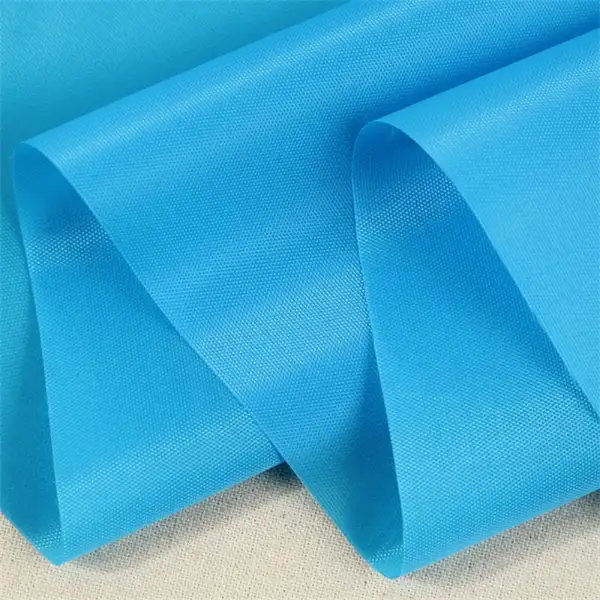
When choosing the thickness of a bag, photos or videos can only provide a rough impression. They cannot truly convey the actual feel, flexibility, or firmness of the fabric. Many customers only realize the difference between 190T and 300D after seeing physical samples — the contrast is often much greater than expected. Thickness is something that must be experienced by touch; only when you hold the fabric in your hand can you accurately judge it.
Therefore, before finalizing your custom bag, it is highly recommended to make samples and compare them directly. Evaluate differences in hand feel, weight, load capacity, foldability, and printing performance. This hands-on comparison allows you to clearly confirm which fabric best matches your expectations and helps prevent costly adjustments later due to misjudgment from digital impressions.
Based on years of collaboration with clients across different industries, we’ve identified some common preferences for bag thickness. However, these are not fixed rules:
Event bags or drawstring pouches: Usually made with 210D, which balances lightness and cost.
Branded shopping bags or gift bags: Commonly use 300D or 420D, providing a balance between texture and durability.
Backpacks, travel bags, or tool carriers: Often made with 600D to ensure structure and strength.
These recommendations are flexible and adjusted according to each project’s actual needs. Some clients prioritize lightweight designs, while others prefer a firmer, more premium feel. We typically confirm the ideal thickness through sample testing and customer feedback to achieve the best outcome.
Choosing the right thickness means choosing the right quality. There’s no single standard for fabric thickness — what matters is whether it fits the bag’s intended function and brand positioning. Lightweight bags focus on portability and cost efficiency; medium-weight bags emphasize durability and texture; thicker bags highlight structure and long-term use. Each thickness has its value, and when matched with the right purpose, it performs at its best.
For brand owners and buyers, thickness is not just a number — it directly shapes the product experience and the impression your brand leaves. Working with a manufacturer who understands materials and production techniques allows you to discuss, sample, and adjust together, achieving results far better than relying on a price sheet alone.
A well-chosen thickness makes a bag look professional, feel comfortable, and last longer — ultimately strengthening the brand’s image. That’s what we care about most when working with our clients: making sure every bag we produce has “just the right thickness.”
Get a free quote and expert consultation today. Let's bring your brand vision to life.
1 The Wikipedia entry on textile measurement identifies Denier as the standardized linear mass density unit expressing fiber thickness in grams per 9,000 meters.
2 Within textile engineering, Industrial Physics outlines that the level of “loads” directly determines a material’s tensile endurance and structural reliability.
3 According to sustainability insights summarized by Textile Exchange, RPET polyester bridges environmental responsibility and performance consistency in modern fabric manufacturing.
Answer: Denier is a unit that measures the thickness of the individual yarns used in polyester fabric, defined as the weight in grams of 9,000 meters of fiber; a higher Denier means thicker yarn and usually stronger, more durable fabric.
Answer: Photos or videos can’t fully convey fabric feel, flexibility, or firmness, so sampling lets you compare hand feel, weight, load capacity, foldability, and printing effects to ensure the thickness matches your needs.
Answer: Denier measures the thickness of the individual yarn in polyester fabric, while GSM (grams per square meter) measures the overall fabric weight; both help assess strength and feel, but Denier reflects fiber thickness and GSM reflects fabric density.
Answer: Smooth, lower-Denier polyester usually results in finer print detail, while thicker weave textures may show slight surface texture in prints; all common thicknesses like 190T, 210D, 300D, or 600D can be printed well with appropriate methods.
Answer: Polyester is a synthetic fiber known for strength, abrasion resistance, and moisture stability, making it ideal for bags that need durability, repeat use, and good printing performance.
Answer: Consider the intended use, expected load, desired look and feel, printing method (sublimation, screen print, etc.), cost, and brand positioning to balance durability and aesthetics.
Answer: Sublimation, screen printing, and heat transfer are commonly used for polyester bags, with method choice depending on design detail, color richness, and fabric surface.
Answer: A higher Denier number generally means thicker fibers and a denser fabric, which can feel firmer and more rugged but also slightly heavier.
Answer: Reusable polyester bags reduce single-use plastic waste and can be made from recycled materials, offering a more sustainable option when used many times.
Answer: Thicker and higher Denier fabrics typically cost more and weigh more to ship, so balancing thickness with actual use requirements helps optimize cost-effectiveness.

Order or no-order we are Always here to help you!
We will contact you within 1 working day, please pay attention to the email with the suffix “@yanxinbag.com”.
Order or no-order we are Always here to help you!
We will contact you within 1 working day, please pay attention to the email with the suffix “@yanxinbag.com”.