
Our Academy

Many buyers encounter the same problem when budgeting for custom bags: what seems like a simple product often ends up costing more than expected. On the surface, costs seem to be made up of fabric, printing, and labor, but what really drives the price up are often the small details that are easy to overlook. For example, a slight change in size can drastically alter the amount of fabric required; a slightly more complex structure can significantly increase the labor time. As manufacturers, we frequently see these situations in actual orders, which makes us more aware of how costs are actually calculated. Once you understand these factors, it becomes much easier to make the right choices within your budget.
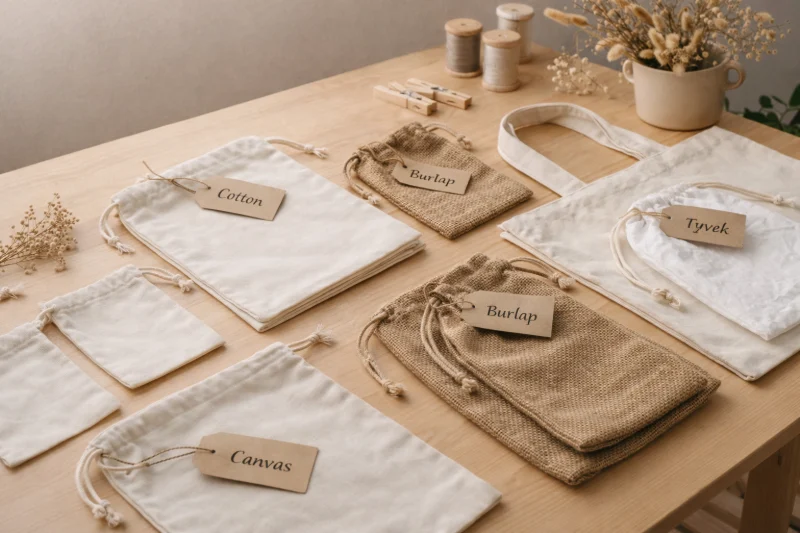
When budgeting for custom bags, material is usually the first thing people consider. Different fabrics have different price points. For example, non-woven fabric is ideal for large-scale promotions, cotton and canvas are more durable, while materials like Tyvek1 or washable kraft paper tend to be more expensive. If your budget is tight, adjusting the material can be a relatively easy way to control costs.
The weight of the material, or GSM (grams per square meter), affects the unit price and transportation costs. The thicker the fabric, the heavier it is, and the higher the cost and shipping fees. By selecting the right thickness based on the bag’s intended use, you don’t necessarily need to choose the thickest material, which helps maintain quality while controlling costs.
Size is another practical point of adjustment. A difference of just one or two centimeters in size may not affect usage much, but it can lead to varying levels of waste during the cutting process. You can ask the supplier if the size fits the cutting layout well. If slightly reducing the size can save material without affecting functionality, that’s an easy and effective way to cut costs.
Material selection isn’t complicated. By choosing the right fabric for the intended use and adjusting the weight and size to just the right range, your budget will be much easier to control.
The structure of a bag directly affects how much time it takes to produce. The simpler the design, the smoother the production process, and the more stable the production efficiency. If it’s just a single layer of fabric, basic stitching, and simple handles, the production line can maintain a good pace, and the overall cost is easier to control.
Once the structure becomes more complex, labor costs naturally increase. For example, adding linings, hidden pockets, binding, fasteners, zippers, and other details may seem small, but each additional step in the process extends production time and increases labor costs2. A more complex structure also reduces production capacity, as the factory needs to invest more labor and time, thus adjusting the profit margin per bag.
If the bag is mainly for promotional giveaways or simple packaging, keeping the structure simple will save costs. If it’s for brand retail purposes, adding some details is fine, as long as it fits the budget and serves the intended use. Overall, the simpler the structure, the smoother the production process, and the more stable the unit price.
The choice of printing method typically depends on the design and order quantity. For designs with fewer colors and simpler graphics, screen printing3 is the most common option. When the order volume is slightly larger, this method becomes more cost-effective. For smaller orders, many buyers opt for UV printing, which doesn’t require setup fees, though the result is more flat compared to screen printing.
If the budget is limited, the key to controlling printing costs is usually to make the design smaller and use fewer colors. By adjusting the design and reducing unnecessary colors and coverage, it becomes easier to control costs.
Shipping costs are related to the type of bags, quantity, and shipping method you choose. For small items like cosmetic bags or tool bags, the shipping cost per unit is relatively low. However, if you’re dealing with larger items like cooler bags, insulated bags, or bags with many accessories, the size increases, and shipping costs generally rise as well.
Shipping methods also make a significant difference. Sea freight and rail are more cost-effective and are suited for orders that are not time-sensitive. Air freight and courier services are faster but more expensive, typically used for smaller orders or urgent shipments.
If you want a more predictable landing cost, the most practical approach is to plan your delivery time in advance. If you have enough time, you can choose a more economical shipping method. If time is tight and only express or air shipping is an option, the shipping costs will naturally be higher.
In the custom bag production process, the clearer the initial confirmation, the smoother the production later on. Many buyers think that changing a few details won’t be a big deal, but during production, even small changes can disrupt the pre-planned workflow. For example, changes in size, logo placement, or bag structure may render the pre-cut fabric and semi-finished products unusable, requiring them to be made from scratch.
The purpose of sampling is to uncover potential issues early. By reviewing samples, you can see the proportions, overall effect, and details of the process, allowing for adjustments in advance. If you wait until full production to make changes, both time and material costs will increase.
Confirming details like size, structure, logo, and materials early is the most stress-free approach. Clear communication and sample approval ensure that the subsequent production runs smoothly and helps avoid unnecessary rework and loss.
If you have higher quality requirements for your products, such as those for retail or boutique stores, be sure to inform the seller at the time of placing the order. Different quality standards will affect material waste and quality inspection time during production. When strict standards are set, the seller will ensure each step meets high standards, starting from raw materials all the way through to the final quality check, where even the smallest defects are picked out.
If you’re making promotional bags or simple packaging bags, a standard quality level will be sufficient. The production process will be faster, the quality requirements will be lower, and the price will naturally be more affordable.
Additionally, packaging requirements can vary. Promotional bags typically use simple packaging and don’t require individual wrapping, whereas premium products may need individual packaging, with additional elements like hang tags, stickers, or card toppers. The seller will adjust the quote based on these packaging requirements.
The key is that the product positioning determines the quality standards and packaging requirements. Once these requirements are clearly defined, the seller will provide a quote based on those standards.
Frequent switching of suppliers not only wastes time but also increases costs. Each time you switch, you need to renegotiate, confirm details, and finalize requirements, which consumes a lot of time. More importantly, suppliers who are not familiar with your requirements are more likely to make mistakes and cause delays.
Choosing a low-cost supplier may seem like a good way to save money, but it often brings quality risks. To lower costs, some suppliers may use inferior materials, lower-quality printing, or less precise workmanship. These issues can directly affect the quality and appearance of your products and may even damage your brand image. If these problems reach the market, it could negatively impact customer experience and reviews, leading to bigger risks.
Long-term collaboration with stable suppliers reduces these unnecessary costs. Suppliers who understand your needs will improve production efficiency, reduce errors, and minimize delays, making overall costs easier to control. Additionally, long-term partnerships can lead to discounts, priority production, and reduced MOQ. The reuse of previous molds or printing screens can save you further costs.
In the custom bag procurement process, every stage—from material selection and structural design to printing, quantity, and shipping—can affect the final cost. By confirming each detail in advance, choosing the right suppliers, and adjusting quality standards and packaging requirements based on your product positioning, you can ensure the best choice within your budget.
While low-cost suppliers may save money in the short term, in the long run, stable suppliers provide more efficient production, fewer errors, consistent quality, and more competitive pricing. Clear communication, planning ahead, and making thoughtful choices will help you control costs and avoid unnecessary losses.
Get a free quote and expert consultation today. Let's bring your brand vision to life.
1 The DuPont page on Tyvek outlines how this material is both lightweight and strong, making it suitable for a variety of applications, including custom bags.
2 In the context of business expenses, Investopedia explains that labor costs consist of both direct compensation and indirect expenses, influencing overall production costs.
3 In the context explained by FESPA, screen printing’s cost-efficiency makes it particularly well-suited for mass production, especially when compared to newer digital technologies.
Answer: Order quantity influences how fixed costs like setup, tooling, and printing are spread across units. Larger orders often lower the cost per bag because these fixed costs are divided across more units, while small orders may result in a higher unit price due to less cost distribution.
Answer: Small changes in size, even one or two centimeters, can affect how efficiently fabric is laid out during cutting, potentially increasing waste and material consumption. Asking the supplier about optimal layout can help reduce waste and costs.
Answer: MOQ varies by manufacturer and complexity, but many factories set MOQ between 100 and 1,000 pieces depending on design, materials, and production methods.
Answer: Yes. Additional customization such as embroidery, specialized closures, and hardware increases production time, complexity, and cost per unit.
Answer: Larger bags or those with accessories have greater volume and weight, meaning they occupy more space in shipping calculations (dimensional weight), leading to higher transport costs.
Answer: Sea freight and rail are generally lower‑cost but slower, while air freight and courier services are faster but more expensive, so delivery timelines and budgets should be balanced accordingly.
Answer: A supplier that understands your specifications can reduce communication errors, production mistakes, and delays, leading to more predictable costs and smoother production.
Answer: Retail bags can be made from materials like paper, polyester, cotton, nylon, jute, and polypropylene, depending on durability, style, and budget.
Answer: Requesting quotes for different quantities lets buyers see how unit pricing changes, helping them choose the most cost‑effective order size based on their budget and use.

Order or no-order we are Always here to help you!
We will contact you within 1 working day, please pay attention to the email with the suffix “@yanxinbag.com”.
Order or no-order we are Always here to help you!
We will contact you within 1 working day, please pay attention to the email with the suffix “@yanxinbag.com”.