
Our Academy
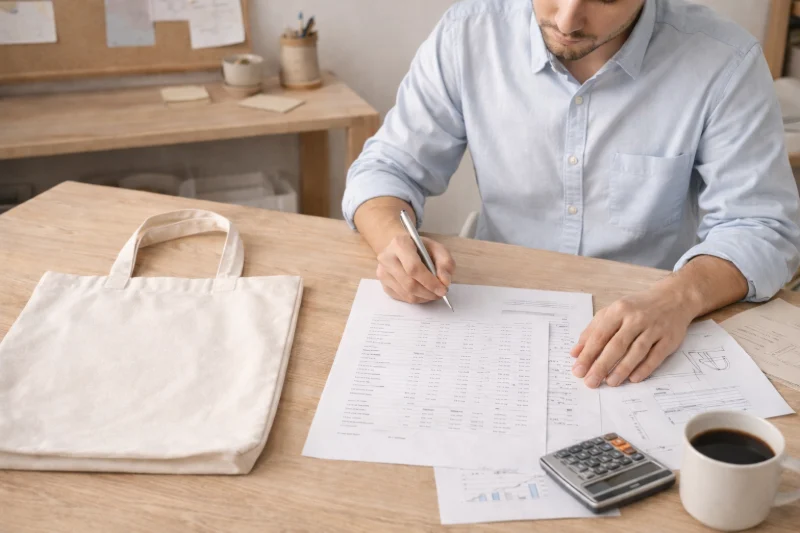
In the custom bag industry, almost every buyer has the same question: why do bags that look nearly identical have such different quotes? On the surface, the price should simply come down to fabric, labor, and shipping. But what truly determines the final quote is the combination of craftsmanship and production details behind each design.
Unlike ready-made stock bags, every stage of custom bag production must be configured according to the buyer’s specific requirements. Material selection, bag structure, printing method, and order quantity—these small decisions reshape the entire cost structure. After seeing countless cases on the production floor, we’ve realized one thing: price differences always hide in the details. So when you see a total quote, it’s already the result of many small variables being balanced together.
In the end, hidden costs aren’t extra charges—they’re the invisible factors that still influence the final price even though they don’t appear on the quotation sheet. Understanding this is the key to truly knowing why this bag costs what it does.
In a custom bag quotation, material cost seems straightforward, but it’s often the most misunderstood part. The unit price of fabrics can vary widely. Heavier canvas, Tyvek, or washable kraft paper, for example, naturally cost much more than regular cotton or non-woven fabric. Even within the same material type, variations in thickness, weight (GSM), or model can cause the unit price to differ by two or three times. The thicker the material, the heavier it gets, which also raises the shipping cost—something many buyers overlook. We’ve seen cases where identical bag designs ended up with a 15% price gap simply because of different fabric weights1.
Another source of variation lies in material utilization. In production, the fabric’s usable width determines how efficiently it can be cut. Different bag sizes and shapes can lead to cutting waste. If the design dimensions are slightly adjusted to fit a more efficient layout, the utilization rate improves and the unit cost drops. Discussing size optimization with your supplier before placing an order can often save more money than negotiating on price.
Ultimately, fabric cost isn’t just about “how much per meter.” It’s the balance between material type, thickness, and utilization efficiency. Understanding these three factors is the only way to truly understand why two seemingly identical bags can have such different prices.
Printing is the part of custom bag production that best expresses a brand’s personality, yet it’s also one of the key factors behind price variation.
Silk screen printing—especially machine or table printing—is the most cost-effective method for large-volume orders, but it’s less friendly to small runs. Each color requires its own screen, setup2, and test print. When quantities are low, these fixed preparation costs can’t be spread out, which naturally raises the unit price. Hand screen printing, on the other hand, has lower setup costs and therefore works better for small batches.
Heat-transfer printing is priced mainly by surface area. Its production cost is already higher than UV or sublimation printing, so the larger the printed area, the higher the price. UV and sublimation methods are more stable in cost—the print area doesn’t affect the price as strongly—but dark, saturated, or large-coverage designs will increase ink usage and printing time.
Ultimately, printing cost isn’t about “color being expensive” or “area being expensive”; it’s about which method best fits your design and order size. Understanding the sensitivities of each printing process allows buyers to find the right balance between budget and brand presentation.

The more three-dimensional a bag’s structure is, the more production steps it requires. What seems like just an extra lining or pocket actually means additional cutting, stitching, and positioning steps. Some bags look only slightly different but take nearly twice the sewing time—this is a perfect example of how design directly determines labor hours.
Buyers often focus on materials while overlooking the “making” time. Layers, edge binding, zippers, and buttons—each small design detail accumulates into the overall rhythm of the production line. Complex structures require more manual work, output slows down, and unit prices rise accordingly.
In the end, a bag’s cost isn’t calculated by fabric alone, but by time. The simpler the structure, the easier it is to control labor hours; the more intricate the design, the more it tests craftsmanship—and the budget.
In custom bag production, quantity isn’t a “price amplifier,” but a “balancer.” It determines how much of the fixed preparation cost is distributed across each bag.
Whether you order a few hundred or a few thousand pieces, the early steps—sampling, purchasing, machine setup, scheduling, inspection—all cost the same. These are fixed expenses. Only when the quantity is large enough can these costs be averaged out to a lower unit price. When the order is small, those same fixed costs get multiplied across fewer items, pushing the price up.
Quantity also affects shipping options. Small orders often have to go by express courier, where the cost per unit is far higher than sea or rail freight. The smaller the order, the harder it is to spread the logistics cost. In many cases, the shipping expense alone can take up a surprisingly large share of the total price.
Shipping costs are calculated differently depending on the type of cargo: light but bulky goods are charged by volume, while heavy goods are charged by weight. Smart packaging and carton design can effectively reduce overall freight costs.
Shipping method also plays a major role in budgeting. Sea and rail transport are cheaper but take longer, while air freight and express delivery are faster but more expensive. The right choice depends on how you balance lead time, budget, and warehouse planning.
Freight isn’t fixed—it’s the result of how packaging, transport mode, and shipping schedule come together.
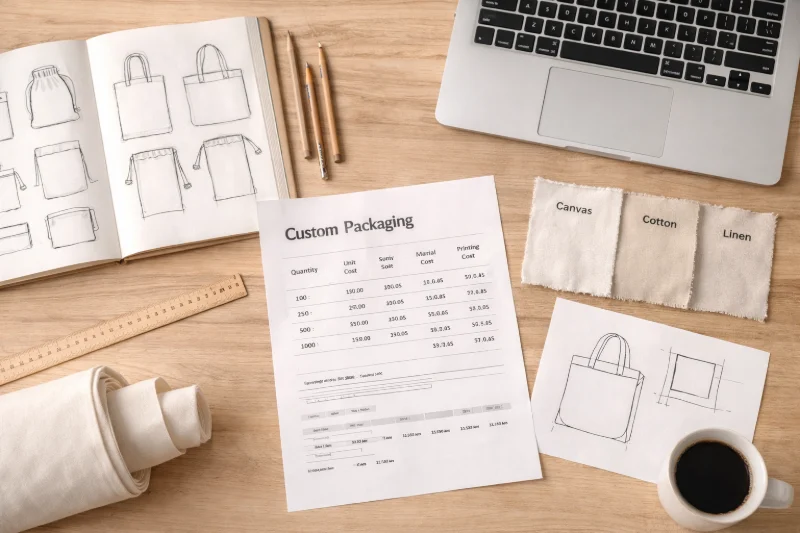
The purpose of sampling has never been about the sample itself — it’s about confirming direction. Many designs look perfect on paper, but once they turn into a three-dimensional bag, proportions, thickness, or print placement often need fine-tuning. A sample is the one bag that tests every assumption and gives the buyer a real preview of what the finished product will look like.
In essence, sampling isn’t just a production step — it’s alignment. It ensures both sides share the same understanding of dimensions, texture, appearance, and craftsmanship. It also helps the buyer decide whether the design is truly worth moving into mass production.
Design or material changes are most troublesome when they happen during production. Once a change is made, previously prepared materials may become unusable, and new ones have to be re-sourced. Even small adjustments can lead to additional time and material loss.
Not every change is feasible — it depends on what is being modified. Bag production follows a sequence, and once certain stages of sewing are complete, the structure can no longer be altered. For example, adding a lining3 or an inner pocket might invalidate previous steps entirely. The closer the order is to completion, the higher the cost of change.
That’s why it’s best to confirm all details early on. Paying for a sample is usually the safest option; or after materials are ready, making a pre-production sample (often free) can help verify the effect. At the very least, reviewing a digital mockup before confirmation helps minimize later revisions.
Quality standards determine not only inspection requirements but also production speed — and ultimately, cost. The stricter the standard, the more procedures are added, and the slower the output becomes. Labor hours rise naturally with precision.
What matters most is confirming these standards before production begins. Whether it’s a regular inspection or full inspection, whether the target quality is commercial-grade or premium-grade — these details should be clearly discussed at the quotation stage. Different expectations require different production setups, and prices should be aligned accordingly.
Once goods arrive at the warehouse, the clock doesn’t stop ticking. Storage rent, management, packaging aging, and manual handling all quietly eat into profit. When inventory piles up, cash flow gets locked into stock, and new orders become harder to move forward.
Warehousing itself isn’t the problem — turnover speed is. With proper planning and a steady shipping rhythm, inventory won’t turn into pressure. Only the goods that sell generate profit; everything sitting in storage is cost.
International transfers always involve handling fees, and exchange rates fluctuate with the market. Though the amount may seem small, these costs add up over time in long-term trade.
They usually appear only at the payment stage, which makes them easy to overlook. For cross-border purchases, they’re a small but real part of the process. Allowing a little extra in your budget upfront is much easier than dealing with unexpected shortfalls later.
Today, many buyers prefer third-party cross-border payment platforms that allow local account transfers. These systems speed up transactions and reduce both exchange rate loss and bank fees. For small orders, the difference is especially noticeable—a few hundred dollars in order value can shrink fast if each transfer costs dozens in service fees.

Most buyers provide their own artwork, and the factory only needs to adjust sizing or prepare print layouts. These are standard steps that don’t add extra cost.
However, if a buyer has no clear design direction and asks the factory to create new artwork or multiple design options, this becomes a design service—one that takes additional time and labor.
At the same time, the buyer’s own time is an investment too. Repeated revisions, confirmations, and discussions all consume decision bandwidth. The less clear the direction, the longer the process takes—and the higher the overall cost becomes.
The best approach is to define the design goals and file requirements from the start. Clear direction means smoother communication—and a project that lands on time.
Price alone isn’t the issue—the real question is whether the supplier can deliver consistently. If the bag’s quality is subpar, the printing color is off, or the shipment is delayed, you’ll face rework, lost time, and potentially damaged reputation. Those losses often outweigh the savings from a lower initial quote.
A stable, communicative supplier manages every stage—sampling, production, packaging, and delivery—with care. These unseen efforts are what truly determine whether a project runs smoothly. In the end, reliability matters more than price. Choosing the right factory saves not just money, but also time, energy, and trust.
The total cost of a custom bag comes from many small decisions: material selection, bag structure, printing method, order quantity, and shipping plan. Each choice quietly reshapes the final price. These details might not appear on a quotation sheet—but they’re always there.
Buyers who manage budgets effectively don’t just look at the unit price. They think ahead about what each stage may cost—confirming designs early, minimizing revisions, and selecting the right production methods and dependable partners.
In the end, price is never just about numbers—it’s about judgment. The clearer you see, the more transparent your real costs become.
Get a free quote and expert consultation today. Let's bring your brand vision to life.
1 The Wikipedia entry on grammage identifies fabric weights as a measure of material mass per unit area, directly correlating to cost and density in textile and paper applications.
2 As described by AccountingTools, setup costs function as batch-level expenses incurred to prepare tools, materials, and equipment for specific manufacturing runs.
3 In textile production, UK Fabrics Online explains that adding a lining alters the garment’s construction sequence, as it strengthens interior structure and affects later sewing stages.
Answer: Custom bag quotes can differ widely even for bags that look alike because factors such as material selection, bag structure, printing method, and order quantity all influence the cost. These production details change the way the bag is made behind the scenes, affecting the final price.
Answer: MOQ is the smallest number of units a manufacturer is willing to produce in a single custom bag order. It exists to help spread fixed setup and production costs; smaller orders often result in higher unit prices because these costs cannot be balanced across enough units.
Answer: Sampling is not just about producing one bag; it’s a way to confirm design direction. Many designs that look good on paper may need adjustments in proportions, thickness, or print placement when made into an actual bag. A sample helps both buyer and maker align expectations before mass production.
Answer: Setup charges are one-time fees associated with preparing printing processes, such as creating screens for each color in screen printing. These charges vary by print method and can impact the overall cost, especially for small orders.
Answer: Yes, some manufacturers accept low MOQ orders, especially for small batches or startup brands, but buyers should be prepared for higher unit prices because fixed costs are harder to spread across fewer units.
Answer: Shipping cost depends on the characteristics of the shipment. Light items with large volume are often charged by volume weight, while heavy items are charged by physical weight. Efficient carton design and packing can reduce overall freight cost.
Answer: International payments may incur bank transfer fees and exchange rate fluctuations, which add to the total cost. Using local-account-based third-party payment platforms can reduce these fees and speed up transactions.
Answer: Quality standards influence production time and labor intensity. Stricter standards require more inspection steps and slow down production, which increases cost. Buyers should confirm their desired quality level early to avoid unexpected charges.
Answer: A low quote may not account for hidden factors such as quality issues, miscommunication, or delayed delivery. If problems arise, rework and delays can cost more in time and money than choosing a higher but more reliable quote.

Order or no-order we are Always here to help you!
We will contact you within 1 working day, please pay attention to the email with the suffix “@yanxinbag.com”.
Order or no-order we are Always here to help you!
We will contact you within 1 working day, please pay attention to the email with the suffix “@yanxinbag.com”.