.

Our Academy

What Is Canvas Fabric? Explained for Eco Bag Buyers

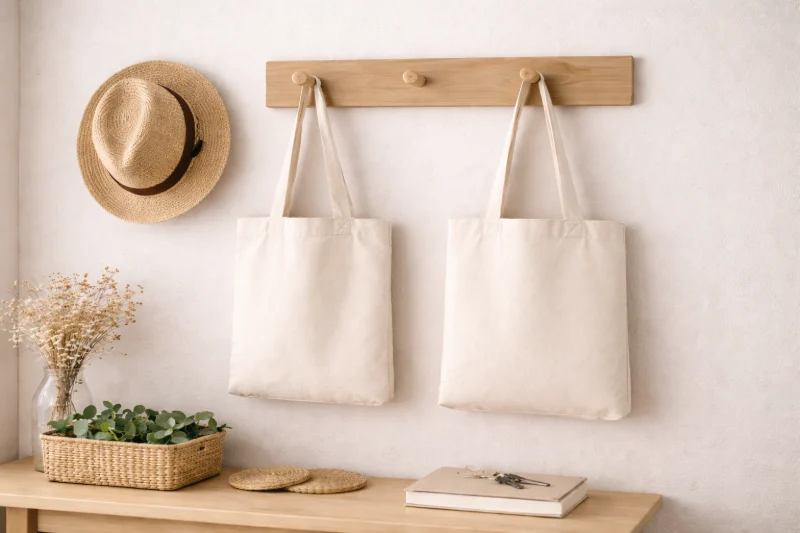
Two plain canvas tote bags hanging on a wooden wall rack in a minimal interior, illustrating What Is Canvas Fabric? Explained for Eco Bag Buyers.

Canvas fabric is one of the most durable and popular materials used in eco bag manufacturing. Known for its thick plain weave and strong structure, it’s widely chosen for tote bags, shopping bags, and promotional packaging. In China’s bag industry, canvas usually refers to heavier cotton or poly-cotton fabrics above 200gsm — tough, reusable, and ideal for printing and daily use.

Table of Contents

What Is Canvas Fabric?

Canvas is a high-density plain-woven fabric, usually made from cotton yarn or blended fibers. Its surface is thick, strong, and highly supportive, making it one of the most durable materials used in bag production. The tight weaving structure makes canvas both durable and shape-retaining, which is why it is widely used in eco bags, tote bags, and other reusable packaging.

How Is Canvas Fabric Made?

The strength of canvas comes from its weaving structure. During the weaving process, the warp and weft yarns are tightly interlaced in a plain weave pattern, forming a thick and supportive fabric surface. Compared with regular cotton fabric, canvas uses thicker yarns and a higher density1, giving it greater tensile strength and wear resistance. This structure allows canvas bags to maintain their shape and strength even after repeated use, making it an ideal material for reusable eco bags.

To better visualize the structural differences between canvas and regular cotton fabric, the main weaving characteristics of canvas can be summarized in the following table:

Comparison ItemCotton FabricCanvas Fabric
Weaving StructurePlain weave, medium densityPlain weave, but with tighter warp and weft
Yarn ThicknessFine yarns, smooth surfaceCoarse yarns, thick surface with texture
Weight Range100–180g/m²200–400g/m²
Hand FeelSoft, light, and breathableFirm, structured, and supportive
Common UsesLightweight shopping bags, foldable bags, lining bagsTote bags, shopping bags, tool bags, branded bags

As shown above, canvas and cotton fabric share the same plain weave structure, but canvas uses thicker yarns and a higher density, resulting in a thicker and more structured texture. This is why canvas bags are more wear-resistant, stronger, and less likely to deform during everyday use. From a weaving perspective, canvas can be regarded as a “thicker and denser version of plain cotton fabric,” where the enhanced structure provides improved durability, firmness, and reusability.

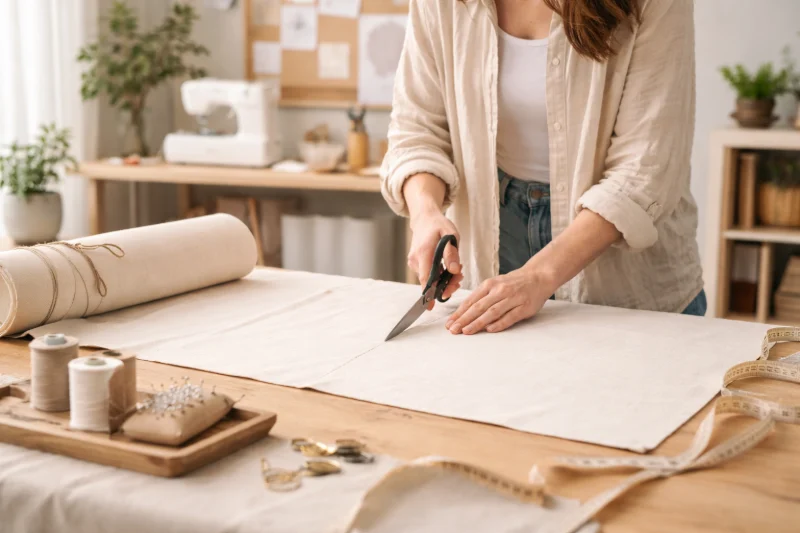
Hands cutting a piece of canvas fabric on a worktable with sewing tools, illustrating What Is Canvas Fabric? Explained for Eco Bag Buyers.

What Are the Advantages of Canvas Fabric?

The advantages of canvas lie not only in its strength but also in how its structure translates into practical value and brand identity for bags. The following qualities make canvas one of the most widely used and reliable fabrics in eco bag production.

Durable and Strong

Canvas features a high-density plain weave with coarse and tightly interlaced yarns, giving the fabric great strength and tensile resistance. Even with long-term weight-bearing or frequent use, it is resistant to abrasion and deformation, making it suitable for shopping bags and commuter bags that are used regularly.

Structured and Firm

Canvas has a thick body and strong support, effectively maintaining the three-dimensional shape and stability of the bag. Finished bags appear more structured and less likely to collapse, making canvas ideal for branded and premium retail bags.

Excellent Printability

The surface of canvas is smooth and finely textured, suitable for screen printing, heat transfer, and UV printing. Printed patterns appear vivid and clear-edged, making it ideal for bags that require visible brand logos or detailed designs.

Natural Texture

Canvas has a distinct weave and natural fabric texture that looks simple and warm, reinforcing an eco-friendly and lifestyle-oriented brand image. Compared with synthetic materials, it conveys a more natural and sustainable visual impression.

Reusable

Canvas is highly durable and wear-resistant, with a long lifespan, making it an ideal alternative to single-use plastic bags. Its dense structure allows for multiple washes and extended use, combining practicality with environmental value.

The table below summarizes the main qualities of canvas used in eco bag manufacturing and their practical value:

QualityDescriptionPractical Meaning for Bags
Durable and StrongTight weave and thick texture with high tensile strengthSupports weight, suitable for repeated use
Structured and FirmStrong support, resists saggingEnhances bag stability and premium appearance
Excellent PrintabilitySmooth surface, suitable for various printing techniquesClear patterns and vibrant colors
Natural TextureVisible weave and natural hand feelCreates an eco-friendly, lifestyle-oriented image
ReusableWear-resistant, long-lasting, washableCombines practicality with sustainability

These qualities make canvas a fabric that not only enhances brand texture but also meets the functional demands of long-term use. Its durability, versatility, and tactile appeal have made it one of the most representative materials in eco bag production.

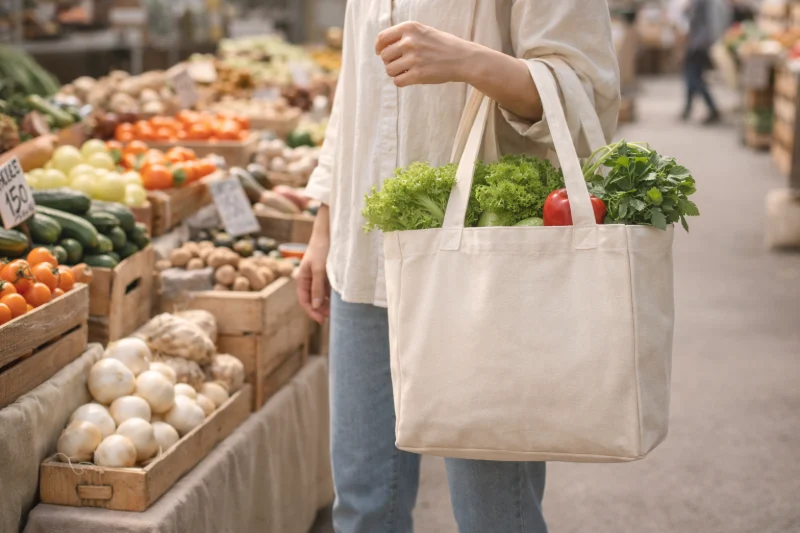
What Is Canvas Fabric Explained for Eco Bag Buyers showing a canvas tote bag used for grocery shopping

Why Canvas Fabric Is Common in Eco Bags

Canvas combines practicality and aesthetic appeal, making it a preferred material for eco bags among many brands. It presents a natural texture while providing the strength and durability needed for everyday use. For end users, canvas bags are not only sturdy and long-lasting but also carry a unique visual and tactile memory, reinforcing the brand image through repeated use.

The thickness and firmness2 of canvas give bags a more structured appearance, allowing them to maintain a neat look even when carrying heavy items or used frequently. Compared with lightweight cotton fabric, canvas can better withstand weight and friction, offering a longer lifespan—ideal for branded shopping bags, commuter bags, and gift bags used in high-frequency scenarios. In addition, the print performance of canvas is excellent, clearly displaying brand logos or graphic designs without fading or distortion. This balance of durability, visual appeal, and sustainability makes canvas bags the preferred choice for retail brands and eco-friendly packaging.

Conclusion

With its thickness, durability, and versatility, canvas has become one of the most representative materials in eco bag manufacturing. Its high-density weave allows bags to retain their structured form over long periods of use, making it ideal for carrying weight, printing, and brand presentation.

For brands, a canvas bag serves as a medium that combines function with image—it supports daily use while conveying a sense of naturalness, eco-consciousness, and reliability. For consumers, canvas bags symbolize durability, reusability, and a sustainable lifestyle. In today’s world where environmental awareness is growing, choosing canvas bags is not only a practical decision but also a sustainable expression of brand values.




Ready to Create Your Custom Canvas Bags?

Get a free quote and expert consultation today. Let's bring your brand vision to life.

Additional Resources

1 The Wikipedia entry on Units of textile measurement identifies density in fabrics through parameters like thread count and ends per inch, establishing it as a key structural factor influencing fabric strength and stability.

2 According to Taber Industries’ description of fabric stiffness testing, firmness represents the resistance of textile materials to bending or flexing under their own weight, a property linked to bending length and flexural rigidity.

FAQs for Canvas Bags

Q1: What is canvas fabric and why is it used for eco bags?

Answer: Canvas fabric is a high-density plain-woven textile made from cotton or blended fibers. Its thick, sturdy surface and tight weave give excellent strength and durability, making it ideal for eco bags that need to carry weight and maintain shape over repeated use.

Q2: How is canvas fabric different from ordinary cotton fabric?

Answer: Canvas uses thicker yarns and a tighter plain weave than ordinary cotton fabric, resulting in higher tensile strength, greater wear resistance, and better shape retention, which makes canvas more suitable for bags that carry heavy or frequent loads.

Q3: Does the plain weave structure make canvas strong?

Answer: Yes. The plain weave interlaces warp and weft yarns tightly, creating a dense and robust texture that resists wear and tear—one of the reasons canvas remains a popular choice for durable bags.

Q4: What does “canvas fabric weight” mean?

Answer: Weight for canvas fabric is often expressed in ounces per square yard or grams per square meter, with higher weights indicating thicker, stronger fabric suitable for heavy-duty bags.

Q5: Can canvas fabric be printed with custom logos?

Answer: Yes. Canvas’s smooth, tightly woven surface accepts screen printing, heat transfer, digital, or UV printing effectively, making it great for custom brand designs.

Q6: How does canvas compare to cotton tote bags in carrying capacity?

Answer: Canvas fabric is thicker and more durable than lightweight cotton, so canvas tote bags typically hold heavier items and maintain upright shape better than cotton bags.

Q7: Does canvas fabric shrink after washing?

Answer: Canvas fabric can shrink slightly (< 5 %) if washed incorrectly. Washing with cold water and air-drying helps maintain its size.

Q8: Can canvas fabric be water-resistant?

Answer: Canvas fabric can be treated with coatings like PVC, wax, or silicone to enhance its water resistance, making it more suitable for outdoor bags or weather-exposed use.

Q9: What is canvas fabric traditionally used for beyond bags?

Answer: Canvas has traditionally been used for sails, tents, outdoor gear, and paintings due to its durability, and these applications still exist alongside modern bag manufacturing.

Custom Bags With Easy

Order or no-order we are Always here to help you!

We will contact you within 1 working day, please pay attention to the email with the suffix “@yanxinbag.com”.

Custom Bags With Easy

Order or no-order we are Always here to help you!

We will contact you within 1 working day, please pay attention to the email with the suffix “@yanxinbag.com”.