
Our Academy
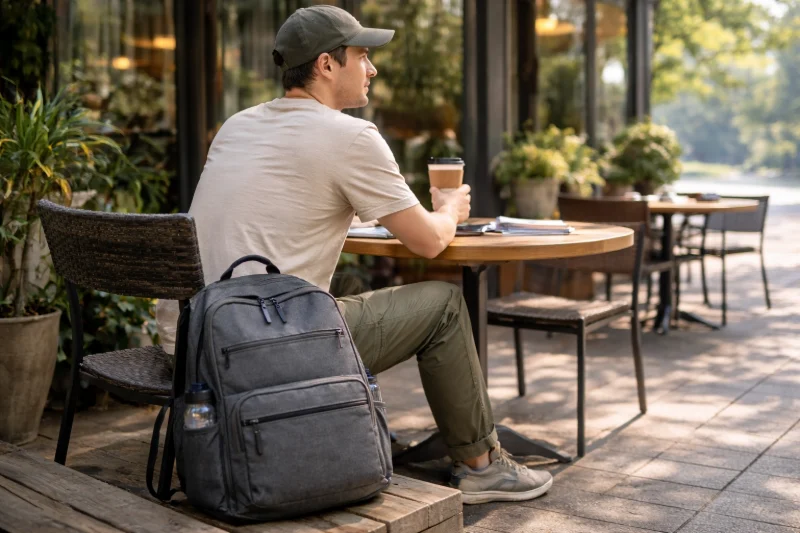
When you’re picking a backpack, the way it fits your back often matters more than how it looks or how much it holds. Real comfort comes from a design that sits naturally against your body, allows air to flow, and distributes weight evenly. Mesh backpacks are loved for being light and airy, perfect for workouts, outdoor trips, or humid weather. Fabric backpacks, on the other hand, are appreciated for their sturdy build and reliable protection. Knowing how these two materials differ helps you find the right pack for your lifestyle.
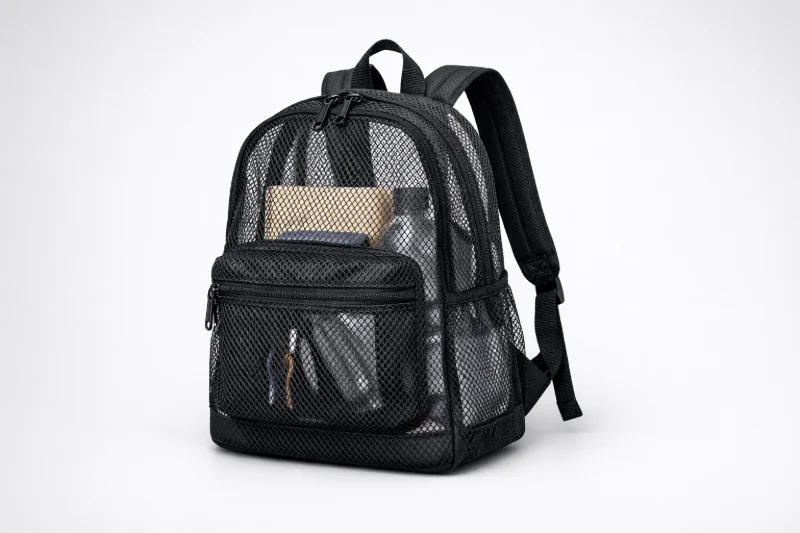
A mesh backpack is a lightweight pack made primarily from nylon or polyester mesh. Its key feature is its open structure, which allows for excellent airflow and quick moisture evaporation1. People commonly use mesh backpacks for activities like gym workouts, swimming, travel, or school security checks, where carrying clothing, towels, or daily items conveniently is important.
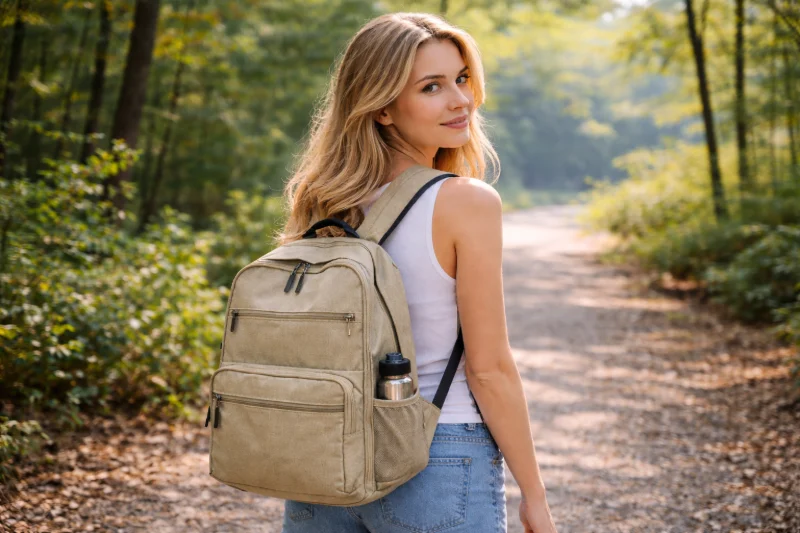
A fabric backpack is a traditional-style pack made from solid woven materials such as canvas or Oxford cloth. Its main advantage lies in its sturdy structure and abrasion resistance, maintaining its shape and strength over time. This type of backpack is popular for commuting, school, business trips, and outdoor travel, especially when carrying heavier loads or electronic devices.
Good Breathability
The mesh structure allows air to flow in from all directions, keeping your back from overheating. Even after a workout, damp clothes or towels can dry faster inside.
Lightweight
Most mesh backpacks are made entirely of mesh with minimal padding or layers, making them noticeably lighter. They’re great for short trips or daily commutes.
Quick-Drying
Mesh materials don’t absorb much water; once wet, they dry quickly. This makes them especially useful for pool days or beach trips.
Easy to Clean
Dust and sand easily fall off the mesh surface. You can simply rinse it with water, making it ideal for gyms, stores, or warehouses where frequent reuse is common.

Limited Durability
Mesh focuses on being lightweight and breathable, so it isn’t as strong as thicker fabrics. It’s perfectly fine for everyday use, but not ideal for heavy loads or rough contact surfaces.
Weaker Protection
Because mesh fabric is thinner and lacks strong internal support, it offers less protection for electronics or fragile items. It’s better suited for carrying clothes, towels, or lighter belongings.
Lower Privacy
Mesh is semi-transparent, meaning the contents can be partially visible. While this is convenient for schools or outdoor use, in public areas you may prefer designs with inner pockets or partial fabric linings to keep valuables more discreet and secure.
In real-world discussions, we’ve found that many customers initially associate mesh backpacks with “better comfort.” However, after testing samples or using them in daily scenarios, they often shift their focus toward strap width, padding thickness, and weight distribution rather than just the back material.
The table below summarizes the key advantages and limitations of mesh backpacks to help you quickly understand their characteristics.
| Advantages | Disadvantages |
|---|---|
| Excellent breathability; stays cool against the back | Limited durability; not ideal for heavy or rough use |
| Lightweight and easy to carry | Weak protection; limited impact resistance |
| Dries quickly; suitable for humid or outdoor use | Lower privacy; contents are visible |
| Easy to clean; simple rinse and dry |
Mesh backpacks stand out for their lightweight and breathable design, making them ideal for quick-dry or short-term use scenarios.
Stable Structure
Thick fabrics make the bag more structured, with strong stitching and reliable load-bearing capacity. Whether you’re carrying books or a laptop, the backpack maintains its shape without easily collapsing.
Strong Protection
Multiple layers of fabric combined with inner linings provide better protection for contents. Minor impacts or light rain won’t easily affect the electronics or documents inside.
Good Organization
This type of backpack usually includes multiple compartments and zippered pockets for organized storage. During daily commutes or travel, documents, accessories, and personal items all have their proper places.
Water-Repellent Ability
Most nylon or Oxford cloth surfaces are coated for water resistance, keeping the bag dry in light rain or humid environments and preventing moisture from seeping in.
Poor Breathability
The thick fabric sits closely against the back, allowing limited airflow. In hot weather or during long use, it can feel warm and lead to sweating.
Heavier Weight
Due to multilayer fabrics and inner linings, the overall weight is slightly higher than mesh models. For users who prefer lightweight travel or hiking, this may increase the carrying load.
Harder to Clean
Fabric absorbs water easily and takes longer to dry. Washing and drying require more time, making it less ideal for situations where frequent cleaning is necessary.
The table below summarizes the performance of fabric backpacks in terms of structure, protection, and user experience, allowing for a direct comparison with mesh backpacks.
| Advantages | Disadvantages |
|---|---|
| Stable structure, strong load-bearing capacity | Poor breathability; may feel hot during long use |
| Excellent protection for electronics and documents | Heavier weight; not suitable for ultralight travel |
| Multiple compartments for better organization | Harder to clean; longer drying time |
| Water-resistant coating for light rain protection | Thicker material; takes up more space |
From the table, it’s clear that fabric backpacks excel in durability and protection, making them ideal for work, commuting, or long-distance travel. However, in terms of lightness and ventilation, they’re less flexible than mesh designs.
Based on user feedback, mesh backpacks indeed have a slight advantage in breathability. They feel less stuffy on the back, and moisture tends to dissipate more quickly. However, many users have also noted that sweating is unavoidable with either mesh or fabric backpacks — the main difference lies in how fast the moisture evaporates.
In comparison, fabric backpacks fit more closely to the body and feel more stable under heavier loads2. During long walks, they help reduce movement and shifting. Overall comfort depends more on the shoulder strap design, hip belt support, and overall pack structure, rather than just the back material itself.
When choosing a backpack, breathability, weight, and durability are often the three key factors people care about most. The comparison table below summarizes the main differences between mesh and fabric backpacks in terms of performance and usage scenarios, helping you quickly identify which type better suits your needs.
| Comparison Aspect | Mesh Backpack | Fabric Backpack |
|---|---|---|
| Main Features | Lightweight, breathable, quick-drying, and easy to clean | Durable, sturdy, and highly protective |
| Common Scenarios | Gym, travel, humid environments | Commuting, school, long-distance travel |
| Advantage Keywords | Ventilation, lightweight, quick-dry | Stability, load-bearing, protection |
| Considerations | Lower privacy, moderate abrasion resistance | Heavier weight, limited breathability |
Overall, mesh backpacks are better suited for everyday or outdoor use where ventilation and light weight are priorities, while fabric backpacks perform more steadily in structure and protection. Different users can choose the most suitable type according to their usage environment and the items they carry.
Mesh and fabric backpacks each have their own advantages, and the key difference lies in how they meet different user needs. Mesh backpacks excel in lightness and ventilation, while fabric backpacks are better suited for situations that require a stable structure and long-term durability.
For brands and bulk buyers, it may be worth developing hybrid back panel designs based on target markets and usage scenarios. For example, using breathable mesh in the areas that make direct contact with the back, while reinforcing load-bearing sections with fabric material. This approach maintains lightness and breathability while enhancing support and durability, meeting a wider range of end-user needs.
Whether you need a lightweight and breathable mesh backpack or a sturdy and durable fabric backpack, Yanxin Bag can provide high-quality custom solutions tailored to your brand. As a professional custom backpack manufacturer, we offer a wide range of eco-friendly materials, structural options, and printing techniques to meet the needs of sports, campus, promotional, and retail applications.
If you are looking for a reliable backpack factory partner, contact Yanxin Bag today. Let us help you create backpack products that combine smart design with everyday functionality for your market.
Get a free quote and expert consultation today. Let's bring your brand vision to life.
1 The Wikipedia entry on evaporation identifies it as a surface-level phase change in which liquid water molecules gain enough energy to escape into the air, a process that explains the drying of clothes in sunlight and wind.
2 As consolidated in NIH and PubMed Central analyses, heavier loads correlate with measurable physiological changes such as increased oxygen uptake and altered center-of-mass trajectory in load-bearing tasks.
Answer: A mesh backpack typically uses open-weave nylon or polyester mesh for enhanced breathability and light weight, while a fabric backpack uses solid woven materials like canvas or Oxford cloth for better structure and protection, making each suitable for different needs.
Answer: Yes, mesh backpacks allow air to circulate more freely due to their open structure, which helps reduce heat and moisture buildup, but overall breathability also depends on design and back panel construction.
Answer: Fabric backpacks are generally better for long-distance travel because their sturdy construction and protective layers offer more durability and load support, whereas mesh backpacks are lighter and more suitable for short trips or humid conditions.
Answer: Mesh backpacks are known for being lightweight, highly breathable, quick-drying, and easy to clean, making them ideal for activities like gym use, beach trips, and humid weather conditions.
Answer: Fabric backpacks are typically made from materials like canvas, high-denier nylon, polyester, or Oxford cloth, which provide durability, water resistance, and structural stability.
Answer: Consider your priorities: choose a mesh backpack if you value breathability and light weight for short or humid journeys, and choose a fabric backpack if you need durability, organization, and protection for heavy loads or daily commuting.
Answer: Mesh backpacks can usually be rinsed with water and air-dried quickly due to their quick-drying materials, but always follow specific care instructions from the manufacturer.
Answer: Mesh backpacks can be suitable for school if you need a lightweight option for carrying clothes or gym gear, but for textbooks, laptops, and heavier loads, a fabric backpack is often more practical.

Order or no-order we are Always here to help you!
We will contact you within 1 working day, please pay attention to the email with the suffix “@yanxinbag.com”.
Order or no-order we are Always here to help you!
We will contact you within 1 working day, please pay attention to the email with the suffix “@yanxinbag.com”.