
Our Academy
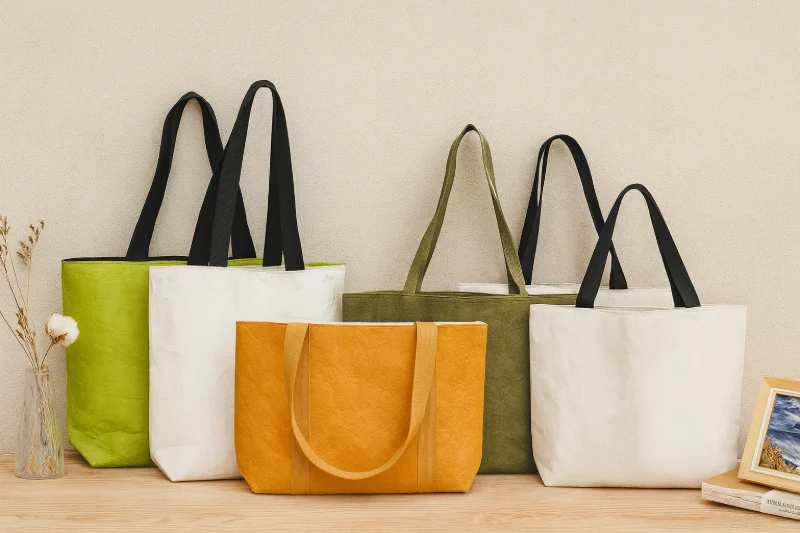
When brands choose materials for eco-friendly bags, they’re often searching for something both light and strong. Paper bags are light but not durable enough, while fabric bags are sturdy but a bit too heavy. Tyvek bridges that gap perfectly — it’s lightweight, waterproof, and tear-resistant, giving packaging a mix of practicality and modern style.
What is Tyvek? Tyvek is a nonwoven material developed by DuPont, made from high-density polyethylene (HDPE). Through a heat-pressing process, ultra-fine fibers are bonded into a thin yet durable sheet structure. It features water resistance, breathability, tear resistance, and recyclability. Tyvek is commonly used in eco bags, packaging design, construction protection, and medical applications.
Thanks to this unique combination of lightness, durability, and recyclability, Tyvek is becoming one of the most popular choices for sustainable packaging. Its fiber network helps balance strength and breathability. So, how exactly is Tyvek made, and why does it perform so well? Let’s take a closer look.

The high-density fiber structure of Tyvek allows it to maintain strength even in an ultra-thin form. The material is so light that it adds almost no weight, yet it withstands daily pulling and folding with ease — making it ideal for lightweight packaging and reusable eco bags.
The surface fibers effectively block liquid penetration, causing water droplets to slide off easily. Even when exposed to rain or spills, Tyvek protects the contents from moisture while keeping the bag surface clean and smooth.
Made from 100% high-density polyethylene, Tyvek contains no adhesives or coatings and can be directly recycled. Its durability ensures a longer usage cycle, helping reduce single-use packaging waste from the source.
The smooth, dense surface of Tyvek enables precise color and image reproduction. Whether screen printing, heat transfer, or digital printing, designs appear sharp and vibrant — ideal for brand logos and premium gift bag designs.
Tyvek looks like paper but feels like fabric, with subtle creases that give it a natural touch. When laminated with nonwoven fabric, it can achieve a thicker, leather-like texture with dimensional appearance — maintaining lightness and water resistance while enhancing its tactile quality and premium look.
These properties make Tyvek a standout material that combines high performance with environmental responsibility.
Tyvek combines functionality and design flexibility, making it one of the most representative materials in modern eco-bag manufacturing. Its waterproof, lightweight, and recyclable characteristics strike a balance between practicality and sustainability. Compared with traditional materials, Tyvek offers a more contemporary look, giving shopping bags, gift bags, and retail packaging a lighter and more refined feel.
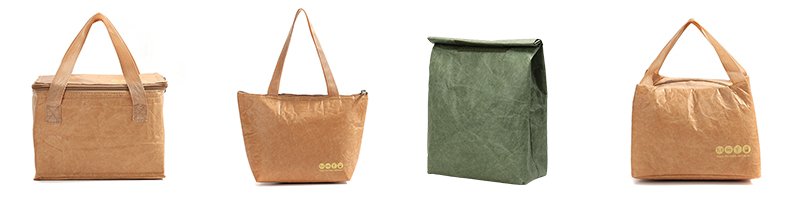
Tyvek materials are mainly divided into two structural types: hard structure (D Series) and soft structure (R Series).
The hard-structure Tyvek (D Series) features a smooth surface and crisp texture, offering excellent rigidity and shape retention.
The soft-structure Tyvek (R Series), on the other hand, has a fabric-like feel — soft, flexible, and highly breathable.
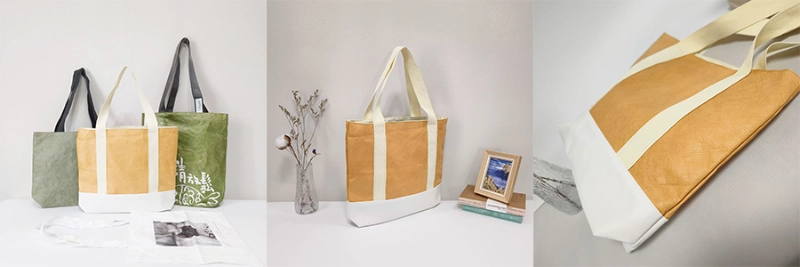
Regardless of the structure, Tyvek can be laminated with nonwoven fabric. This composite process maintains Tyvek’s original waterproof and tear-resistant performance while creating a texture and appearance similar to kraft paper. Laminated Tyvek feels thicker and more durable, with a natural texture and eco-friendly visual appeal.
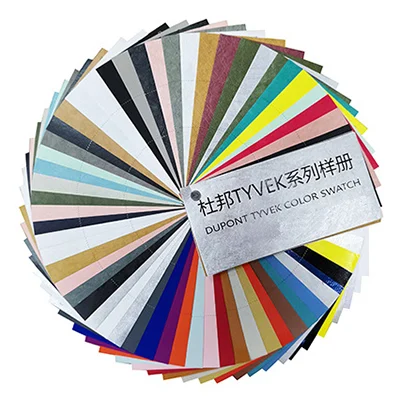
Multiple pre-made color options are available, and brands can also integrate their logos and color schemes directly through UV printing. The printed colors are vibrant, durable, and do not affect Tyvek’s waterproof or breathable properties — making UV printing one of the most popular techniques in custom brand packaging.
The table below summarizes the main structural differences between the D and R Series of Tyvek:
| Type | Characteristics |
|---|---|
| D Series (Hard) | Smooth surface, crisp texture, strong rigidity, paper-like feel |
| R Series (Soft) | Flexible, breathable, and fabric-like texture |
Both structures can be laminated with nonwoven materials to achieve a thicker, leather-like appearance and texture.
Tyvek is lightweight, waterproof, and recyclable, making it an ideal material for sustainable packaging. It is widely used for shopping bags, gift bags, and promotional totes, combining functionality with a modern aesthetic. Its smooth surface allows for high-quality printing, helping brands achieve consistent and professional visual identity across packaging.
With its breathable, waterproof, and bacteria-resistant properties, Tyvek is extensively used in medical sterilization packaging and industrial moisture-proof document pouches. It effectively blocks bacteria and liquids while allowing air to pass through, keeping the interior clean and stable — ideal for long-term storage or transportation.
The unique combination of paper-like and fabric-like qualities makes Tyvek popular in fashion, accessories, and art installations. Designers often use its crinkled texture and lightweight flexibility to create pieces that express both environmental consciousness and creative aesthetics.
Tyvek’s lightness and durability make it an excellent choice for travel organizers and outdoor gear. It resists moisture, is easy to clean, and can be folded repeatedly without damage. Common applications include shoe bags, toiletry pouches, and camping supplies. Its high tensile strength and waterproof nature make travel lighter, cleaner, and more reliable.
The eco-value of Tyvek lies not in biodegradability but in recyclability and durability. Made from a single material — high-density polyethylene — it can be recycled through specialized systems. Compared with disposable paper bags or multilayer composites, Tyvek offers a much longer lifespan and higher life-cycle value.
By lasting longer, Tyvek helps reduce waste and minimizes the need for frequent replacements. It can be wiped or washed for reuse, maintaining its original form even after repeated folding or travel. For brands focused on sustainability, Tyvek represents a rational and long-lasting choice for eco-conscious packaging.
Compared with paper bags, Tyvek offers much stronger water resistance and tear resistance. It maintains its shape even in humid conditions, making it far more durable and suitable for repeated use.
Compared with fabric bags, Tyvek is lighter and easier to carry. Its surface resists dust and stains, allowing for effortless daily cleaning.
Compared with non-woven bags, Tyvek has a smoother surface, producing sharper and more detailed printing results with a cleaner, more modern appearance.
Compared with leather, Tyvek is significantly lighter and more cost-effective. When laminated with nonwoven fabric or given surface texture treatment, it can achieve a leather-like look and thickness — providing a sustainable alternative for products that seek a premium appearance without sacrificing lightness or eco-friendliness.
Overall, Tyvek represents a new balance between paper, fabric, and leather, combining visual appeal with the principles of modern sustainable design.
To better visualize the differences between Tyvek bags and other common bag types, the table below summarizes their key performance and aesthetic features.
| Material | Main Advantages | Limitations | Typical Uses |
|---|---|---|---|
| Tyvek Bag | Lightweight, waterproof, recyclable, printable | Slightly higher cost | Eco bags, brand packaging |
| Paper Bag | Low cost, easy to recycle | Not waterproof, easily torn | Disposable packaging |
| Fabric Bag | Durable, washable | Heavier, easily absorbs dirt | Long-term reusable bags |
| Leather Bag | Premium look, strong structure | Not eco-friendly, high cost | Gift packaging, high-end fashion |
From the table, it’s clear that Tyvek achieves an ideal balance between performance and appearance, standing as the new-generation eco material that bridges paper, fabric, and leather.
Tyvek is more than an environmentally friendly material — it embodies a design philosophy that balances functionality with sustainability. With its lightweight, waterproof, and recyclable properties, Tyvek offers brands a practical yet eco-conscious packaging solution. Today, more global brands are choosing Tyvek as the foundation for sustainable packaging — expressing lasting value through lighter design.
Yanxin Bag is a professional Tyvek bag manufacturer, offering a wide range of structures and printing options for custom DuPont paper bags.
If you’re looking for a reliable Tyvek bag factory partner, contact Yanxin Bag today — and make your packaging more sustainable and brand-distinctive.
Get a free quote and expert consultation today. Let's bring your brand vision to life.
1 The Wikipedia entry on high-density polyethylene identifies it as a thermoplastic polymer produced from petroleum, providing the fundamental molecular structure that enables Tyvek’s strength and flexibility.
2 As outlined by Intertek, breathability functions as a key performance indicator in functional textiles, ensuring moisture transfer that enhances comfort and prevents humidity accumulation.
3 In the context of industrial printing, FESPA explains that UV printing functions by curing ink directly on the surface layer, ensuring strong adhesion and color accuracy across multiple media types.
Answer: A DuPont paper bag is made from Tyvek, a non-woven material composed of high-density polyethylene (HDPE) fibers. This synthetic structure combines the strength of plastic with a paper-like feel, offering lightweight, water-resistant, and tear-resistant qualities commonly used in custom Tyvek bags and branded eco bags.
Answer: Tyvek is technically recyclable as HDPE (#2 resin), but most curbside recycling programs do not accept it; proper recycling typically requires specialized recycling centers or mail-in initiatives to ensure Tyvek bags are recycled correctly.
Answer: Yes, Tyvek is breathable—it resists liquid water penetration while allowing water vapor and air to pass through. This means Tyvek bags are water-resistant but not fully waterproof, helping reduce moisture buildup and keeping the interior dry.
Answer: To clean Tyvek bags, wipe them with a damp cloth for light dirt, or hand wash with mild detergent for tougher stains; avoid bleaching or machine drying on high heat, as excessive heat can deform or melt the material.
Answer: Tyvek’s original color is pure white, but other colors and patterns are typically created through printing methods like UV printing. These printed colors can be vibrant and durable without affecting the bag’s strength, breathability, or water resistance.
Answer: Tyvek bags offer several advantages: they are lightweight, tear-resistant, water-resistant, printable, and recyclable. These features make custom Tyvek bags ideal for eco-conscious branding, shopping, and promotional use, with durability and modern visual appeal.
Answer: Tyvek bags are commonly used for reusable shopping tote bags, promotional bags, food delivery carriers, event giveaways, and premium packaging, thanks to their water and tear resistance and high-quality print surface for brand logos and designs.
Answer: Tyvek bags are water-resistant but not fully waterproof; they repel water and protect contents from moisture under everyday conditions but are not designed for full submersion or extended exposure to water.
Answer: Tyvek bags are more durable than traditional paper and many nonwoven fabrics, resisting tearing, punctures, and abrasion while remaining lightweight, though they may not be as strong as heavy canvas or nylon in extremely heavy-duty applications.
Answer: Yes, Tyvek bags are considered environmentally friendly because they are made from 100% recyclable HDPE and can be reused many times, helping reduce reliance on single-use plastic bags while offering long-lasting packaging solutions.

Order or no-order we are Always here to help you!
We will contact you within 1 working day, please pay attention to the email with the suffix “@yanxinbag.com”.
Order or no-order we are Always here to help you!
We will contact you within 1 working day, please pay attention to the email with the suffix “@yanxinbag.com”.