
Our Academy

Whether for shopping bags, gift packaging, or everyday tote styles, cotton bags have become noticeably more common than before. Their soft texture, natural appearance, and reusability have made us increasingly recommend cotton fabric to our clients when discussing bag options. To help you decide whether this material suits your project, we’ve organized the key information in this article.
Cotton fabric is a natural textile made from cotton fibers through processes such as cleaning, carding, spinning, and weaving. Its composition is simple—mainly cellulose—without any synthetic additives. Depending on the yarn thickness1 and weaving method, cotton can appear in plain weave, twill, or heavier canvas forms, making it one of the most commonly used base materials for various types of bags.
Breathability
The natural gaps between cotton fibers make the fabric light and breathable, preventing a stuffy feeling during wear or use.
Moisture Absorption
Cotton quickly absorbs moisture and sweat, keeping the surface dry and comfortable to the touch.
Softness
The fine and smooth natural fibers of cotton provide a gentle and pleasant feel.
Durability
Cotton has a stable structure suitable for daily use. It’s strong and can withstand repeated washing.
Hypoallergenic
Without synthetic fibers or irritants, cotton is generally skin-friendly and unlikely to cause allergic reactions.
Moisture-Wicking
Cotton effectively absorbs and releases moisture, keeping the user dry and preventing a sticky feeling.
Wrinkling
As a natural fiber, cotton tends to wrinkle during use or storage—a common feature of this material.
Shrinkage
Cotton fabric may shrink slightly after washing, especially if it hasn’t been pre-shrunk.
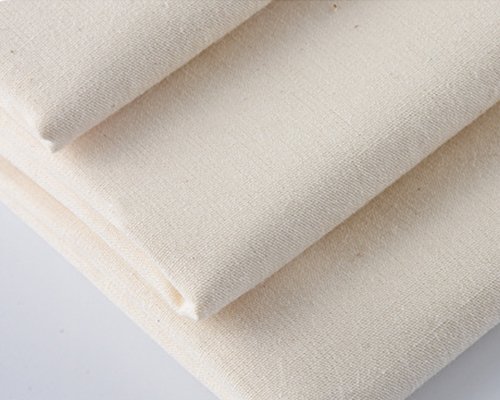
High Durability
Cotton bags are highly durable and can withstand daily use and washing without being easily damaged.
Versatile
Cotton bags are suitable for a wide range of uses, such as shopping, gifting, or everyday storage.
Eco-friendly
Compared with plastic bags, cotton bags are more environmentally friendly and help reduce plastic pollution.
Reusable
Cotton bags can be used repeatedly, reducing the need for single-use bags and lowering the environmental burden.
Lightweight and Portable
Cotton bags are lightweight, easy to carry and store, making them convenient for everyday use.
Breathable
The breathability of cotton helps keep the contents fresh and prevents moisture and odor.
Stylish Design
Cotton bags now come in various designs to meet different aesthetic preferences—practical yet fashionable.
Customizable with Excellent Print Quality
Cotton bags can be customized, and their printing results are clear and stable, making them ideal for business branding or personalized projects.
Cost-effective in the Long Run
Although the initial cost is higher, their durability and reusability lead to cost savings over time.
Reduce Plastic Waste
Using cotton bags helps minimize the use of plastic bags, supporting sustainable development.
Possible Shrinkage
Cotton may shrink after washing or exposure to high temperatures, especially if the fabric hasn’t been pre-shrunk. This usually happens after the first wash.
Color Fading on Dyed Fabrics
Dark-colored cotton may fade slightly after washing, especially with high-saturation dyes. Although this doesn’t affect regular use, frequent washing can cause visible fading.
Lower Load Capacity than Canvas
Cotton bags are suitable for light to medium loads, but compared with canvas, they have slightly lower load-bearing strength and are less ideal for heavy items.
Higher Cost than Non-woven Fabric
As a natural fiber, cotton generally costs more to produce, both in raw materials and processing, making it more expensive than non-woven alternatives.
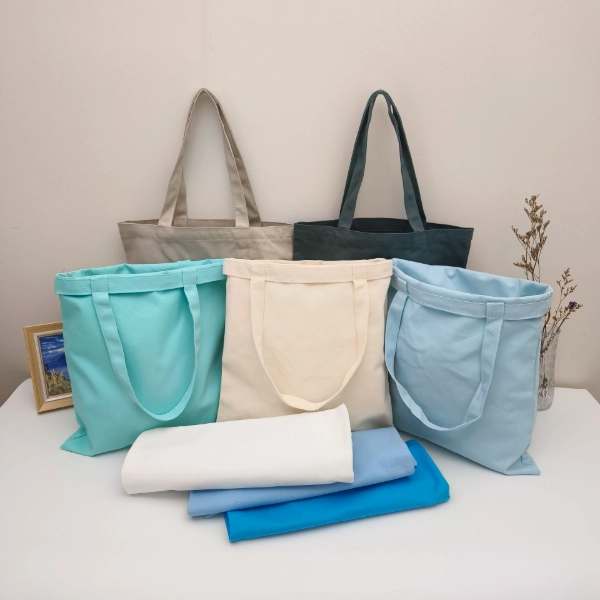
The difference between cotton and canvas mainly lies in their weight (oz).
In China, the general classification is as follows:
Cotton: Refers to fabrics below 8oz, which are soft and lightweight.
Canvas: Refers to fabrics above 8oz, which are thicker and stronger, suitable for carrying heavier loads.
Both can be made from 100% cotton, poly-cotton, or polyester, but their key differences are in thickness and strength.
Shopping bags
Packaging bags
Event or conference bags
Boutique gift bags
Subscription box packaging
Promotional bags
Food or produce bags
When choosing cotton bags, different types of cotton fabrics come with their own features and advantages. Understanding the characteristics, pros, and cons of each material helps you select the most suitable cotton bag for your needs.
| Material | Advantages | Disadvantages |
|---|---|---|
| Cotton | Lightweight and breathable | Average load capacity |
| Cotton Canvas | Thick, strong, and tear-resistant | Heavier and takes up more space when folded |
| Organic Cotton | Eco-friendly, natural, skin-friendly, and meets sustainability standards | Higher price, limited supply, and higher production cost |
| Recycled Cotton | Environmentally friendly, reduces textile waste | Complex recycling process, limited availability, and higher cost |
| Cotton Twill | Twill weave, wear-resistant, and durable | Thicker, stiffer texture, and higher cost |
| Muslin Cotton | Lightweight, breathable, and soft texture | Poor load capacity, wears easily, shorter lifespan |
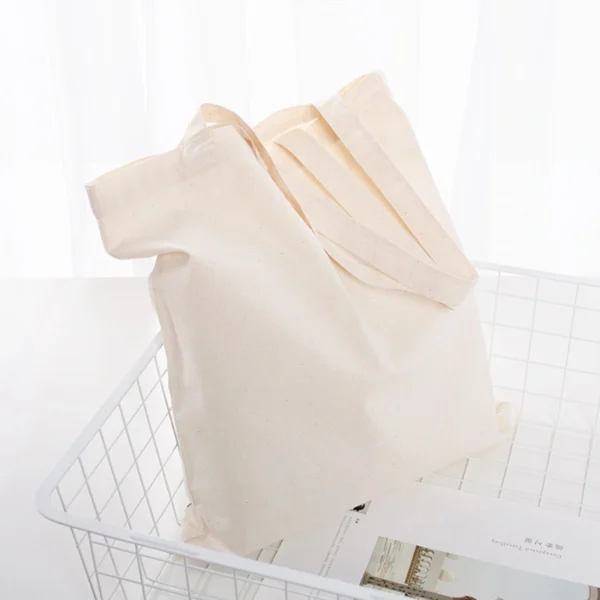
When selecting cotton fabric, GSM (grams per square meter) or oz (ounces)2 is the most direct indicator affecting the bag’s texture and application. Different weights correspond to different levels of thickness and strength. In our production experience, we usually recommend fabrics based on the intended use:
5–6oz (approx. 135–170gsm)
Commonly used for promotional bags or event giveaways. Lightweight and low-cost, ideal for short-term or mass-use occasions.
8–12oz (approx. 220–350gsm)
The most commonly used range, balancing hand feel and durability. 8oz suits daily shopping or packaging bags, while 10–12oz offers more structure and firmness—ideal for brand and e-commerce packaging bags.
14–20oz (approx. 400–560gsm)
A heavy canvas range, often used for premium or structured bags like boutique shopping bags, tool bags, or travel bags.
The texture is more pronounced, giving a stronger, high-quality appearance.
Plain weave: The most common weaving method. The fabric surface is flat and stable, suitable for general cotton bags.
Twill weave: Characterized by visible diagonal lines and higher strength, suitable for heavy-duty or abrasion-resistant bags.
During production, cotton can be processed to achieve different base tones. These variations affect not only appearance but also printing results and overall style. Common color types include:
Natural Cotton – Unbleached and undyed, retaining the fiber’s natural off-white tone.
Semi-bleached Cotton – Lightly bleached, resulting in a cleaner, softer shade while keeping a slight natural tone.
Bleached Cotton – Fully bleached, appearing pure white, smooth and clean.
Dyed Cotton – Dyed into various colors, ideal for brands needing specific tones or visual effects.
The cost of cotton bags is not determined solely by thickness.
In real production, several factors affect the final price:
Raw Material Composition
Even for cotton fabric, prices vary by fiber type.
Typically: 100% Cotton > Polyester > Poly-cotton.
Pure cotton is more natural and eco-friendly but costs more. Poly-cotton and polyester are cheaper, but less soft and eco-appealing.
Thickness Is Not the Only Factor
Thicker doesn’t always mean more expensive; the exact weight matters more.
Shipping and Volume
Heavier fabrics increase both weight and volume, so international freight costs can rise significantly—sometimes even more than the fabric price difference itself.
Printing
Printing methods and coverage area affect the price. We usually recommend the most suitable and cost-effective printing solution based on the design and order size.
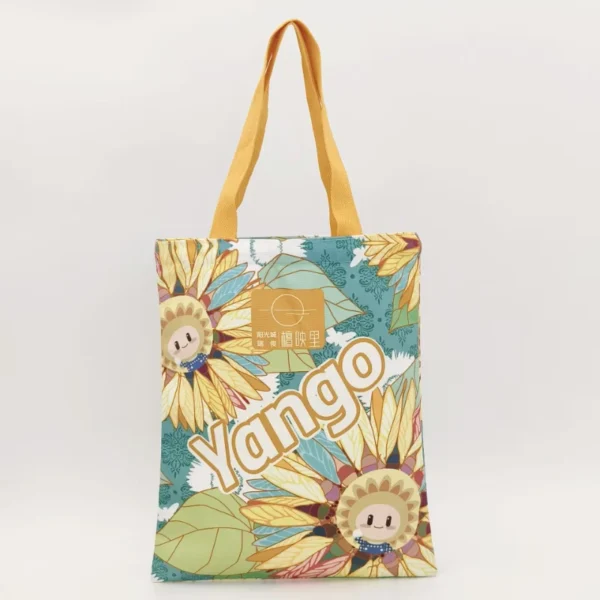
The texture and stiffness of cotton bags depend not only on weight and weave but also on finishing treatments. Light cotton feels soft and natural, while heavy canvas maintains a structured shape. For customers who want a more rigid look, we often suggest lamination3 or starch finishing, which enhances stiffness and adds water resistance and durability.
Cotton bags can be printed using various methods. Each printing technique differs in color performance, cost, and fabric compatibility. The following table compares the most common options to help you quickly understand their features and recommendations.
| Printing Method | Features & Advantages | Notes |
|---|---|---|
| Screen Printing | Custom color matching, high color fastness, ideal for simple and large-volume designs. | Not suitable for gradients or complex multi-color images. |
| Heat Transfer Printing | Bright colors with photo-quality results. | Slightly higher cost. |
| UV Printing | Supports gradients and detailed full-color printing. | High cost. |
| Sublimation Printing | Vivid and stable colors, ideal for full-surface printing. | Not suitable for pure cotton or poly-cotton fabrics. |
| Embroidery | Textured and premium appearance, durable and high-end. | High cost, not suitable for very detailed designs. |
Each printing method has its own advantages—there’s no absolute best or worst. We usually help customers choose the most suitable technique based on design complexity, budget, and order quantity.
Cotton bags are often regarded as a symbol of eco-friendly packaging. Made from natural plant fibers, they are biodegradable4 and reusable, unlike plastic bags that cause long-term pollution. From a usage standpoint, cotton is indeed more sustainable—the longer it’s used, the less waste it generates compared to single-use packaging.
However, from a production perspective, cotton cultivation requires significant amounts of water and land resources, meaning its environmental impact isn’t entirely negligible. Still, compared to disposable materials, cotton’s durability and long lifespan make it a more sustainable choice overall. As long as cotton bags are reused multiple times, they remain a relatively eco-friendly and consumer-accepted material.
With its natural, durable, and comfortable qualities, cotton has become one of the most popular materials for eco bags. It offers both excellent printing performance and user experience, suitable for everything from daily shopping to branded packaging. While not a perfect solution, thoughtful design and long-term use allow cotton bags to balance practicality with sustainability. Choosing a cotton bag is not just replacing plastic—it’s adopting a more sustainable lifestyle.
If you’re looking for a reliable cotton bag manufacturer, Yanxin Bag provides one-stop service from fabric selection to printing and packaging. We specialize in custom cotton bags and canvas tote bags, supporting both small trial orders and bulk exports.
Whether you’re a brand, online seller, or wholesaler, we can recommend the most suitable materials and printing options for your needs and budget.
Feel free to contact Yanxin Bag to learn more about custom eco bag production and sustainable packaging solutions.
Curious about canvas tote bags?
This guide explains materials, pros and cons, common uses, design options, manufacturing steps, and care instructions—all in one place. 《The Ultimate Guide to Canvas Tote Bags》
Not sure which fabric suits your canvas bag?
This article compares cotton, polycotton, and polyester in terms of features, printability, and selection tips to help you make the right choice. 《Cotton vs Polycotton vs Polyester: Which Fabric Is Right for Your Canvas Bag?》
Want to keep your canvas bags clean and durable?
This guide focuses on cleaning and maintaining canvas bags, showing how to remove stains, the best washing methods, and practical tips to ensure long-term use. 《How to Clean Canvas Bags》
Wondering how cotton bags differ from canvas ones?
This article breaks down their material, look, durability, and more—helping you understand which is better for your needs. 《What’s the Difference Between A Cotton Bag and A Canvas Bag?》
Looking for the best way to decorate your cotton canvas bags?
This article explores multiple printing and embellishment methods—complete with pros, visuals, and cost considerations to help you pick the right one. 《How to Print on Cotton Canvas Bags: 10 Effective Techniques》
Get a free quote and expert consultation today. Let's bring your brand vision to life.
1 In industry standards yarn thickness functions as a measurement parameter used to determine yarn fineness, fabric structure, and textile manufacturing specifications.
2 Wikipedia describes how oz (ounces) are used in textiles to indicate the weight or areal density of fabric materials.
3 ScienceDirect identifies the lamination process as the method of assembling individual sheets of materials into a multilayered component through pressure, heat, or adhesives.
4 Academic research cited by Knowledge4Policy notes that biodegradable packaging materials must reach at least 90 percent biodegradation within six months under standardized composting test conditions.
Answer: Cotton bags are durable, reusable and biodegradable — unlike single-use plastic bags. They offer good breathability and softness, can be washed and reused many times, and help reduce plastic pollution and waste in the long term.
Answer: Yes. High-quality cotton (or canvas) bags have stable fiber structure and stitching, so they can withstand repeated use and washing without easily breaking, making them suitable for everyday shopping, packaging, and carrying items over time.
Answer: The difference mainly lies in weight and fabric thickness: “cotton bag” typically refers to lighter, thinner cotton fabric under about 8 oz (soft and lightweight), whereas “canvas bag” uses heavier fabric over 8 oz with tighter weave for stronger strength and better load-bearing capacity.
Answer: For lightweight or promotional bags, 5–6 oz (≈ 135–170 gsm) works fine; for normal daily-use tote or packaging bags, 8–12 oz (≈ 220–350 gsm) balances flexibility and strength; for heavy-duty or structured bags (e.g. travel bags, tool bags), 14–20 oz (≈ 400–560 gsm) canvas fabric is recommended.
Answer: Yes. Both cotton and canvas fabrics provide a good surface for printing methods like screen printing, heat transfer, or embroidery — making them ideal for custom tote bags, branded packaging, promotional bags or retail merchandise.
Answer: Yes. Canvas has tighter weave and thicker threads, which makes it more resistant to tearing and abrasion — so canvas bags are more suitable when you expect heavier loads or frequent outdoor use.
Answer: Yes — if made from natural cotton fibers (not synthetic blends), cotton canvas bags are biodegradable because cotton is a natural plant fiber; after disposal under proper conditions, they can decompose, unlike non-biodegradable plastic bags.
Answer: It’s recommended to wash cotton or canvas bags with mild detergent in cold or lukewarm water and air-dry them. Avoid high-temperature drying or harsh chemicals to prevent shrinkage, color fading, or damage to prints / stitching.
Answer: Yes — cotton bags are breathable and absorb moisture, which can help keep produce fresh and reduce condensation. Many people use cotton bags for groceries, fruits or vegetables as a more sustainable alternative to plastic grocery bags.

Order or no-order we are Always here to help you!
We will contact you within 1 working day, please pay attention to the email with the suffix “@yanxinbag.com”.
Order or no-order we are Always here to help you!
We will contact you within 1 working day, please pay attention to the email with the suffix “@yanxinbag.com”.