
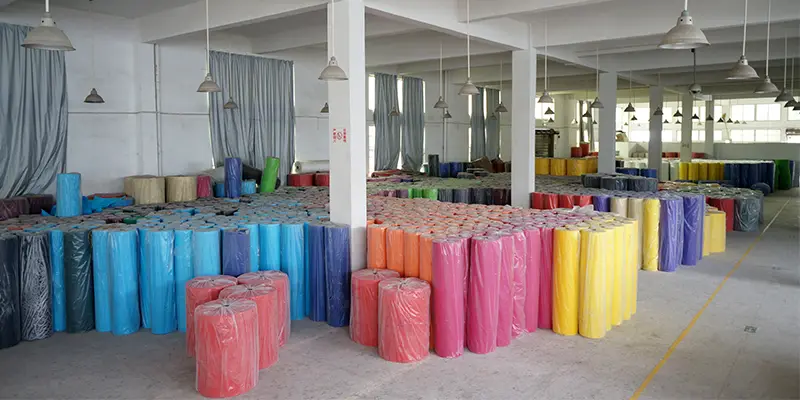
Nonwoven fabric is a type of material that can be made without weaving or knitting. It is produced by bonding fibers directly together through mechanical, water, thermal, or chemical methods to form a sheet-like structure with certain strength and stability. Unlike traditional cotton or knitted fabrics, nonwoven fabric has no interlaced warp and weft threads, yet it remains strong, soft, and highly versatile. Due to its high production efficiency, low cost, and clean appearance, it is widely used in medical supplies, packaging materials, eco-friendly shopping bags, and filtration products, making it one of the most practical and commonly seen textile materials in modern life.
The classification of nonwoven fabrics mainly falls into two categories: by manufacturing process and by raw materials. The process determines the structure and texture of the fabric—for example, methods such as spunbond, meltblown, spunlace, or needle-punched combine fibers in different ways. The raw materials, on the other hand, define the properties of the fabric, such as strength, softness, heat resistance, and environmental performance. Common materials include polypropylene (PP), polyester (PET), recycled polyester (RPET), and polylactic acid (PLA). In short: the process shapes it, the material defines it—together they determine the quality and application of nonwoven fabrics.
Spunbond nonwoven fabric is produced using a continuous filament web process, where polypropylene1 is melted, extruded into filaments, laid into a web, and bonded by hot rolling. Compared with short-fiber nonwovens, it has better structural stability and tensile strength and is less prone to deformation. With a smooth surface, it can be laminated or combined with meltblown layers and is one of the primary base materials for eco-friendly bags, medical protective fabrics, and agricultural cover cloths.
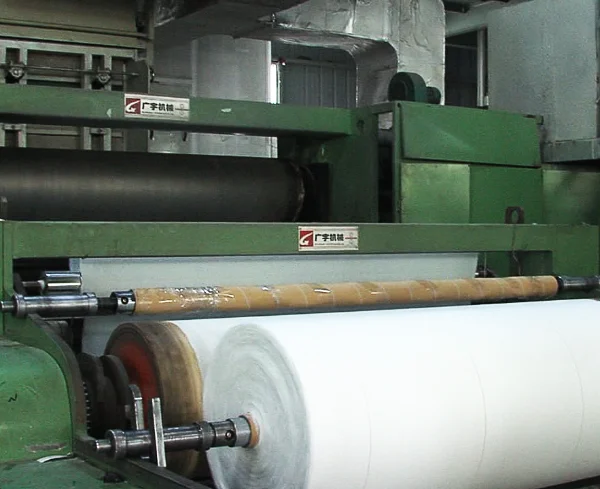
Spunlace nonwoven fabric uses high-pressure water jets to entangle fibers into a web without any adhesives, forming a strong yet soft fabric surface. Its fiber structure is compact and smooth, with a cotton-like feel, excellent absorbency, and skin-friendliness. Because it contains no chemical binders and has high cleanliness, it is widely used in wet wipes, medical dressings, facial mask sheets, and household cleaning cloths.
Needle-punched nonwoven fabric is made by repeatedly piercing a fiber web with barbed needles to entangle and compress the fibers into a dense structure. Compared with spunlace or spunbond fabrics, it is thicker, more wear-resistant, and pressure-resistant, with excellent dimensional stability. Needle-punched fabric is commonly used in carpet backings, sound and thermal insulation layers, geotextiles, and automotive interiors, making it a durable industrial-grade nonwoven material.
Thermal-bonded nonwoven fabric bonds fibers together using heat or thermoplastic fibers without additional adhesives. The process results in a smooth, uniform surface with good dimensional stability3 and high production efficiency. It is commonly used in hygiene products, filtration materials, and disposable protective items, making it a lightweight and widely applied thermally set material.
Chemical-bonded nonwoven fabric is made by spraying or impregnating a fiber web with a water-based adhesive, which is then dried and cured to bond the fiber intersections. This type of fabric has a stable structure and good formability, suitable for cleaning wipes, industrial protective materials, disposable sheets, and as distribution or supporting layers in diapers and sanitary pads, providing effective liquid dispersion and structural support.
Airlaid nonwoven fabric mainly uses wood pulp fibers as raw material. Through high-speed airflow, the fibers are dispersed into single strands and evenly laid into a web, then bonded using heat or latex. The resulting structure is fluffy, highly absorbent, dust-free, and consistently thick. It is widely used in sanitary pads, diapers, napkins, and oil-absorbing paper as an absorbent core material in hygiene products.
Wetlaid nonwoven fabric is produced by dispersing short fibers in water to form a suspension slurry, which is then deposited, dewatered, and dried into a fabric. This process creates an extremely uniform fiber distribution, giving the fabric a smooth surface and dense structure with a paper-like appearance while maintaining good breathability. Wetlaid nonwoven fabric is commonly used in tea bag paper, filter paper, wipes, and industrial filter media, ideal for applications requiring high cleanliness or precise filtration performance.
Once you understand how each type of nonwoven fabric is made, the table below gives you a quick overview of their web-forming methods, bonding techniques, and common uses. It’s a simple way to find which fabric best suits your needs — whether you’re choosing materials for eco-friendly bags, medical protection, or industrial applications.
| Type | Web Formation | Bonding Method | Main Features | Common Applications |
|---|---|---|---|---|
| Spunbond | Melt extrusion | Thermal bonding | Even texture, durable, lightweight | Reusable shopping bags, protective garments |
| Meltblown | Melt extrusion | Self-bonded | Ultrafine fibers, excellent filtration | Mask filters, air filters |
| Spunlace | Dry-laid | Water jet entanglement | Soft, skin-friendly, lint-free | Wet wipes, facial masks, medical dressings |
| Needle-punched | Dry-laid | Mechanical needling | Thick, strong, abrasion-resistant | Carpet backing, geotextiles, insulation |
| Thermal-bonded | Dry-laid | Heat bonding | Thin, smooth surface | Hygiene products, filter materials |
| Chemical-bonded | Dry/Wet-laid | Adhesive bonding | Soft, low-cost | Disposable wipes, absorbent layers |
| Airlaid | Air-laid web | Heat/Latex bonding | Highly absorbent, clean | Sanitary pads, napkins, tissue papers |
| Wetlaid | Wet-laid web | Mechanical reinforcement | Smooth, fine structure | Tea bags, filter papers, industrial filters |
The performance and application of nonwoven fabrics largely depend on the raw materials used. Different polymers or fiber types determine the strength, texture, heat resistance, and environmental characteristics of the fabric. The following are the most common types of nonwoven fabric materials today:
Polypropylene (PP) is the most commonly used raw material for nonwoven fabrics. It is lightweight, low-cost, and resistant to water and moisture. Easy to process and recyclable, PP is the dominant material in eco-friendly shopping bags, packaging bags, and medical protective products, holding the largest share in the nonwoven fabric market.
Polyester (PET) nonwoven fabric offers high strength, excellent heat resistance, and better dimensional stability than PP. It is often used in filtration materials, automotive interiors, and engineering fabrics, making it suitable for long-term or industrial applications. PET nonwoven fabric can also be used for shopping and packaging bags, but because of its higher cost and larger minimum order quantity, it is mainly chosen for projects emphasizing durability or premium branding rather than regular production.
Recycled polyester (RPET) nonwoven fabric is made from recycled plastic bottles and has a similar appearance to regular PET, with a stronger environmental advantage. It is often used in branded eco bags, exhibition giveaway bags, and other projects focused on sustainability. However, RPET is relatively expensive and requires higher minimum orders, so it is more suitable for large-scale, eco-conscious brands rather than standard bulk orders.
Polylactic acid (PLA) nonwoven fabric is a bio-based material made from plant starches such as corn or sugarcane. It is biodegradable and highly eco-friendly, with a soft texture and fine appearance. PLA nonwoven fabric is mainly used for food packaging, green event bags, and disposable eco-friendly products. Due to its higher cost and limited heat resistance, it remains a premium option for custom or specialized eco projects.
Nylon (PA) nonwoven fabric is known for its outstanding abrasion and heat resistance. It is tough, stable, and durable, making it suitable for use in high-temperature or high-stress environments. It is commonly applied in filtration materials, industrial protective fabrics, automotive engineering, and electrical insulation — ideal for projects requiring high strength and durability.
Natural fiber nonwoven fabric is made from bamboo fiber, wood pulp, or other plant-based materials. It features excellent absorbency, softness, and biodegradability with a gentle, skin-friendly touch. It is widely used in wet wipes, facial mask sheets, and medical dressings, making it a preferred material in personal care and eco-friendly packaging. However, because of its higher cost and large minimum order quantities, it is mostly chosen for premium or environmentally themed projects rather than large-scale standard production.
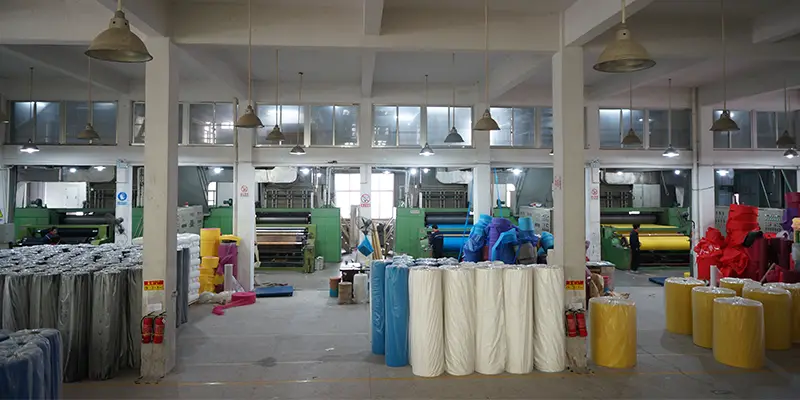
Different raw materials give nonwoven fabrics distinct properties and market positioning. The table below summarizes the differences among major materials in terms of cost, characteristics, and environmental performance, serving as a useful reference when selecting the right fabric for specific projects.
| Material Type | Cost | Main Characteristics | Environmental Attribute | Common Applications |
|---|---|---|---|---|
| PP (Polypropylene) | ★ Lowest | Lightweight, waterproof, recyclable | Recyclable | Shopping bags, packaging, medical protection |
| PET (Polyester) | ★★ Medium | High strength, heat-resistant, stable | Recyclable | Industrial fabrics, filters, premium bags |
| RPET (Recycled Polyester) | ★★☆ Slightly higher | Similar to PET, more eco-friendly | Recycled & eco-friendly | Eco-friendly bags, exhibition bags, gift totes |
| PLA (Polylactic Acid) | ★★★ High | Soft, biodegradable, delicate appearance | Bio-based & degradable | Food packaging, green event bags |
| PA (Nylon) | ★★☆ Slightly higher | Abrasion-resistant, heat-resistant, stable | Partially recyclable | Engineering fabrics, filtration materials |
| Bamboo Fiber / Cellulose | ★★★ High | Absorbent, soft, skin-friendly | Biodegradable & natural | Wet wipes, facial masks, medical dressings |
Nonwoven fabric is a material that combines functionality with sustainability. Its performance mainly depends on two key factors: manufacturing process and raw material. The process defines the fabric’s structure and texture, while the material determines its strength, heat resistance, and environmental characteristics.
When selecting nonwoven products, companies should consider purpose, budget, and environmental goals together.
For cost-effectiveness and versatility, polypropylene (PP) spunbond fabric is the safest choice.
For brand image and sustainability, RPET or PLA materials better convey eco-conscious values.
In industrial and engineering applications, PET and PA high-strength nonwovens provide more stable performance.
If you are looking for reliable and eco-friendly nonwoven bag solutions, Yanxin Bag is your trusted partner. With over 14 years of manufacturing experience, we specialize in custom nonwoven bags made from PP, RPET, PLA, and other sustainable materials. We can tailor the right material and process according to your brand positioning and sustainability goals. Whether for shopping, promotional, or packaging bags, we provide the ideal combination of quality and environmental value. Contact us today for a free consultation and quotation, and let your packaging embody both sustainability and brand strength.
Want to quickly understand non-woven bags and how to customize them?
This article introduces the main types and common uses of non-woven bags, analyzes their pros and cons, and walks through printing options and the full customization process—clear and practical for first-time users or buyers. 《Everything You Need to Know About Non-woven Bags》
Looking for a clear overview of non-woven bags’ strengths and limitations?
This article briefly covers the basics and efficiently breaks down the pros, cons, typical uses, and common styles of nonwoven bags — all illustrated for quick understanding. 《Pros & Cons of Nonwoven Bags》
Deciding between non-woven and plastic bags?
From materials and sustainability to load capacity, waterproofing, and printability, this comparison breaks down 14 key aspects to help businesses make the right packaging decision with confidence. 《Non Woven Bags vs Plastic Bags: Helping Your Business Make the Best Choice》
Confused between non-woven and PP woven bags?
From materials and lamination to durability, cost, texture, and eco-friendliness, this guide gives you a side-by-side breakdown across 12 detailed criteria to support better packaging decisions. 《Non-Woven Bag vs. PP Woven Bag: What Are the Difference?》
Want to extend the life of your non-woven bags?
This article walks you through each step — from prepping and spot cleaning to hand washing and drying — so your bags stay clean and in shape for longer use. 《How to Clean Non-Woven Bags Properly?》
Get a free quote and expert consultation today. Let's bring your brand vision to life.
1 Learn about polypropylene’s role in nonwoven fabrics and its significance in various industries, including medical and agricultural.
2 Discover the manufacturing process and materials used in N95 masks, crucial for understanding their effectiveness in filtration.
3 Wikipedia identifies dimensional stability as the ability of a fabric to maintain its original size and shape after mechanical, thermal, or chemical stress.
Answer: Nonwoven fabric is a sheet-like material produced by bonding fibers together through mechanical, water-jet, thermal or chemical methods without weaving or knitting. Unlike traditional woven or knitted textiles, it has no interlaced warp and weft threads yet still delivers strength, flexibility and broad application potential.
Answer: Nonwoven fabrics can be classified principally in two ways — by manufacturing process (e.g., spunbond, meltblown, spunlace or needle-punched) which determines structure and hand-feel, and by raw material (such as PP, PET, RPET or PLA) which defines strength, softness, heat resistance and sustainability.
Answer: Many nonwoven fabrics made from polypropylene (PP) and polyester (PET) are recyclable. Materials like recycled polyester (RPET) further improve eco-credentials. However, the facility for recycling and the presence of coatings or laminations can affect actual recyclability in practice.
Answer: Meltblown nonwoven fabric is made by extruding molten polymer through a die and stretching it with high-velocity hot air into ultrafine fibers (typically 1-5 μm) which form a dense porous web capable of capturing tiny particles. This fine fiber diameter and dense structure make it ideal for filtration applications such as mask filters and air filters.
Answer: PLA nonwoven fabric is biodegradable and plant-based, with a soft hand and refined appearance, making it suitable for green packaging and event bags. However, it is more expensive, has less heat resistance than some synthetics, and is typically used for higher-end or custom orders rather than mass-volume production.
Answer: Nonwoven fabric offers faster and more cost-effective manufacturing, high versatility in structure and function, and can be engineered for special properties like abrasion resistance, absorbency or flame retardancy.
Answer: Because spunbond nonwoven fabric provides a smooth surface, good tensile strength, lightweight structure, and compatibility with printing and lamination, making it ideal for reusable shopping bags with brand printing and durable use.
Answer: Yes — RPET nonwoven fabric is made from recycled plastic bottles and clearly signals a brand’s commitment to recycling and sustainable materials, though it tends to have higher cost and minimum order quantities than standard PP nonwoven bags.
Answer: Meltblown nonwoven fabric produces ultrafine fibers (often around 1–5 microns) which form dense webs capable of capturing very fine particles and providing high filtration efficiency, making it ideal for mask filters and air purification applications.

Order or no-order we are Always here to help you!
We will contact you within 1 working day, please pay attention to the email with the suffix “@yanxinbag.com”.
Order or no-order we are Always here to help you!
We will contact you within 1 working day, please pay attention to the email with the suffix “@yanxinbag.com”.