
Our Academy
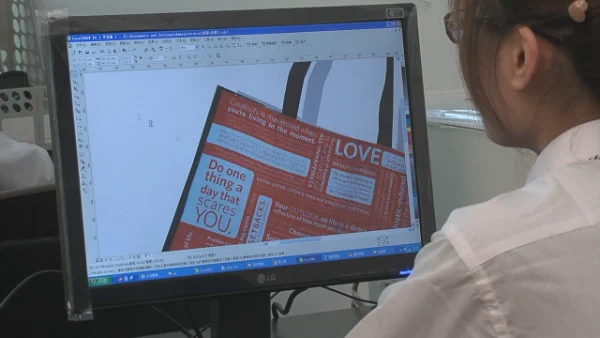
Non woven bag printing has become a key part of eco-friendly packaging and brand promotion. With the global popularity of non woven bags, more companies and brands are paying attention to how suitable printing methods can enhance the appearance of the final product, ensure durability, and control costs at the same time. Whether it is for large-scale commercial promotions or small-batch customized needs, choosing the right printing technique can significantly impact the final result. This article will systematically introduce the most common non woven bag printing methods and, combined with the characteristics of four main materials—PP, PET, RPET, and PLA—help you quickly determine which option best fits your requirements.
Non-woven bags are produced from different types of fibers, and among them four materials are the most common in the market: PP, PET, RPET, and PLA. Polypropylene (PP) is the most widely used option thanks to its low cost, light weight, and durability, making it suitable for most printing methods. Polyester (PET) offers higher strength and better wear resistance, and it can be recycled, which makes it ideal for premium or heavy-duty applications. Recycled polyester (RPET) takes sustainability a step further by reusing existing plastic resources, becoming a preferred choice for brands that want to highlight their eco-friendly values. Finally, polylactic acid (PLA) is a biodegradable material derived from plant-based resources. It provides the best environmental profile, though its printing adaptability is more limited compared to PP and PET.
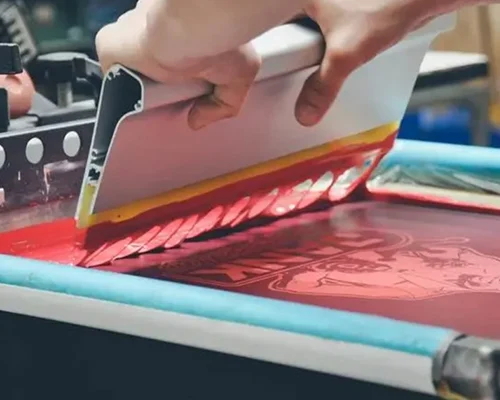
Screen printing is one of the most traditional and widely used printing methods. It works by creating a stencil screen and pressing ink through with a squeegee onto the bag’s surface to form the desired pattern. The advantages of screen printing are high color saturation1, strong adhesion, and durable finished products. It is very suitable for large-volume orders with relatively low unit cost. Its drawback is that it is not suitable for gradient effects or overly complex designs, and it also does not work well for designs with too many colors.
Heat transfer printing2 first prints the design onto a transfer film or paper and then uses high temperature and pressure to transfer the design onto the surface of the non woven bag. Its advantages include the ability to achieve multi-color printing and high-precision patterns with excellent reproduction, resulting in bright and vivid visual effects. The disadvantage is that the process is relatively complex and the cost is higher than screen printing.
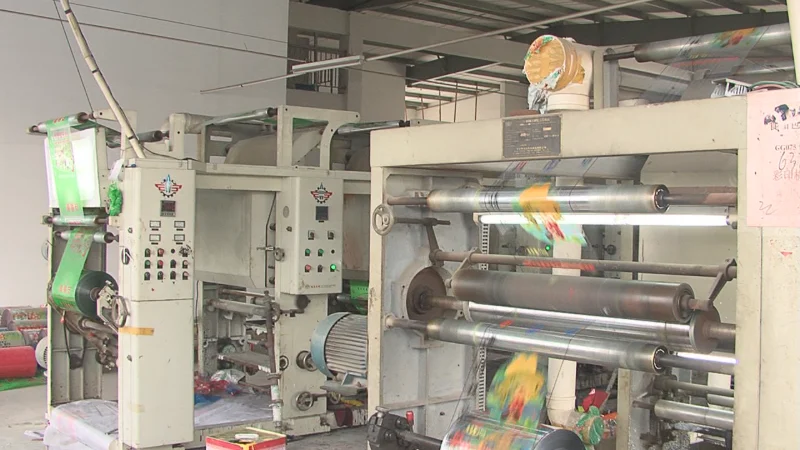
Gravure printing requires engraving the design onto a metal cylinder, then transferring the ink onto a film, and finally laminating the printed film with the non woven fabric. This method ensures stable colors and clear patterns, capable of achieving CMYK full color and spot color management. It is particularly suitable for mass production, as long-term use of the same set of plates can greatly reduce unit cost. Its disadvantage is the high initial plate-making cost and poor flexibility, making it unsuitable for small orders or customers who frequently change designs.
Digital printing on non woven bags is not direct inkjet onto the fabric surface. Instead, the design is first printed onto a thin film, which is then laminated with the non woven fabric. This method is similar to gravure printing, but the biggest advantage of digital printing is that it does not require plate making, making it very suitable for small-volume orders or personalized customization. It can achieve high precision, multi-color, and gradient effects with bright colors, offering the best visual performance among the printing methods. The drawback is that the unit cost is relatively high and it cannot compete with gravure or screen printing in terms of cost-effectiveness for large-scale production.
The UV printing process requires applying an extremely thin coating on the surface of the non woven fabric before printing to enhance ink adhesion. Then, UV printing equipment directly sprays the ink onto the bag surface and cures it with ultraviolet light to form clear patterns with rich color layers. The advantage of UV printing is that it can achieve gradients, three-dimensional effects, and full-color prints. However, for non-gradient designs, digital or gravure printing is now more commonly used.
Sublimation printing uses high temperature to turn dye into gas, allowing it to penetrate the fibers and bond with the material. The resulting patterns are vivid and resistant to fading. It is particularly suitable for customized projects requiring high-quality color effects. However, this method has clear limitations: sublimation is only applicable to polyester-based fibers, meaning it works only for PET and RPET non woven bags, and cannot be applied to PP or PLA materials.
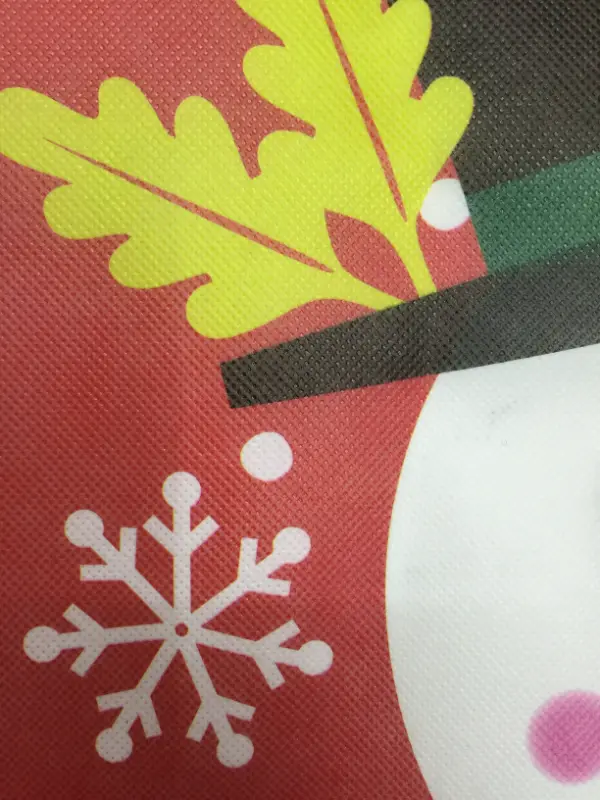
Among all non woven bag printing methods, screen printing and digital printing are the most common and also the ones customers hesitate about most often. Each has its own advantages and disadvantages, and they are suitable for different order volumes and design requirements. The table below summarizes their differences across several key aspects:
| Comparison Dimension | Screen Printing | Digital Printing |
|---|---|---|
| Order Volume | Suitable for large orders, the higher the quantity, the lower the unit price | Suitable for small batches or personalized orders |
| Design Complexity | Best for simple designs with fewer colors | Suitable for complex, multi-color, gradient, or photo-level designs |
| Printing Effect | High color saturation and strong durability, but not suitable for fine lines or gradients | Rich colors and clear details, but large solid areas may be less saturated compared to screen printing |
| Preparation | Requires plate making, more setup steps | No plate making required, direct output, high flexibility |
| Cost | Low cost for large volumes, not economical for small runs | Cost-effective for small runs, but higher cost than screen printing for large volumes |
| Lead Time | Longer overall lead time due to plate making | Quick output, shorter overall lead time |
If your order volume is large and the design is relatively simple, screen printing remains the most economical and durable option. If the order is small, or the design is complex and rich in colors, digital printing ensures better final results. In other words, screen printing3 is more suitable for “standardized, large-scale” projects, while digital printing is better for “personalized, small-scale” needs. In practice, many customers choose to use both methods across different projects to strike the best balance between cost and quality.
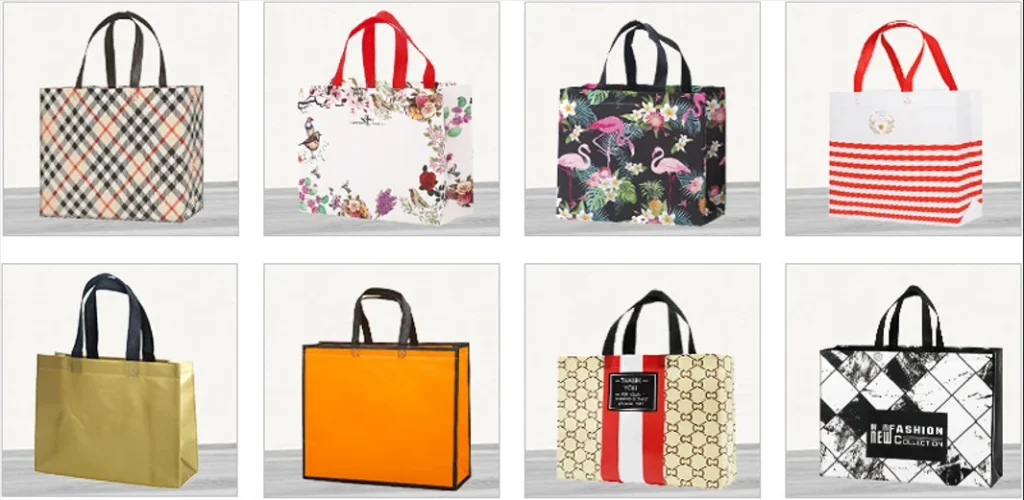
Digital printing does not require plate making. The design is printed directly onto a film and then laminated with the non woven fabric. It is highly flexible, suitable for small batches, multiple styles, or orders that require quick delivery, and it can handle complex designs and gradient effects.
Gravure printing requires plate making first, then printing the design onto a film and laminating it with the non woven fabric. Its advantage is lower unit cost in large-volume production, with stable color management, making it suitable for full coverage and large-area printing. The drawback is high initial plate-making cost and less flexibility compared to digital printing.
Digital printing is more advantageous for small runs and complex designs, while gravure printing is better suited for long-term, stable, high-volume projects.
| Comparison Dimension | Digital Printing | Gravure Printing |
|---|---|---|
| Plate Making | Not required | Required |
| Order Volume | Flexible for small batches | More economical for large runs |
| Pattern Performance | High precision, bright colors | Stable colors, suitable for full coverage printing |
| Unit Cost | Relatively high | Lower for large volumes |
| Flexibility | Easy to revise, suitable for multiple styles | High cost for revisions, less flexible |
The choice of non woven bag printing method depends on order volume, design complexity, and material. For small batches, multi-color, or gradient designs, digital printing is flexible and efficient; for large-scale, long-term production, screen printing or gravure printing offers better cost performance; and for localized high-precision or personalized elements, heat transfer can be used. For PET/RPET substrates, sublimation can be applied when not laminated to achieve high-saturation color effects.
If you are looking for a professional non woven bag manufacturer, Yanxin Bag is a reliable partner. We have long specialized in the design and production of various custom non woven bags, covering eco-friendly materials such as PP, PET, RPET, and PLA, and supporting multiple processes including screen printing, gravure printing, digital printing, heat transfer, UV, and sublimation.
Whether for large promotional campaigns or small personalized orders, we provide flexible solutions to ensure the best balance between cost, quality, and lead time. As an experienced non woven bag factory, Yanxin Bag has served numerous global brands, retailers, and event organizers with dependable customization services. Contact Yanxin Bag today to get tailored printing solutions that make your non woven bags not only eco-friendly and durable but also a standout carrier for your brand.
Want a full overview before choosing your next bag style?
This complete guide breaks down the common types, materials, key benefits, and customization options — a great entry point for planning your product or campaign needs. 《Everything You Need to Know About Non-woven Bags》
Unsure which bag structure suits each use case?
This article outlines the most popular shapes — from flat totes to foldable and drawstring bags — and explains how each type performs in different scenarios. 《Types of Non-Woven Bags for Eco-Friendly Shopping: Styles, Craftsmanship & Applications 》
Planning promotional bags? Printing makes all the difference
Explore six key printing methods, including screen and gravure, with pros and cons across cost, design quality, and material compatibility — a must-read for brand-led use. 《Non Woven Bag Printing: Methods, Comparisons & Complete Guide 》
Using your bags often? Make sure you’re cleaning them right
From gentle cleaning tips to common mistakes, this article shows how to safely maintain your non-woven bags for repeated use — whether at home or in business. 《How to Clean Non-Woven Bags Properly?》
Get a free quote and expert consultation today. Let's bring your brand vision to life.
1 Art Prof defines Color saturation as the intensity and purity of a color, indicating how vivid or muted it appears.
2 Wikipedia describes how thermal-transfer printing applies heat and pressure to transfer ink from a ribbon onto materials such as paper, synthetics, or textiles.
3 FESPA describes how screen printing allows high color saturation, strong adhesion, and durable prints on materials such as textiles, plastics, and metals.
Answer: Yes, but printing options are limited. PLA non-woven bags are biodegradable and more sensitive to heat, so techniques like screen printing or simple heat transfer are more suitable, while sublimation is not compatible.
Answer: Gravure printing and sublimation are both highly durable on RPET non-woven bags. Gravure ensures stable colors in large runs, while sublimation penetrates fibers to create long-lasting, vibrant prints.
Answer: No. Sublimation only works on polyester-based fabrics such as PET and RPET. PP and PLA non-woven bags cannot absorb sublimation dyes.
Answer: Yes. Most printing methods, including screen printing and digital printing, allow for designs on both sides of a non-woven bag, either identical or different.
Answer: Digital printing, UV printing, or gravure printing are ideal for full-color or gradient designs. The choice depends on order size and budget.
Answer: Not always. Screen printing and heat transfer can be applied directly to the fabric, but gravure and digital printing typically require a laminated film surface for best results.
Answer: Screen printing gives sharp edges for simple logos, while digital printing produces the sharpest results for multi-color or detailed designs.
Answer: For very large volumes, gravure printing and screen printing are generally preferred because they deliver stable results at lower unit costs. These methods are ideal for bulk promotional non woven bags with consistent designs.
Answer: Laminated surfaces make gravure and digital printing more suitable, as the film allows for smoother ink adhesion and better color management. Without lamination, methods like screen printing or heat transfer are often used.

Order or no-order we are Always here to help you!
We will contact you within 1 working day, please pay attention to the email with the suffix “@yanxinbag.com”.
Order or no-order we are Always here to help you!
We will contact you within 1 working day, please pay attention to the email with the suffix “@yanxinbag.com”.